Commercial Roofing in New Canaan, CT
Coordinate commercial roof inspections and phased repairs in New Canaan, CT. We document roof zones, access limits, drainage conditions, and next steps.
A scheduled roof walk needs a route that keeps building staff and repair crews from crossing active service paths. In New Canaan, CT, we confirm who controls roof access, what activity must continue below, and which sections belong in the first inspection. Then we mark the roof condition that prompted the call. That order gives the facility director a useful boundary for repair planning and keeps a maintenance visit from turning into an undefined survey.
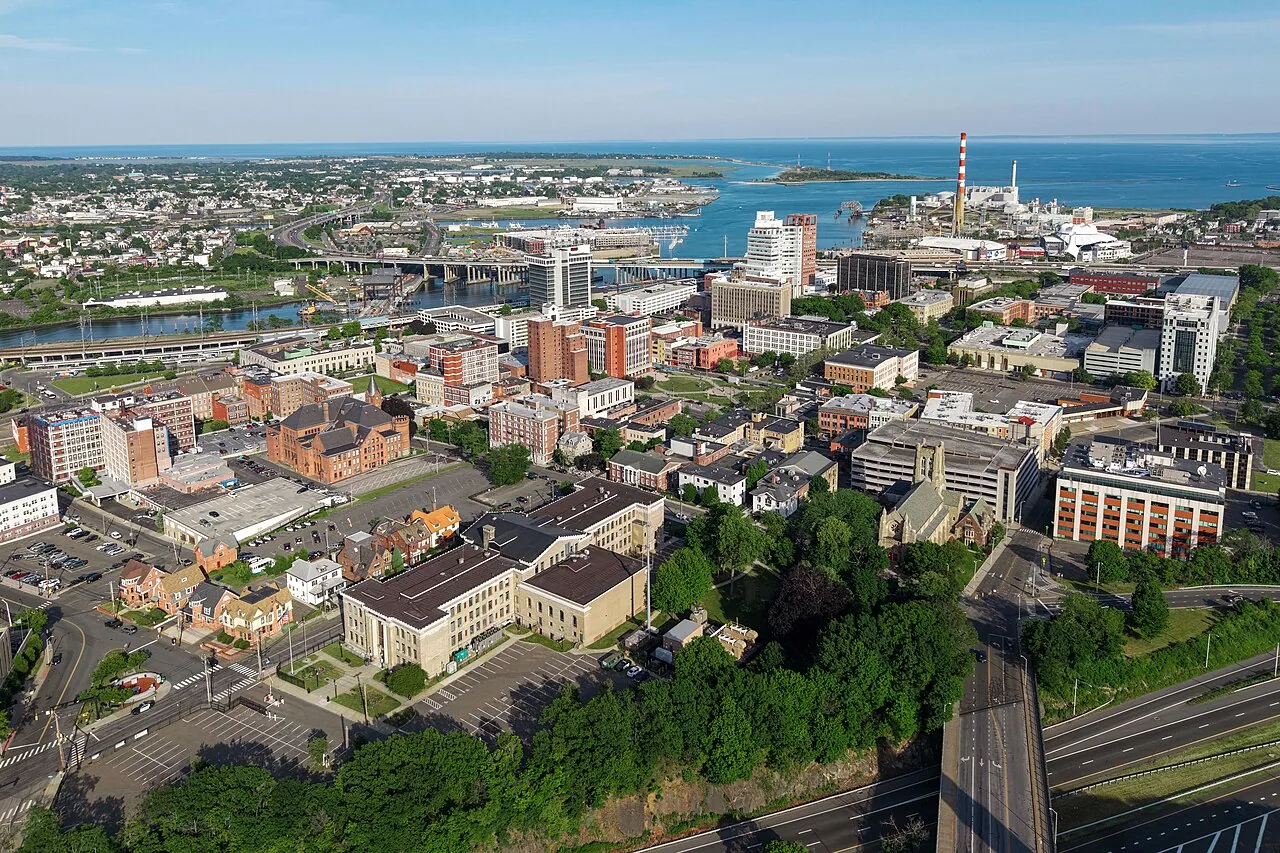
New Canaan spans 22.2 square miles, with its center approximately 15.9 miles from Bridgeport's. Before work begins, we verify the property's access point, assembly history, water path, and occupied areas. The written scope connects each proposed action to those observations.
Define the Walk Before Entry
We begin by asking what decision the inspection needs to support. An active leak may call for a focused tracing visit; a capital review may need a broader condition map across several roof levels. The building contact identifies access procedures, restricted areas, equipment clearances, and any records that explain prior repairs. We mark what is included and list any section that cannot be reached safely, so the report does not imply coverage beyond the walk.
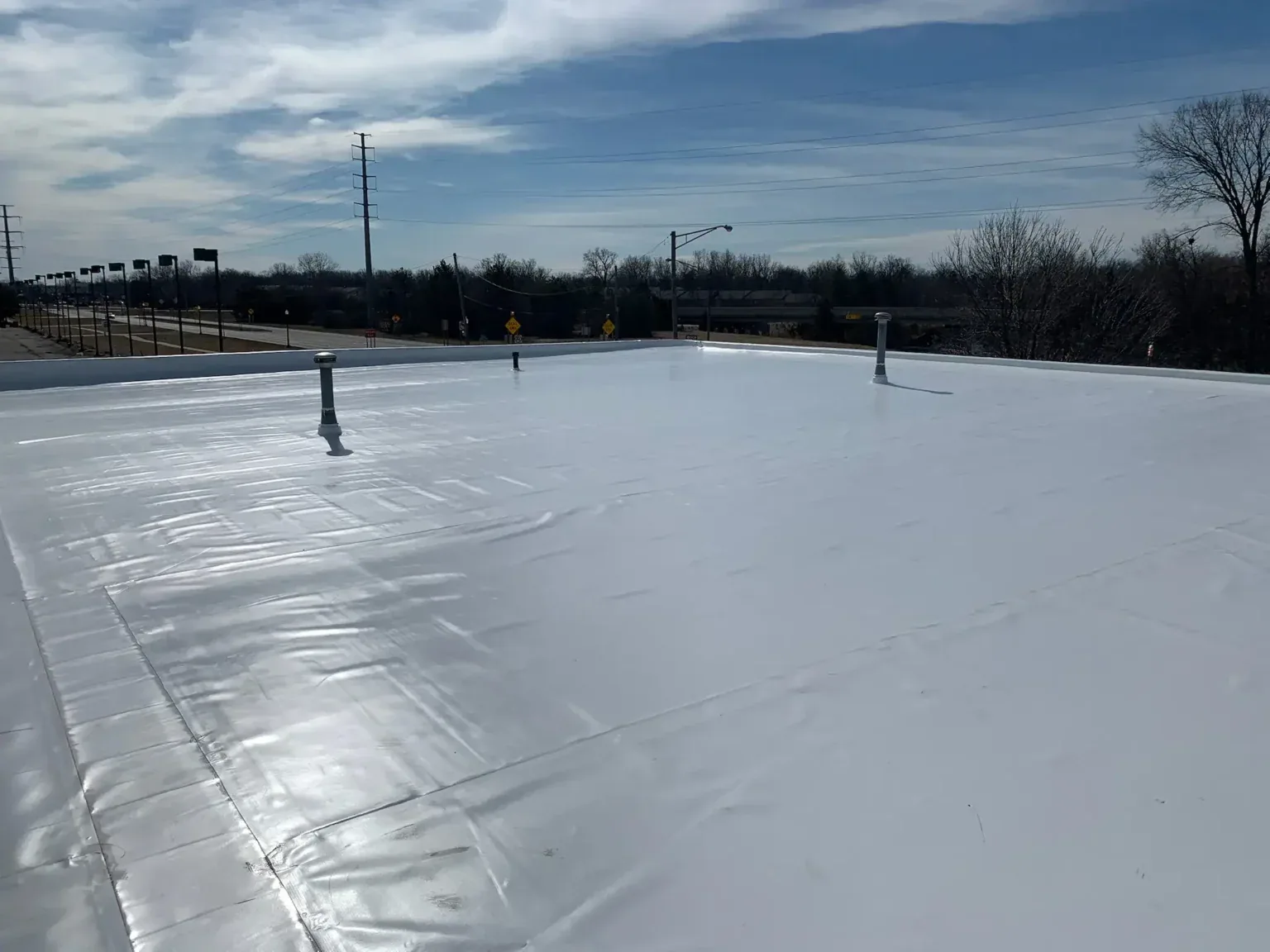
On the roof, each observation gets a zone reference and photograph. We note the visible surface, laps or panel joints, curbs, penetrations, edge details, and nearby outlets. The walk also records whether a patch appears stable or whether movement at a transition deserves follow-up. A documented commercial inspection can separate immediate defects from maintenance items. If the owner is evaluating a planned project, a capital planning review can carry those distinctions into a phased decision.
Read Drainage After Precipitation
Bridgeport averages 33.6 inches of snowfall each year, alongside 44.09 inches of annual precipitation. Those regional amounts provide background for drainage review in New Canaan, while actual outlet conditions and forecasts guide the inspection. We examine strainers, drain bowls, scuppers, overflow openings, and transitions, recording whether debris, a low section, or a failed seam appears to affect runoff.
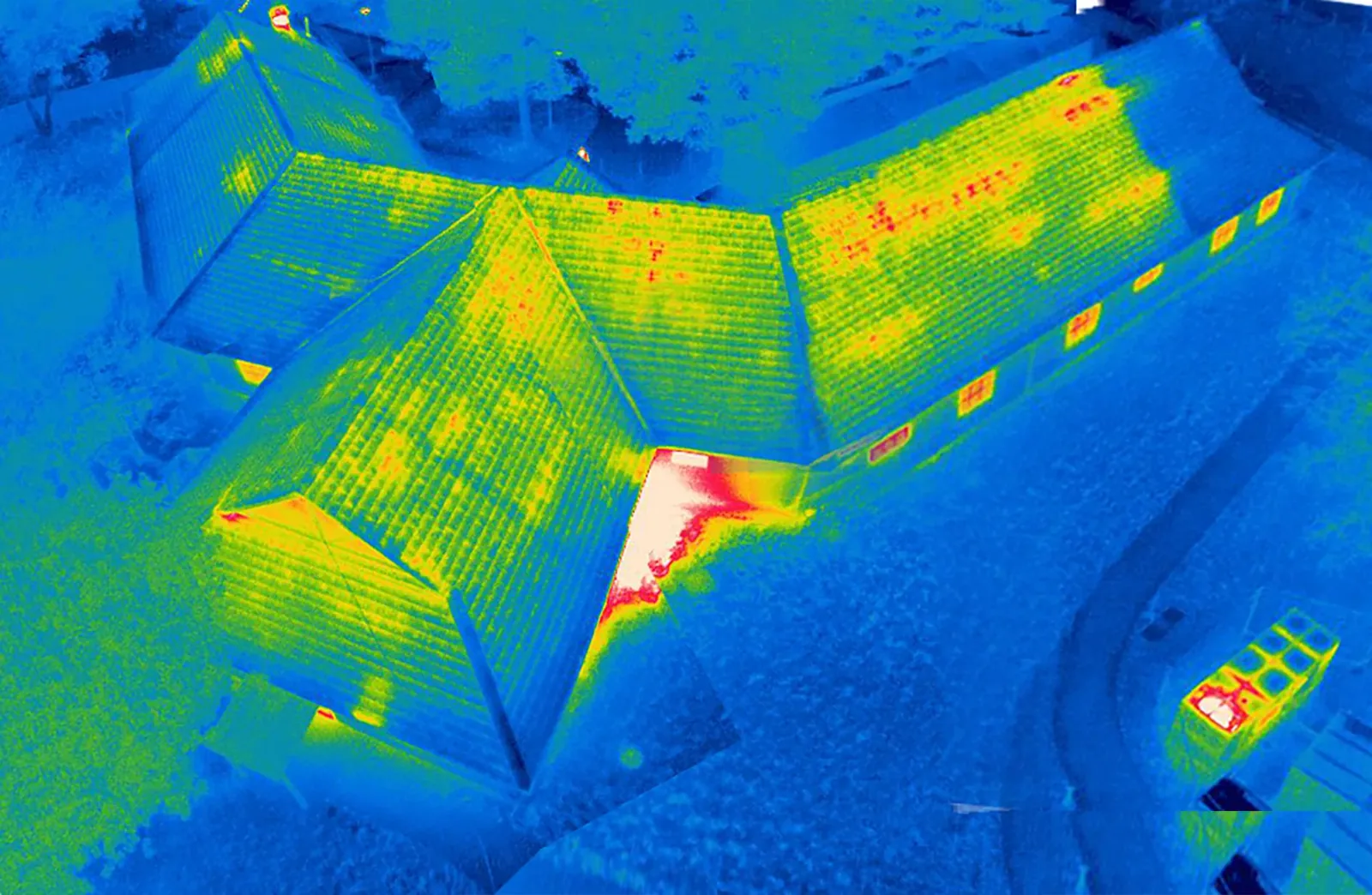
Snow or rain does not identify a failure by itself. A leak reported after a thaw may come from a seam, flashing, puncture, or wet insulation that was already affected. We compare the timing with the roof zone and interior location, then recommend repair or testing based on visible evidence. If drainage is the question, roof outlet service can define the checks around bowls and overflow paths. For repeated dampness below a roof field, an infrared moisture survey may help select locations for evaluation when surface conditions and assembly type support its use.
Coordinate the Work Window
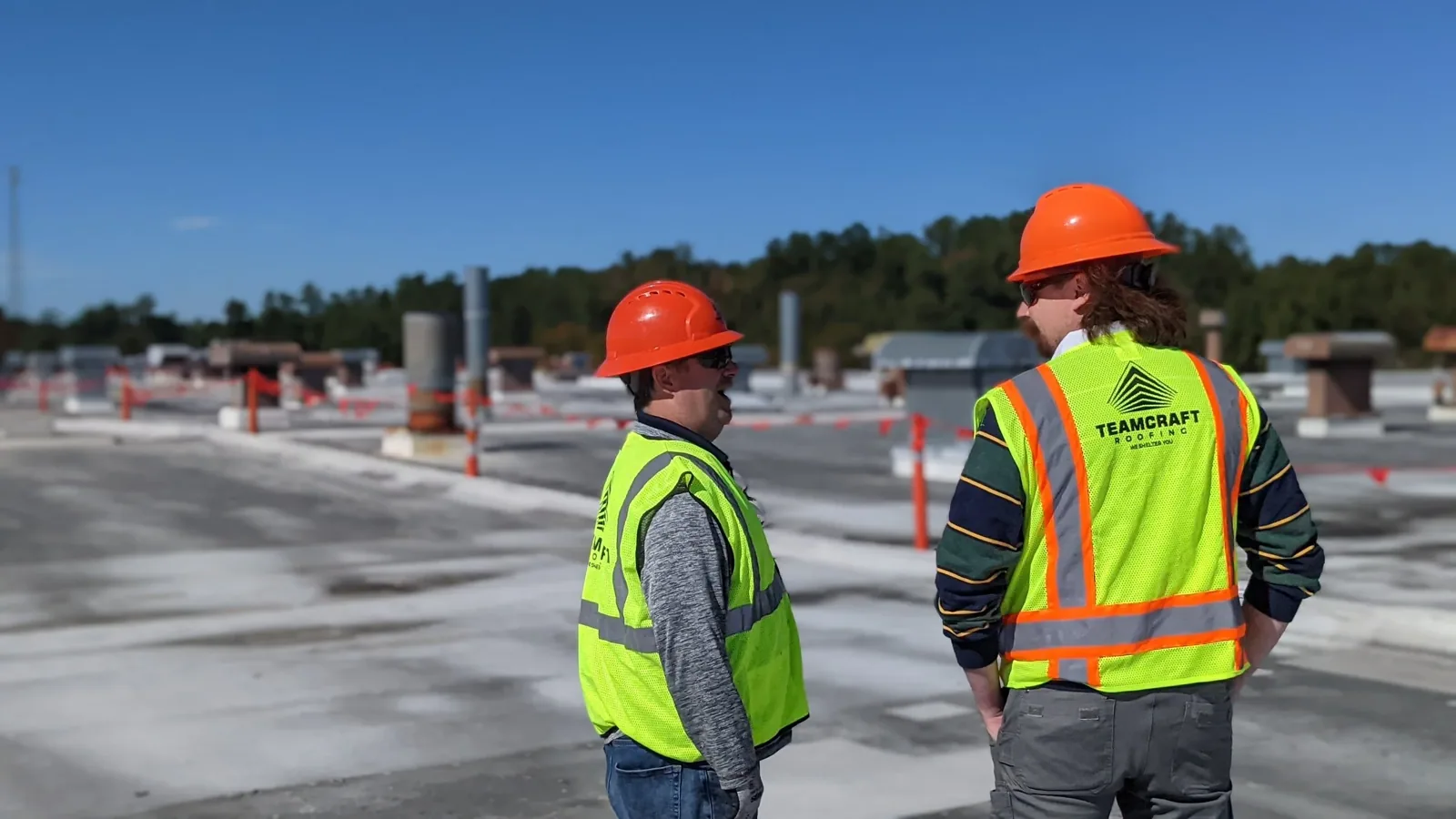
A repair plan must account for the route from access point to work area, not just the material on the roof. We confirm ladder or hatch procedures, fall protection, lifting limits, and whether technicians need rooftop equipment access during the work. The facility contact sets quiet periods, tenant restrictions, or loading windows. We use those limits to choose a staging zone, sequence roof sections, and identify who receives the end-of-day handoff.
Before removal starts, the crew should know where temporary dry-in ends and how the site will be secured if weather interrupts the shift. We keep drains open, track material movement, and record each completed section. If a concealed deck condition changes the scope, the stop point and approval contact should already be clear. A phased occupied-building reroof can address those logistics when a project crosses active space. Nearby work in Darien or Bridgeport uses the same handoff, with each property's own access and roof records.
Compare Assembly Options
Not every roof concern calls for the same scale of work. A reachable flashing defect or isolated seam failure may be repaired when surrounding material can accept a sound tie-in. Broad deterioration, recurring leaks, or moisture found below the membrane can point to a larger review. We note where removal would begin, what must be tested, and how the owner will approve concealed-condition work before the crew expands the scope.
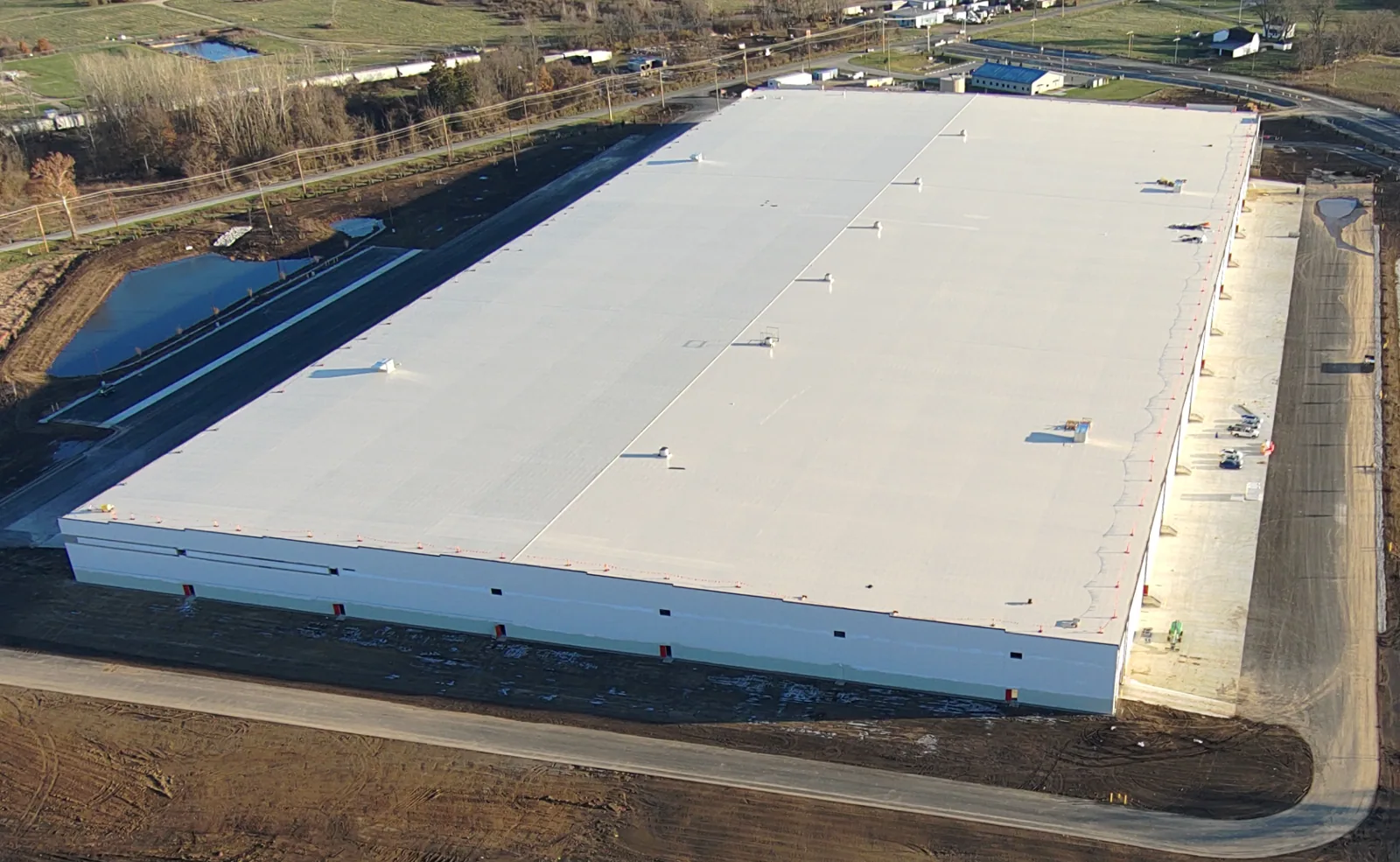
A recover can reduce removal only when the existing layers, deck, drainage, and project requirements support it. If insulation is wet or the assembly is unstable, leaving it in place may carry the condition forward. A tear-off can expose the deck for repair but requires a stronger dry-in sequence and more coordination below. We explain cost and timing drivers, including access, disposal, substrate work, weather holds, and protection of occupied rooms. The system should follow that assessment: we can compare an EPDM assembly for seam and termination details, while a cover-board and insulation scope makes elevation and substrate decisions visible. Any isolated wind damage is documented as its own repair boundary when inspection confirms the condition.
Leave a Transferable Roof Record
A closeout should show where the crew worked, what was found, and what remains for a later visit. We label photographs to match roof zones, describe the repair materials and tie-in, and note any area excluded from inspection. If deck or insulation findings changed the original boundary, the record identifies the approval and resulting work. That gives an owner a useful starting point for maintenance instead of images without location or context.
Before the first call, gather roof plans, prior reports, leak dates, repair invoices, access rules, and the decision deadline. Tell us which floors or operations have the least flexibility. We will confirm the inspection scope and state the next step in writing, including whether testing or design review remains open. For several properties, a consistent condition record can keep observations comparable without assuming every assembly needs the same work. If replacement is being considered, a replacement assessment can build on the observed zones and access plan.
Questions and Answers
Can the inspection cover several roof levels in one visit?
Yes, when access and time allow each level to be inspected safely. We list the included zones, identify locked or restricted areas, and keep each photo tied to its roof level. If a section cannot be reached, we state that limit and the information needed to return rather than imply that it was checked.
What makes a repair suitable for a limited work window?
A repair is easier to sequence when the source is localized, the material is identified, and the tie-in can be completed before the planned secure point. We confirm staging, noise, weather exposure, and access before setting the scope. If the defect opens onto wet insulation or damaged deck, the approval path may extend the work window.
Do precipitation records show whether my New Canaan roof has a leak?
They provide regional context only. We still need to inspect the roof surface, flashing, drainage, and the area above the interior report. A weather timeline can help focus the walk, but the written finding distinguishes what was seen from what would require a test or opening to confirm.
How do you protect rooftop equipment during a reroof?
We note service clearances and equipment locations during planning, then coordinate temporary protection, access paths, and any needed trade attendance. The project scope assigns responsibility for disconnects or adjustments before work begins. The daily handoff confirms that service routes and roof areas are returned in the agreed condition.
What goes into the written recommendation?
It records roof zones checked, photographs, observed conditions, access limits, and the work or test recommended next. Where concealed material may change the scope, we identify an approval point. That lets ownership compare a focused repair with broader work using the same set of documented findings.
Related Roofing Work
Schedule a New Canaan Roof Review
Have the roof plan, access procedure, leak history, and operating schedule available. We will define the inspection zones and send a written recommendation with the next action.