
Commercial Roofing for Real Estate Investors in Bridgeport, CT
Assess roof condition, near-term repair exposure, and capital scope for commercial real estate portfolios in Bridgeport, CT, with clear findings.
An acquisition or refinance schedule can move faster than a roof record. We start by identifying the buildings in scope, the available maintenance history, known leaks, and the access needed to inspect each assembly. Bridgeport's planning record covers several building contexts, from older downtown structures to commercial-industrial activity on the West Side. We keep each observation attached to the address and roof area where it was verified. A portfolio in this market can include different operating uses; the inspection needs to show what each roof condition supports. This lets ownership separate roof evidence from budget assumptions at each address.
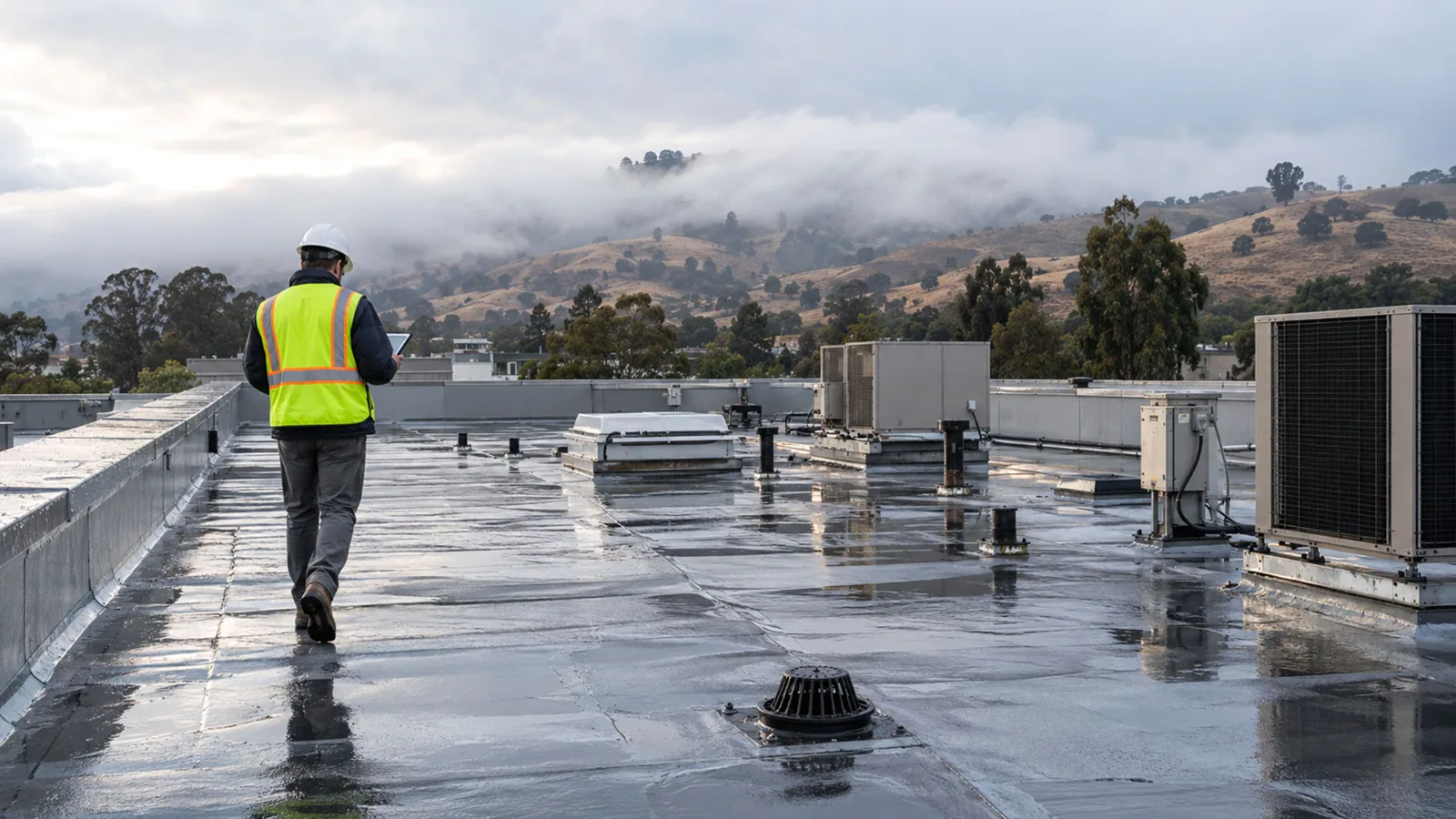
We document visible defects, roof sections, limits, and next actions rather than reducing a building to one rating. A roof due-diligence survey can help frame an acquisition question, while a property roof inspection records current conditions. The report distinguishes immediate repair from further testing or future capital work, giving asset management a field basis for its next decision.
Separate Observed Defects from Assumptions
Older scopes and seller records are useful inputs, but a roof needs an accessible field review before a buyer relies on them. We identify the visible membrane or metal system, note repairs and transitions, and look for drainage, edge, seam, and penetration conditions. A ceiling stain may guide the walk without proving the roof opening. Where moisture extent, deck condition, or attachment cannot be confirmed visually, the report lists the test that would settle the uncertainty.
Bridgeport's normal climate includes precipitation and winter snowfall. We use the seasonal record to schedule wet-weather follow-up, then rank each asset from field observations. We tie each concern to a photograph and location on the roof. For an ownership team managing several properties, a property manager's maintenance record can supplement the field visit, while the condition report keeps inspection evidence consistent across the acquisition file.
Translate Roof Condition into a Work Horizon
Capital planning should distinguish an isolated detail from a roof-wide pattern. A failed curb with sound surrounding material may support a near-term repair. Repeated seam failure, widespread wet insulation, or deterioration across multiple sections can change the scope. We state what we observed, what repair would address, and what information remains necessary before estimating a larger replacement. This lets an investor compare immediate liability with the cost and timing of further investigation.
State Street has larger parcels with potential industrial and showroom uses toward one end and smaller retail-serving parcels toward the other. The West Side/West End plan notes that parcel scale and likely use change along State Street. That is useful background for access questions, but each asset receives its own roof record and work horizon. We confirm loading access, occupancy, and the roof assembly at each asset before setting work priorities. A roof capital plan can rank work by verified condition and timing. If the evidence supports replacement, a replacement assessment defines the areas and preparation that belong in the next scope.
Plan Inspection Access Before the Deadline
Transaction review often requires access while a property remains occupied or managed by a seller. We coordinate the roof hatch, escort, lift or ladder, tenant notices, and restrictions on opening an assembly. The site contact should identify active operations, sensitive equipment, and areas that cannot be entered. If testing requires a cut or core, the buyer and property representative need to agree on authorization and restoration before field work starts. We also record who can authorize roof access and who receives a change in the inspection boundary during a short transaction window.
Bridgeport requires building information and a written scope for many commercial and industrial repair plans. A proposed test or repair should be bounded so the transaction team can understand the affected area. Stratford and Fairfield are nearby towns, but distance does not carry a roof finding from one property to another. We keep the address and access record attached to the specific asset. A general contractor coordinating renovations can use the same marked boundary when capital work begins after close.
Compare Assets Without Flattening the Record
A REIT or multi-market owner may need a portfolio view, but a summary should retain the facts that distinguish one roof from another. We group findings by assembly, urgency, and work type while keeping the building, photo location, access limit, and inspection date visible. A regional table can help sequence inspections; it should not replace the property record. This approach makes it easier to update the capital picture after repair without losing the original condition that drove the work.
A roof asset register can connect inspection, repair, and warranty records over time. For coordinated scheduling, a multi-site roof program can align access across properties. The asset team can then compare repair needs in Stratford, Fairfield, and Bridgeport without treating those locations as a single building or assuming the same work applies everywhere. We will identify which scopes may be coordinated and which require separate mobilization or access planning. Before a reserve moves into the next budget cycle, we can refresh the marked roof areas, confirm whether prior repairs remain intact, and note any new water path or equipment change. This keeps the capital record connected to current field observations instead of an older summary alone.
Deliver a Record for the Next Decision
A useful closeout states the roof areas inspected, what was visible, photographs, access limits, immediate repairs, and the next test or capital trigger. If a recommendation depends on moisture sampling or concealed conditions, that dependency is stated before the buyer sets a budget. We also note whether a temporary repair remains and which condition could require another visit. A clean record lets the next asset manager pick up the decision without translating a roof walk from memory.
Share the property list, transaction deadline, roof plans, leak history, access contacts, and any proposed test authorization for a Bridgeport asset review. We will define the inspection boundary and return findings tied to each address. That gives acquisitions, facilities, and ownership a clear written basis for prioritizing repair, monitoring, or a larger roofing scope.
Questions and Answers
What should a buyer request before the roof inspection?
Ask for roof plans, past scopes and invoices, leak records, warranty documents, equipment changes, and access procedures. We compare those records with visible field conditions and identify gaps that require testing. The report names which roof sections were accessible and what the inspection did not establish.
Can a visual walk estimate the remaining roof life?
It can document condition and maintenance priorities, but a precise remaining-life date depends on assembly, prior work, moisture, and future maintenance. We state whether the evidence supports repair, testing, or a capital review. A buyer should not treat one visible defect as a system-wide conclusion.
How do you separate a repair reserve from replacement work?
We mark localized defects, broader deterioration, and unknown conditions separately. The repair scope addresses a defined area; replacement planning requires evidence about assembly condition and extent. If a test would change that decision, we identify it before the owner commits to a larger project.
Can a portfolio report compare buildings in nearby towns?
Yes, if each property retains its own address, roof sections, photographs, and access limits. We can summarize urgency and work type across Stratford, Fairfield, and Bridgeport, then keep each recommendation attached to the roof inspected. Nearby geography does not make condition evidence transferable.
What should the asset team receive after an inspection?
Keep the marked photos, visible condition, repair boundary, unresolved questions, access limits, and next action together. A capital decision should show what evidence supports the scope and what would change it. We provide the field record in a form facilities and ownership can use for follow-up.
Related Roofing Work
Request a Transaction-Ready Roof Review
Send the property list, transaction dates, roof records, known leaks, and inspection access rules. We will document each roof separately and return findings that distinguish near-term repair from capital review.