Commercial Roofing in Milford, CT
Commercial roofing in Milford, CT ties water tracing to roof access, drainage, and a defined repair limit so facility teams can plan the next step.
A roof call from Milford needs a defined route from the facility entrance to the affected roof zone. We confirm who can provide access, which interior areas need protection, and where equipment can be staged. Then we inspect above the reported leak, trace seams and penetrations, and check the drainage path before choosing between a local correction and a wider investigation.
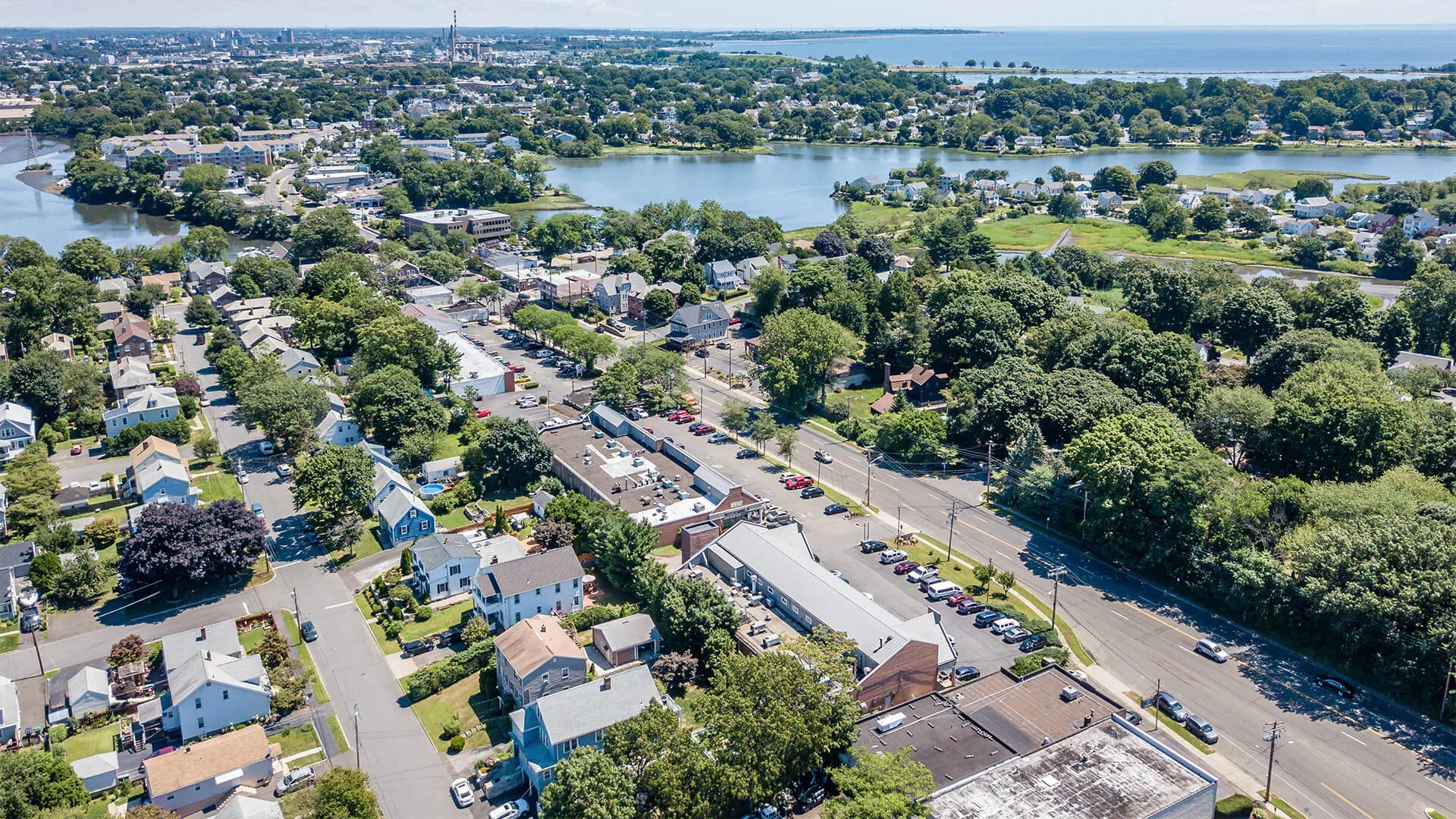
Milford spans 22.2 square miles of land, and its town center is about 7.5 miles from Bridgeport's. That places the communities near one another for service, but each property still needs its own condition map. A commercial leak repair should identify the point of entry, the tie-in material, and the work boundary before a patch is specified.
Read the assembly before opening it
The interior drip can appear far from a failed roof detail. We begin above and uphill from the affected space, following membrane laps, seams, fasteners, curbs, pipes, wall transitions, and edge metal. Drain bowls and overflow paths get checked alongside the leak area because water can collect before it reaches the interior. Photos connect each observation to a roof zone, keeping confirmed conditions separate from assumptions.
A drain is a system of connected details, not just a bowl at the low point. We check whether the roof surface guides water toward the opening, whether the strainer stays seated, and whether an overflow path remains clear. Ponding near a curb or wall receives a separate note because its cause may differ from a blocked outlet. That distinction affects where repair ends.
A prior repair can conceal a second failure at its edge. We look for lifted corners, incompatible patch material, loose coating, soft substrate, and movement at a curb or wall. When visible inspection cannot establish whether moisture continues below the membrane, we lay out a controlled opening or another suitable test. The owner approves its location before removal starts, and the result determines whether the repair remains local or expands.
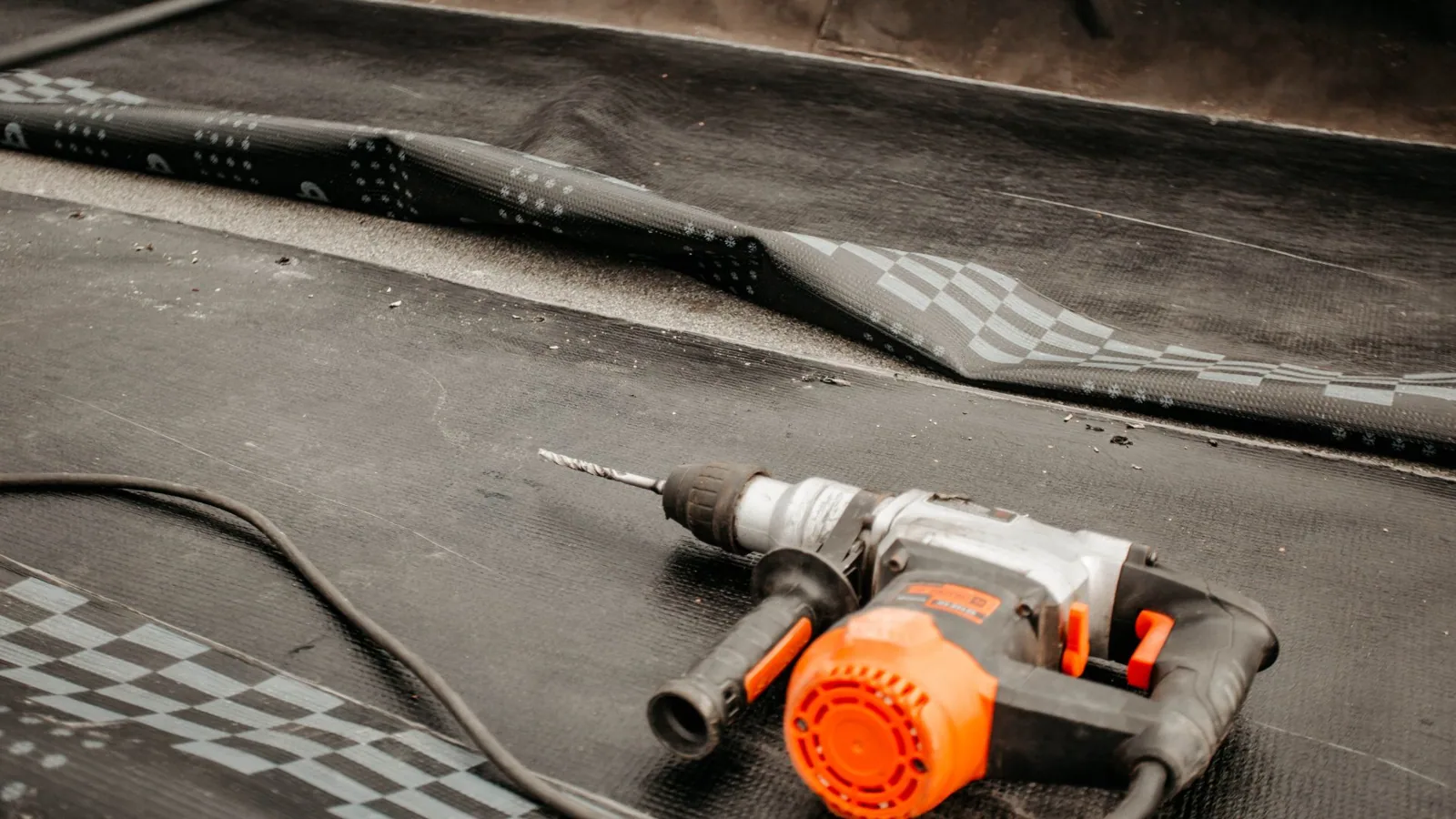
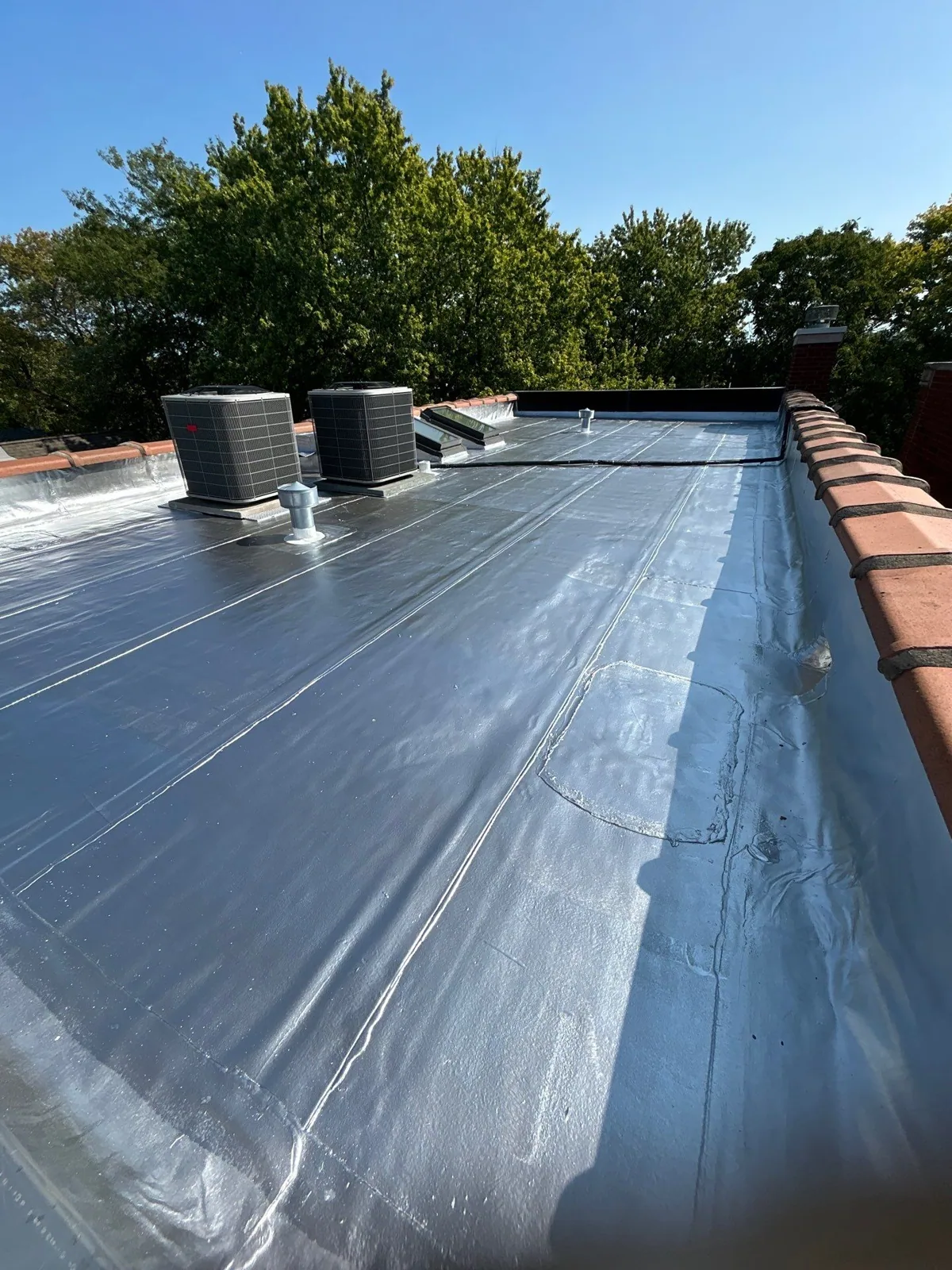
Different systems need different preparation. A membrane patch requires a clean, compatible surface and a sound tie-in; a metal detail needs an attachment and transition that shed water. We identify the existing assembly where possible and specify the correction to match what is present. For a roof with a distinct membrane puncture, the scope also checks whether nearby insulation or attachment was affected.
Keep the work path open below
Before the work window is set, we coordinate access with the person who can arrange keys, alarms, tenant notice, and equipment shutdowns. The material path from delivery to roof is reviewed with the facility contact. A lift or hoist location must preserve necessary movement and protect the surface below. We also decide where removed material will leave the roof so debris does not cross an uncontrolled interior route.
Milford and Bridgeport are included in Connecticut's Coastal Corridor transportation investment area. That corridor includes roads, bridges, waterways, ports, and airports, so the facility contact helps set the actual truck route, roof entry, and lift location. We verify the address-specific setup and the building's own restrictions. A nearby Easton roof visit or a separate Bridgeport site walk receives its own access approval and staging plan.
Once removal begins, a roof zone is opened only to the size the crew can protect as planned. The sequence records the dry-in edge, the interior area below, and the point where work can stop safely. If the deck or insulation changes the expected repair, the facility contact receives the location and choice before additional material is removed. This keeps a field discovery from silently changing the cost or schedule.
Compare a patch with planned work
A focused repair can be enough when the defect is isolated and nearby membrane, attachment, insulation, and deck remain stable. Several leak locations, broad moisture, or recurring seam distress can point to a larger scope. We mark what was confirmed, what was not tested, and where the repair stops. The property team can then compare a local correction with phased work or replacement against the same roof drawing.
Removal depth, deck repair, insulation, edge transitions, lift access, material staging, disposal, and the amount of roof that can be dried in per shift influence time and cost. A recover is only useful if the existing layers and surface are suitable. The recover review checks that condition; a replacement plan defines removal, tie-ins, and protection when the old assembly cannot remain.
A buyer or asset manager may need to separate immediate leaks from longer-range roof exposure. We mark observed defects, note inaccessible areas, and identify testing still needed before projecting the work. A roof due diligence survey can help frame conditions before a larger capital decision is made.
Record what changes the next visit
A closeout should let another facility contact find the repair without repeating the full investigation. We identify the zone, defect, surface preparation, installed material, tie-in, and photographs. Any temporary dry-in is labeled as such, and any nearby detail left outside the scope is recorded separately. The next inspection trigger may be a weather recheck, a test result, or a scheduled look at a transition that could not be opened.
Milford's 22.2 square miles and its 7.5-mile proximity to Bridgeport make regional dispatch practical, while each building receives its own inspection and repair record. Our record stays with the property inspected and its observed assembly. The owner can preserve that history through a roof condition report or maintain recurring checks through a preventive roof maintenance plan. Each follow-up should name the condition and roof area it is meant to review.
For the visit, gather the roof plan, affected room locations, prior repairs, access rules, and the person who can approve a test. We will map the water path and state what can be repaired now, what needs confirmation, and what should be budgeted separately. When a Milford condition leads to a larger replacement question, the written scope keeps the repair decision connected to the next work phase.
Questions and Answers
What can we send before a Milford roof assessment?
The roof plan, leak locations, repair history, access requirements, and operating hours help us prepare the walk. Include the contact authorized to approve a test opening. We can then confirm the route, the areas needing interior protection, and the first roof zones to inspect.
Why can a roof leak show up away from the failed detail?
Water may travel along insulation, deck, or a roof transition before it reaches the ceiling. We inspect above and uphill from the visible effect, then document the path we can confirm. A test is proposed only when it will answer a specific question about the assembly.
How do you decide the size of a repair opening?
The opening follows the defect and the crew's ability to secure the area before stopping. We set a dry-in boundary, protect the space below, and identify the approval point if damaged material continues beyond the expected limit. The owner reviews added work before the opening grows.
Can an overlay reduce roof work in Milford?
It may reduce removal when the existing layers and substrate are suitable, but it cannot correct concealed wet insulation or unstable attachment. We inspect the assembly and compare that option with removal and replacement. The scope identifies preparation, tie-ins, and exclusions for each approach.
Which details should appear in the repair closeout?
The record should show the repaired zone, defect, materials, preparation, photographs, and the edge of the work. It should also state whether protection is temporary and what condition brings the crew back. That makes the next inspection a follow-through rather than a new guess.
Related Roofing Work

Set a Milford inspection window
Share the roof plan, reported leak locations, access restrictions, and prior repair notes. We will trace the affected area, define a controlled work zone, and record the repair decision and follow-up trigger.