
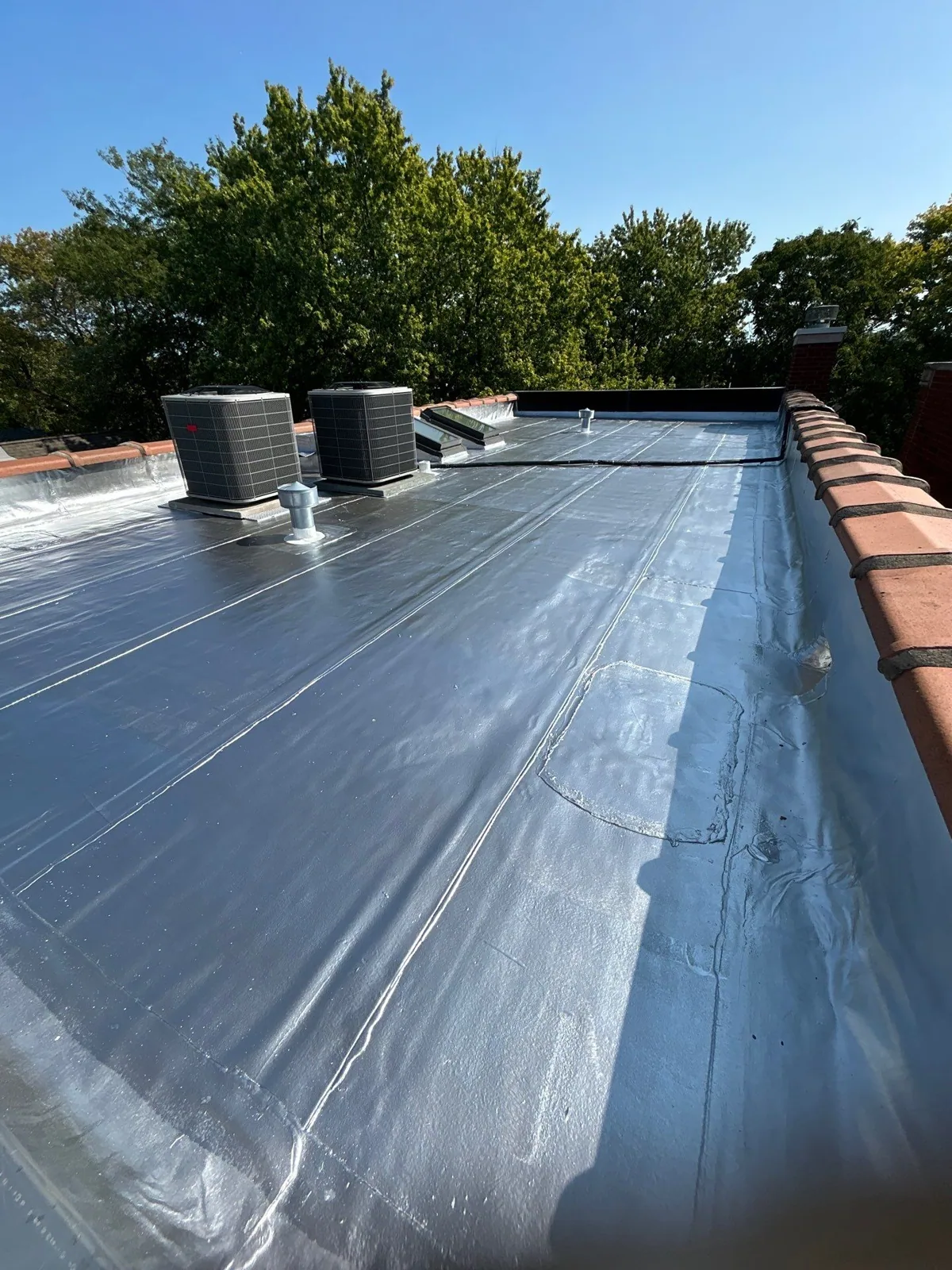
Commercial Membrane Puncture Repair in Bridgeport, CT
Find and repair commercial roof membrane punctures in Bridgeport, CT with a controlled inspection, compatible patch, and documented repair boundary.
A small cut in a roof membrane can admit water long before a ceiling stain appears. On a Bridgeport, CT building, we locate the opening, identify what made it, and check whether the insulation or deck below is already wet. The first walk looks beyond the obvious mark: seams, rooftop equipment routes, access paths, and places where another trade may have crossed the roof.
Foot traffic, dropped tools, fasteners, and maintenance work can leave punctures that look similar from a distance but need different treatment. We photograph the defect, confirm the membrane where possible, and protect an active opening before selecting a permanent material. If water is entering now, our emergency roof response can establish temporary control while the assembly is assessed.
Find the Opening and Its Water Path
We mark each puncture on a roof sketch and check its edges for a tear, lifted coating, crushed insulation, or a patch from an earlier visit. Water can track along a lap or insulation joint, so we inspect uphill before labeling a puncture isolated. A commercial roof inspection can document surrounding details when the damage sits among several older repairs.
Bridgeport's West Side and West End include a district south of I-95 with light-industrial, heavier industrial, and commercial uses. The industrial mix makes equipment routes and loading useful questions for the site contact. We note where maintenance personnel walk, where materials are staged, and whether a service path crosses the damaged field. The repair plan must account for recurring roof traffic.
Separate One Puncture from a Traffic Pattern
A single impact and repeated foot traffic call for different work. We check nearby walk pads, ladders, access doors, and equipment service zones for signs of recurring movement. A puncture beside a compressor may involve a dropped part or a sharp object; a series of marks along a route suggests that the path needs protection as well as repair. We price the puncture separately from any walkway work.
Before opening the assembly, we confirm who uses the roof and what must stay available during the work window. If a mechanical contractor is scheduled, we coordinate the access path and keep tools and removed fasteners out of the drainage route. A preventive maintenance visit can map recurring access points and establish a check after equipment service, but it does not replace a repair to an active puncture.
Patch the Confirmed Roof System
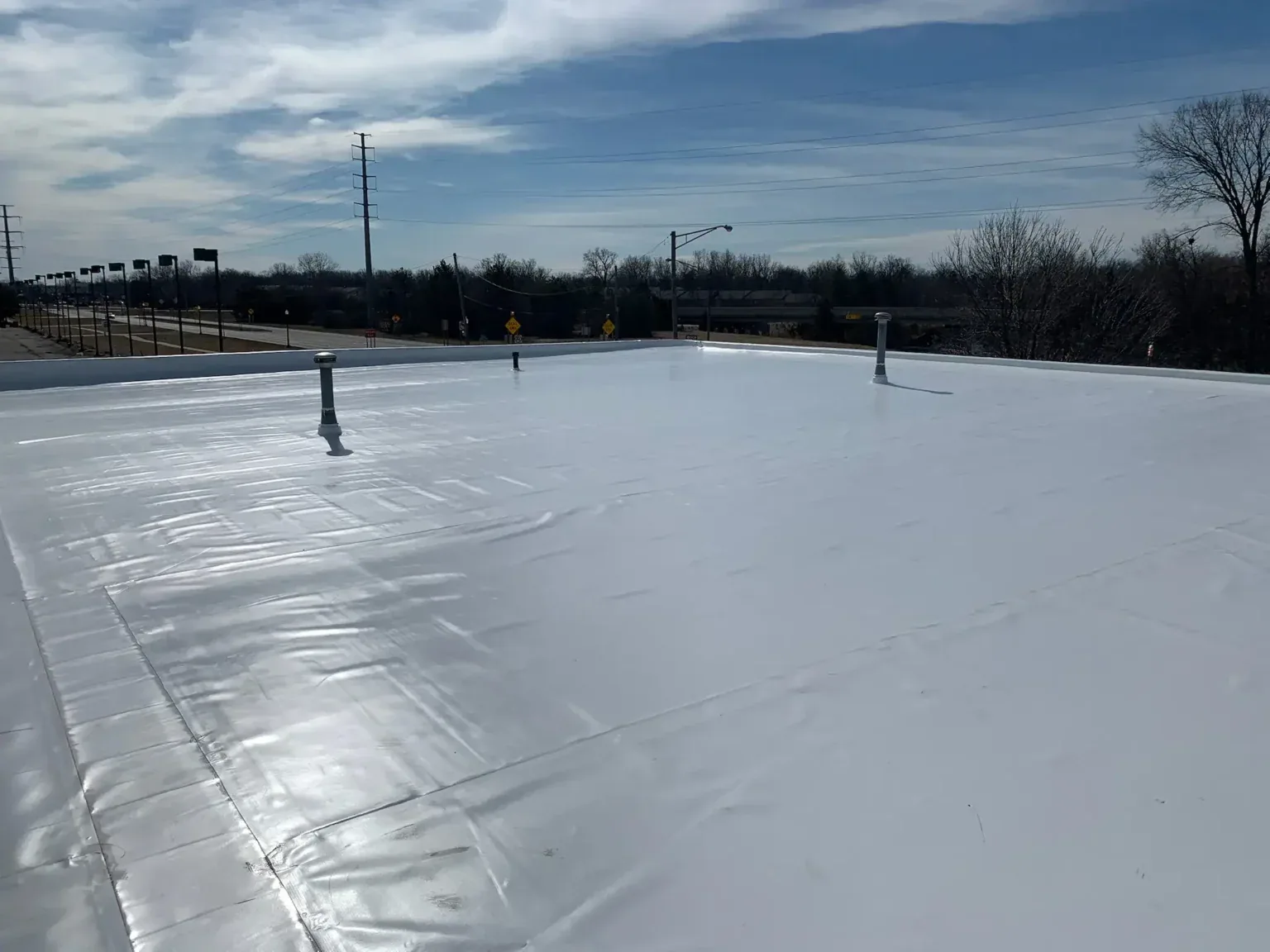
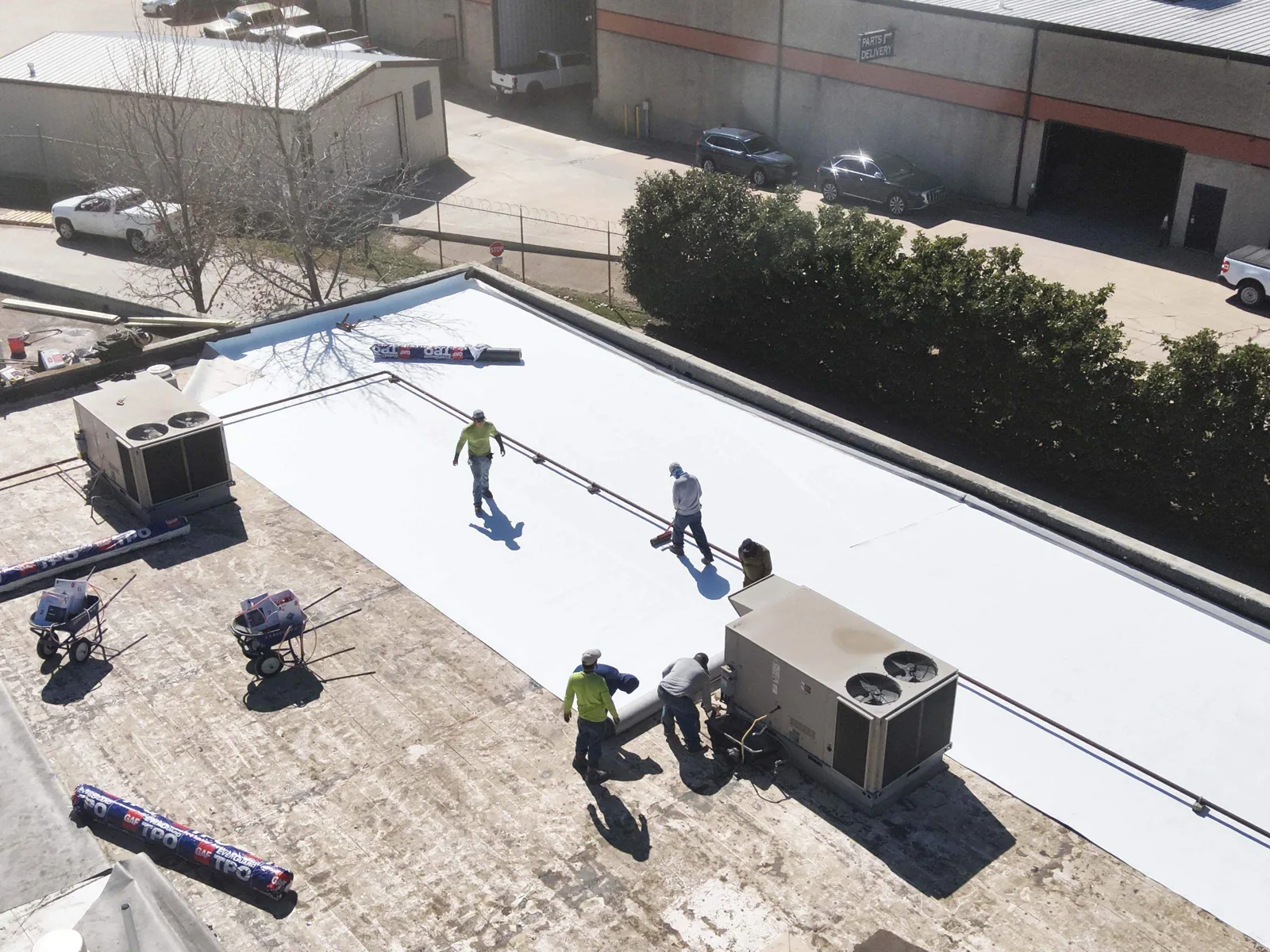
Repair materials have to suit the existing membrane and its condition. A thermoplastic roof may call for compatible sheet material and a prepared weld. EPDM repairs use their own cleaning, primer, tape, or adhesive requirements. Coated surfaces and modified bitumen require different preparation and tie-in details. We confirm the assembly from records and field observation, then state the patch dimensions, overlap, and substrate preparation in the scope. A generic sealant dab can hide the opening without restoring a dependable bond.
If the puncture reaches wet insulation, loose cover board, or a damaged deck, we stop at the approved boundary and show what needs to change. The owner can then decide whether to replace the affected layers or authorize a broader investigation. A TPO system review helps frame the compatible detail once that material is confirmed. EPDM and other systems need their own tie-in method. For an adjacent split lap, the seam assessment records a separate condition rather than blending it into the puncture repair.
Keep the Work Area Dry and Protected
We set the daily opening limit from the actual roof, forecast, and crew capacity. The puncture is not enlarged until the repair materials and temporary protection are ready. If removal exposes damp layers, they are not covered with a new membrane; the area is dried or protected while the next scope is approved. A drain stays open, and temporary materials are secured so they do not become loose debris during a weather change.
Mark the puncture against the roof plan, then inspect nearby membrane for loose edges, displaced ballast, or work traffic that could create another opening. The field lead checks conditions before preparing a weld or adhesive surface and confirms the tie-in can remain protected through the shift. Drainage matters after a puncture repair as well, so drain and scupper work can be coordinated if runoff is obstructed near the affected zone.
Keep Records Useful Across the Property
We record the roof zone, membrane type if confirmed, puncture dimensions, suspected cause, layers replaced, patch material, and photographs of the completed tie-in. If the owner maintains buildings in Fairfield and Stratford, separate maps and roof records keep each property's repair history clear rather than carrying a puncture location from one building to another.
Downtown Bridgeport planning priorities include office, retail, mixed-use, transit connections, and adaptive reuse of historic structures. In that setting, we confirm the receiving route and pedestrian controls at each property before staging a puncture repair. For an individual property, the repair still follows its own loading, tenant, and safety conditions. We confirm those limits with the facility contact, then give maintenance staff a next inspection trigger tied to the repaired area. The Bridgeport service area is the starting point for arranging that roof walk.
Verify the Patch Before Handoff
After the repair has set or cooled, the crew checks the tie-in using the method appropriate to that system. We verify the patch reaches sound material, its edges are bonded or welded as required, and the surrounding field remains intact. The closeout shows what was repaired and what remains outside the approved scope. If the opening revealed concealed moisture or another defect, the record names the condition and the decision still needed instead of presenting a partial repair as full resolution.
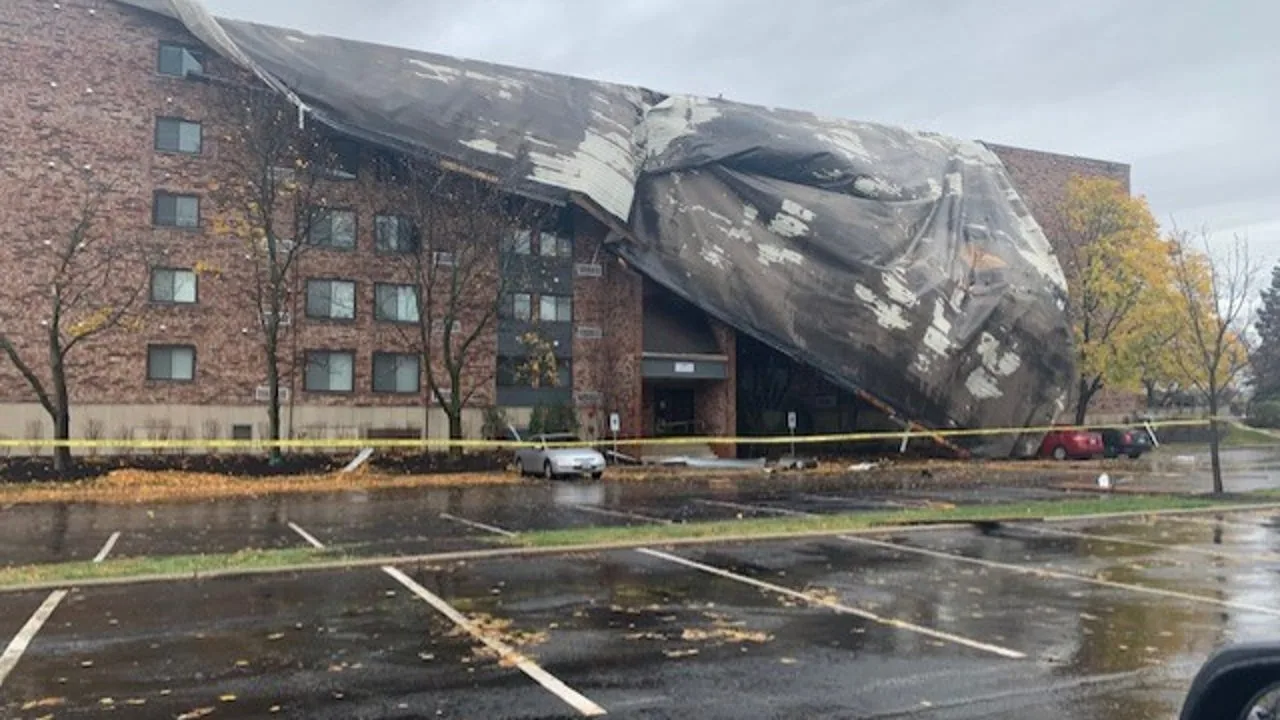
Where the puncture was caused by routine service access, a marked path or protective walkway can reduce the chance of another impact. Where the source was a loose component, the facility contact can pair the repair record with the equipment work order. If the hole sits beside damaged flashing, our insulation and cover-board review can document the layers, while an opening after a larger roof event needs its own containment and repair limits.
Questions and Answers
How do you tell a puncture from a seam split?
We inspect the shape and direction of the opening, probe the nearby lap where appropriate, and look for a linear separation or bond failure. A puncture is usually a discrete impact point; a seam defect follows the lap. If both appear, they receive separate locations and repair details in the scope.
Will a patch fix wet insulation below the membrane?
A surface patch stops water at the membrane only when the underlying assembly is suitable for closure. We check for moisture or crushed layers and identify any removal needed. If concealed conditions remain uncertain, the report sets the next opening or test rather than covering wet material and leaving the issue undocumented.
What happens if roof traffic caused several punctures?
We map the defects and compare them with equipment routes, ladders, and walk pads. The repair restores each damaged area, while a separate recommendation can address the traffic path. Keeping those scopes distinct lets the facility manager authorize the immediate repair and decide how to prevent repeat impacts.
Can you repair an older membrane with a different patch material?
The patch must bond or weld to the existing assembly, so we identify the membrane and check its condition first. A material that looks compatible may not have the right preparation or tie-in method. The written scope names the selected approach and calls out any unknown layer that could change it.
What should be included in the closeout record?
Keep the location, dimensions, repair material, replaced layers, photographs, and any remaining observation with the roof plan. If access traffic contributed to the damage, note the path and agreed protection. That record gives maintenance staff a clear point to revisit after the next service call or inspection.
Related Roofing Work

Document the Puncture and the Tie-In
Have the roof plan, known membrane type, repair history, equipment schedule, and access rules ready. We will locate the opening, check the layers below, and provide a written repair boundary with any conditional work identified.