Commercial Fire Damage Roof Repair in Bridgeport, CT
Commercial fire damage roof repair in Bridgeport, CT begins with a safe roof walk, controlled dry-in, and a written boundary for permanent work.
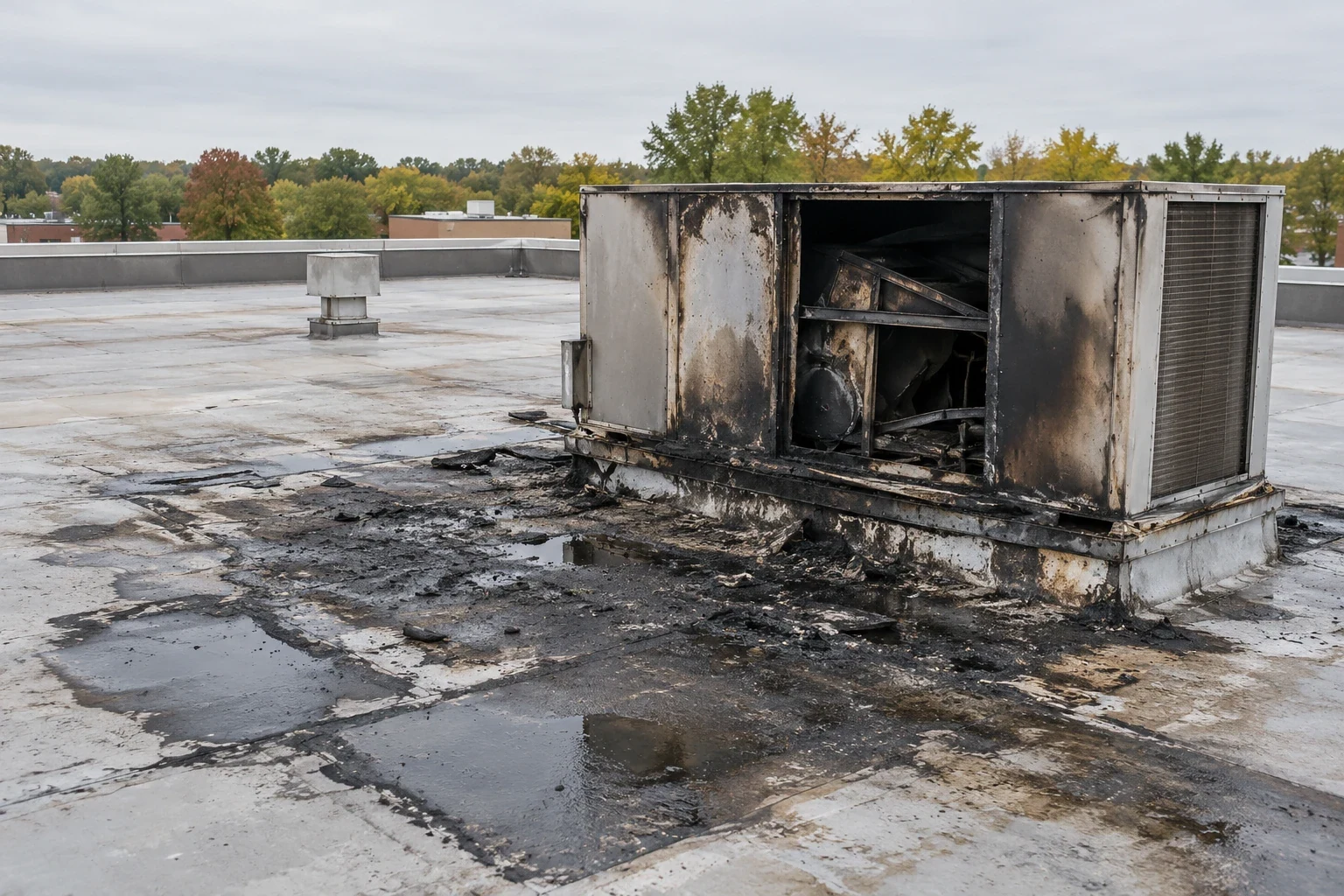
A fire can leave a roof punctured, blistered, smoke-stained, or open at a transition, while the area below still needs to operate. In Bridgeport, CT, we first identify where responders worked, what remains unsafe, and which interior zones need protection. The roof walk separates heat damage, suppression-water exposure, debris impact, and openings that require a temporary cover before the permanent scope can be set.
The first work window sets safe access, staging, and a dry-in plan that keeps drainage open. We map the affected area and mark conditions needing owner, adjuster, or code review. A commercial emergency response can secure an active opening while inspection determines what can be repaired and what must be removed.
Separate Heat Damage from Surface Marks
Smoke can discolor a roof surface without proving that the membrane lost its bond or strength. Heat, flame, falling debris, and water from suppression can create different conditions within a short distance. We map the area and inspect seams, flashings, insulation edges, penetrations, and accessible deck. Notes separate residue from softened, warped, split, or detached material. A broad replacement assumption can miss a small opening, while a surface patch can leave damage beneath it.
Bridgeport's West Side and West End include commercial-industrial corridors such as State Street and The Smile, the area between Railroad Avenue and I-95. A building's use and access rules matter more than the corridor name, so we confirm loading, rooftop equipment, occupied floors, and the route for moving debris before work starts. A commercial roof inspection can document surrounding conditions beyond the visibly affected area when the owner needs a wider condition record.
Protect the Opening Before Permanent Repair
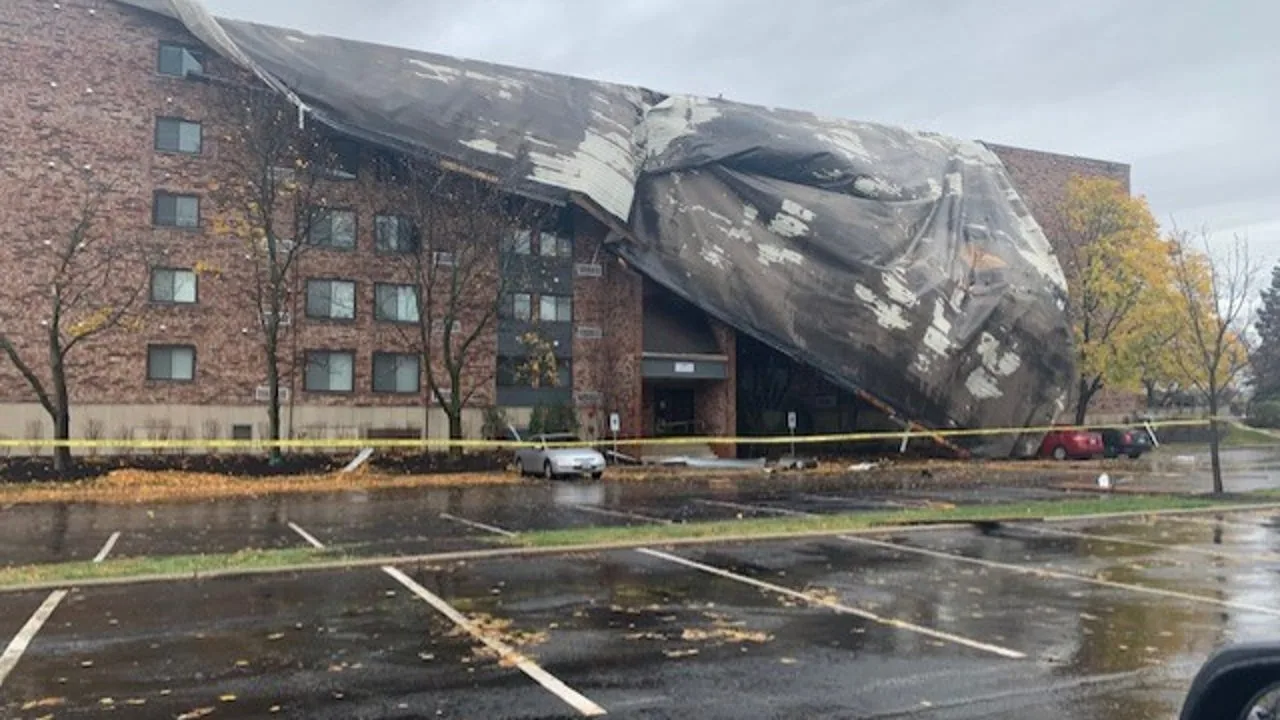
Once the unsafe area is identified, temporary protection must shed water without trapping moisture or covering a drain. We define how far the damaged material extends, secure a temporary cover to sound points, and record its limits so the next crew knows what remains provisional.
After a fire, keep the temporary cover independent from the permanent repair decision. Document the protected area, the material used, and what must be rechecked before the assembly is closed. Bridgeport's precipitation and winter snowfall normals make a defined dry-in stop point useful after a fire. Before opening layers, we check current conditions, set a manageable work zone, and keep water moving toward the drainage route. Where roof runoff details need attention, drain and scupper service can be coordinated with the repair boundary.
Trace the Repair Through Each Roof Layer
A permanent scope starts with the assembly, not the color of the top surface. We identify the membrane or surfacing where possible, then check whether heat affected only the exposed layer or reached cover board, insulation, or deck. A controlled opening may be needed to see the layers beneath. Wet insulation, distorted metal, loose fasteners, or a damaged deck changes the work description and can require a separate approval. The written scope states what is confirmed, what remains concealed, and what condition would trigger a change before more material is removed.
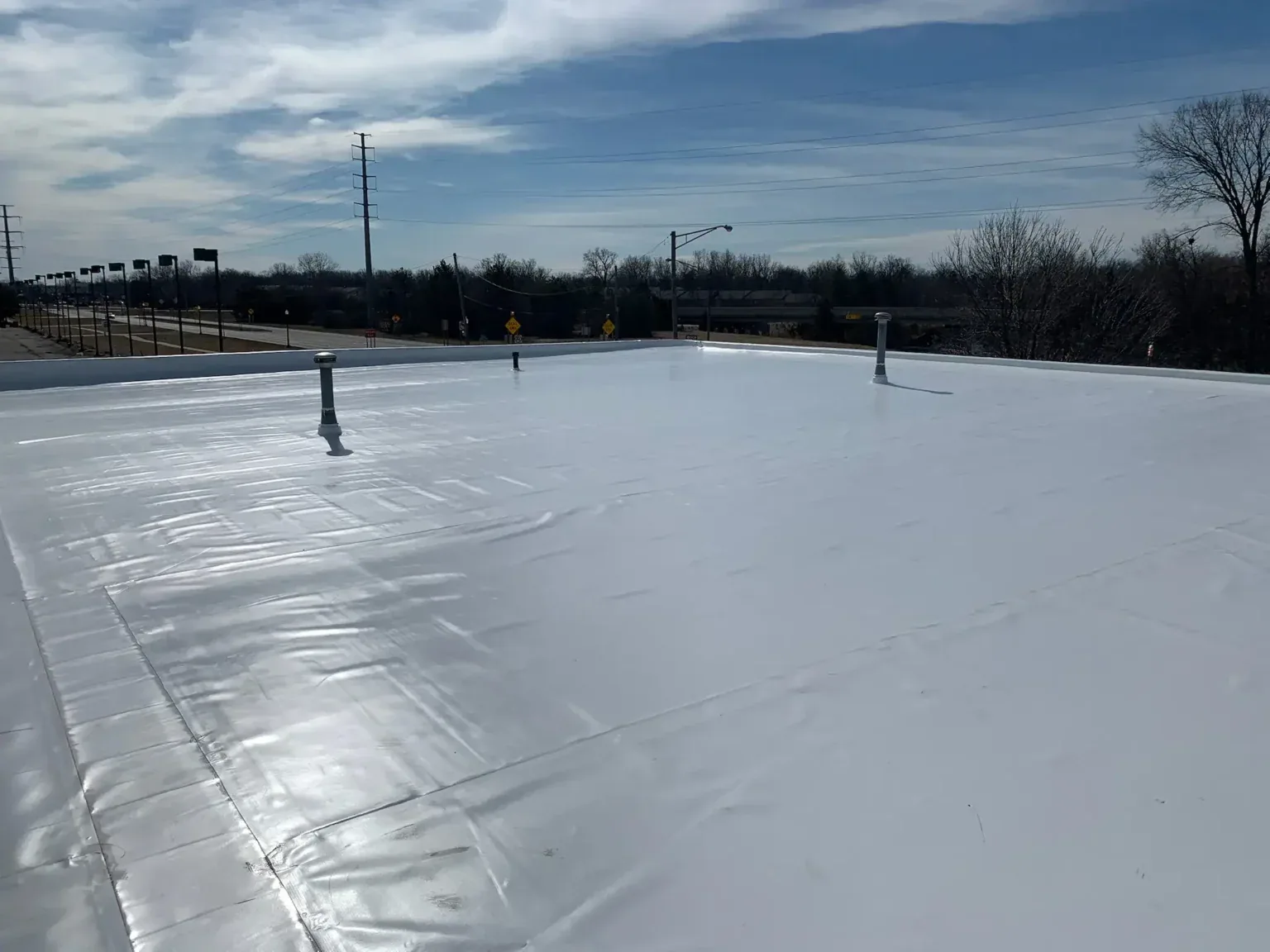
On a thermoplastic roof, a repair may require compatible sheet material and a prepared weld. EPDM, modified bitumen, built-up roofing, metal, and coated assemblies need different tie-ins. We do not bridge an unknown transition with a generic patch. For a confirmed membrane assembly, the TPO repair approach can inform the material sequence. EPDM, modified bitumen, and other systems need their own compatible tie-ins.
Keep Occupied Areas and Trades Coordinated
Fire recovery can involve restoration crews, mechanical trades, electricians, inspectors, and building staff moving through the same property. We set an access path, a roof staging zone, and a daily limit for exposed material before the work begins. The facility contact confirms which equipment must remain available and which interior spaces need notice. If a curb, conduit, or exhaust opening was affected, its temporary closure and permanent flashing must be coordinated with the trade responsible for that equipment.
A portfolio spanning Fairfield and Stratford needs separate roof maps and closeout records for each property. Commercial shipping, ferry service, fishing, and recreational boating use the Port of Bridgeport. We confirm delivery timing and circulation with the property contact rather than infer it from a location. Where tenants remain in place, an occupied-building work sequence can help set daily boundaries and interior communication.
Price the Confirmed Work and Hold the Unknowns
Repair cost and duration depend on how much material must be removed, whether insulation or deck replacement is needed, the roof assembly, the number of penetrations and transitions, and the access equipment required. The estimate separates the known repair from conditional work. If a concealed layer is not visible until removal, the scope describes how the condition will be photographed, protected, priced, and approved before the crew continues. This gives ownership a decision point instead of folding uncertain substrate work into a vague allowance.
For many Bridgeport building alterations, zoning review begins with a plan; commercial or industrial submissions call for building details and a defined work scope. The owner or design team determines the applicable filing; we can provide roof-area descriptions and repair limits for that review. A replacement evaluation is appropriate only when the documented condition and repair economics support a broader project, not simply because a fire occurred.
Leave a Clear Record for Reoccupation
Closeout records repaired locations, materials, tie-in limits, photographs, and any remaining observation. We note whether a temporary cover was removed, what was found below it, and which inspection trigger should bring the area back onto the maintenance schedule. If the owner has adjuster or restoration records, those can be kept beside the roof plan without substituting for the field condition. The handoff identifies the next person responsible for interior checks and any roof follow-up after additional trades finish.
For a repair that touches perimeter metal or a wall transition, our flashing failure repair work can be scoped at that interface, with one boundary for each condition. If the roof also has open laps, the seam repair assessment addresses that separate defect. A Bridgeport roof walk gives the facility team a starting point for documenting the affected area and setting the next written decision.
Questions and Answers
Can the roof be patched before the full fire assessment is complete?
A temporary cover can control an opening when the area is safe to reach and the responsible parties permit the work. We mark it as provisional, keep drainage open, and document its limits. Permanent repair waits until the affected assembly and any required review are clear enough to set a durable tie-in.
Does smoke discoloration mean the membrane needs replacement?
Discoloration alone does not establish membrane failure. We check bond, flexibility, seams, flashings, and the layers beneath before recommending removal. The report distinguishes staining from damage that changes water tightness or material performance, then explains what further opening would resolve any concealed question.
How do you handle insulation that is wet from suppression water?
We identify the wet area and its relationship to the opening, then determine whether it can be accessed and removed within the approved scope. Damp material is not covered by a new membrane. If moisture extends beyond the visible damage, the boundary is documented and presented for a decision before the repair proceeds.
What roof information should the owner provide?
A roof plan, system records, photographs from the incident, restoration notes, access restrictions, and known equipment locations help us prepare the walk. We still verify conditions at the roof. Those records help separate the documented event from the current repair scope and keep the written handoff useful to the next trade.
Can roofing work continue while other recovery trades are on site?
It can when access, hot-work restrictions, overhead activity, and interior protection are coordinated. We agree on the work window and staging area with the site contact, then limit the exposed roof section to what can be protected that shift. If another trade controls the area, the roof sequence pauses at that boundary.
Related Roofing Work
Set the Roof Repair Boundary
Have the roof plan, incident photographs, system records, access restrictions, and restoration contact ready. We will inspect the affected layers, secure any open area, and provide a written repair scope with confirmed and conditional work separated.