Commercial Roofing in Easton, CT
Commercial roofing in Easton, CT pairs a careful roof walk with a controlled access plan, repair boundary, and written handoff for facility teams.
On an Easton commercial roof, the first useful move is to map the affected area before anyone lifts a patch or opens the membrane. We confirm roof access, the room below, and the person managing the work window. Then we inspect the assembly around the reported condition, follow seams and penetrations, and mark the limit of what is visible. The owner gets a defined next step, not a repair recommendation detached from the roof zone.
At each Easton property, we confirm the roof assembly, material, and access limits during the walk before setting the repair boundary. A commercial roof inspection records the observed condition and the question that remains if the assembly cannot be confirmed visually.
Agree on entry and staging
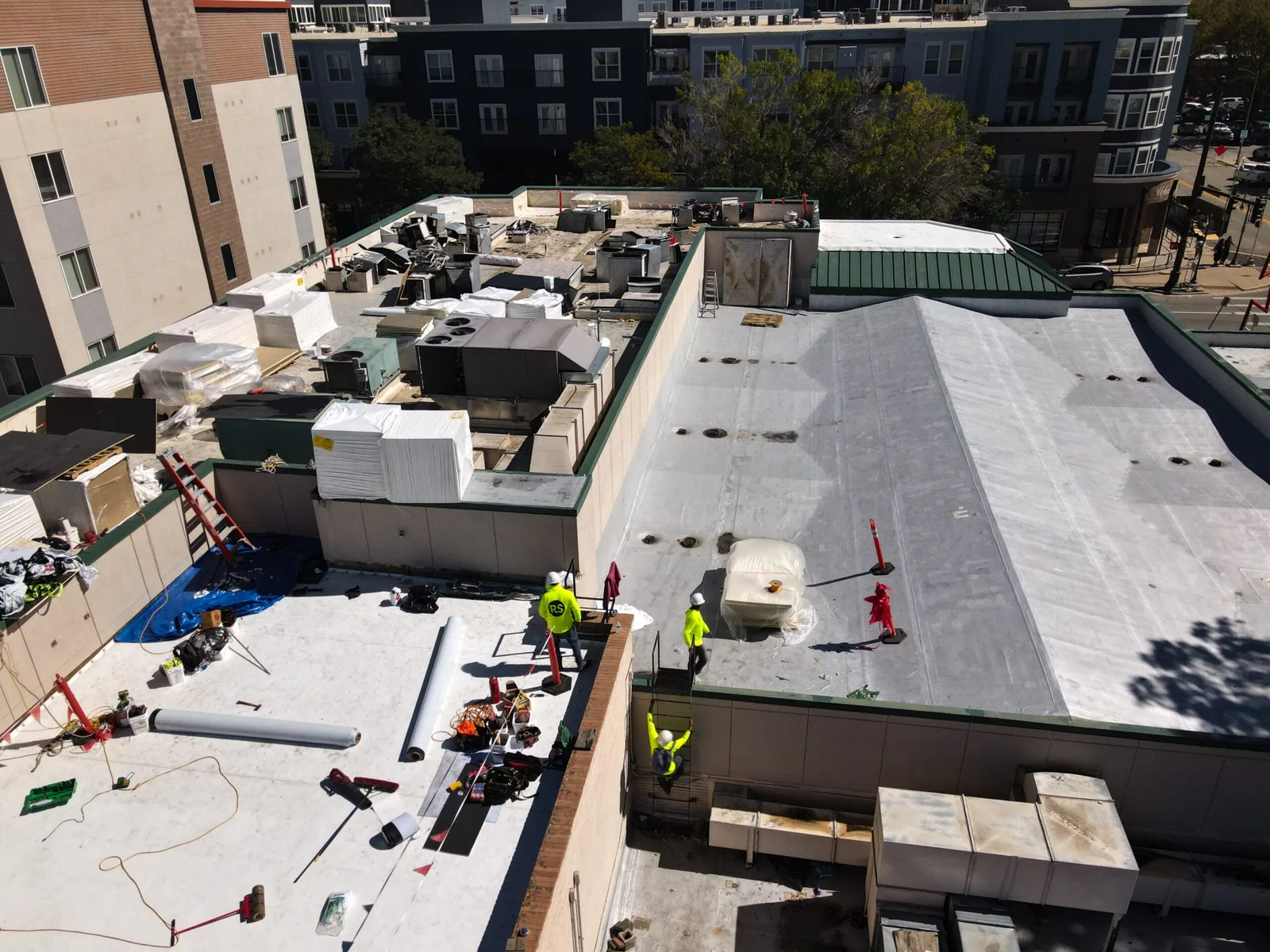
Before a repair date is set, we find out who can release roof access and which areas below need protection. The entry path, ladder or hatch, material lift, and debris route are reviewed with the facility contact. We mark a staging zone that leaves required service paths usable. If equipment must be shut down or a tenant notified, that approval is part of the work window instead of an assumption made at the roof edge.
Connecticut's Coastal Corridor includes Easton and Bridgeport and covers regional roads, bridges, waterways, ports, and airports. We still verify each property's entry route, ground conditions, lift placement, and material-handling rules. A different work order in Trumbull or Stratford requires a separate handoff with that site's contact.
When the building remains occupied, we decide in advance how each roof section will be secured if work pauses. The crew stages dry-in material before opening the membrane, marks the boundary it can close by shift end, and keeps drains or overflow paths clear. A facility contact knows which zone is active and who can approve any expansion. This sequence limits the chance that an interior change or weather hold leaves the opening unresolved.
Test the detail that carries water
A roof leak can start at a curb, seam, drain, edge, or wall transition, and the interior drip may not sit beneath that point. We trace the path above and upslope, looking for separated laps, punctures, loose flashing, and old repairs that have lifted. The roof sketch identifies where each condition appears. If the surface does not reveal the path, we note the unresolved area and propose a focused test rather than assigning a cause prematurely.
Moisture can remain in insulation after the top surface dries. We check whether a proposed patch reaches firm material and whether the adjacent membrane will accept the tie-in. A coating or overlay should not hide a wet substrate. If a test opening is useful, we identify what its size and location will tell us, then wait for the owner's approval. The scope changes only after the condition below the surface is documented.
At metal edges and wall transitions, water control depends on lapping, attachment, movement, and the route runoff takes after it leaves the roof. Sealant alone cannot correct a loose edge or a flashing cut that leaves an open path. We inspect the adjoining material and attachment before specifying a correction. For a failed perimeter, the edge metal and coping repair has to restore the transition and its secure tie-in.
Drainage findings receive their own line in the Diligence Notes. We check bowls, strainers, overflows, low points, and the surface leading to each drain. Debris may call for maintenance; a collapsed or damaged component may require repair; broad ponding needs a separate slope and assembly review. The drain and scupper inspection keeps these conditions distinct so a localized leak correction does not leave a drainage problem unexamined.
Set the work boundary with the owner
A repair can stay local when the affected material is isolated and the surrounding roof remains sound. Several leaks, repeated movement, or moisture extending into adjacent zones can justify phased work or replacement planning. We distinguish confirmed findings from areas that have not been opened. The facility manager can review the map and see what the current scope will correct before choosing a broader option.
Removal depth, deck condition, insulation, flashing, access equipment, disposal, and the amount of roof that can be dried in a shift all affect the work plan. A recover may reduce removal only when the existing layers are suitable and dry. A recover feasibility review checks those conditions; a replacement scope spells out removal, new layers, tie-ins, and temporary protection where a recover is not appropriate.
For a public-use property, the government building roof scope begins with the assembly and operating limits at that address. We list the work zones, protection plan, specified materials, and exclusions so the facility contact can line up review and access before the roof is opened.
Preserve the inspection trail
At closeout, we record the location, surface preparation, materials, repair perimeter, and photographs. Temporary protection is marked as temporary, while untested adjacent areas are listed outside the completed scope. A clear note identifies the next inspection trigger: a recheck after a specific condition, a test result, or a planned review before the next work phase. That detail keeps a future call tied to the right part of the roof.
Easton and Bridgeport both lie in Connecticut's Coastal Corridor; roof findings remain tied to the address and roof zone inspected. The property walk is the basis for the record. We identify the system where visible, note details that were not accessible, and keep the repair boundary clear. If the building team manages several assets, roof asset management can retain inspection history and open decisions by property.
For the first visit, gather the roof plan, reported leak locations, repair notes, access rules, and name of the person who can authorize testing. We will map the concern, confirm the operating window, and write the next decision in terms the facility team can schedule. Nearby Fairfield and Milford properties require their own local site walks. One building's roof map does not stand in for another's.
Questions and Answers
What should we send before a commercial roof visit in Easton?
Send the roof plan, leak location, repair history, access rules, and operating hours. Name who can approve testing. We will map the concern and plan the visit around the building's limits.
How do you decide where to open a roof?
The test location should answer a defined question about the assembly, such as whether insulation is wet or the deck is damaged. We identify the boundary, explain what the opening can confirm, and obtain approval before removing material. Findings are documented before the repair scope is expanded.
What does a roof inspection check besides the leak area?
We inspect seams, curbs, penetrations, walls, edges, and drainage because water can travel before reaching the interior. Each condition is placed on the roof sketch. Untested areas stay separate from confirmed defects.
Can a recover keep the existing layers in place?
Possibly, if the roof surface and underlying assembly can support another system and do not contain unresolved moisture. We check attachment, substrate, and details before recommending it. The scope compares recover with removal and replacement, including tie-ins and protection for each approach.
How do you make the repair useful to the next property manager?
The closeout names the roof zone, observed defect, material, preparation, and photos. It separates untested areas and temporary protection from completed work, then gives the next inspection trigger.
Related Roofing Work

Book an Easton roof inspection
Have the roof plan, leak locations, access restrictions, and prior repair notes ready. We will inspect the affected details, set a controlled work window, and document the repair boundary and follow-up decision.