EPDM Roofing for Bridgeport Commercial Roofs
Evaluate EPDM roofing in Bridgeport, CT by seam condition, roof geometry, drainage, insulation, and the repair access your facility can support.
A leak path on an EPDM roof may begin far from the ceiling stain. We trace the roof section, seam history, flashing transitions, penetrations, and drainage route before choosing a repair or recover scope. The work starts with a map: what is dry, what is suspect, and what must be opened to know more. That map helps the facility director make a decision without turning an isolated symptom into a full-roof assumption.
South of Interstate 95, Bridgeport has light industrial, heavier industrial, and commercial areas. That operating context may affect delivery coordination, but it does not tell us how an individual roof was built. Those buildings can have roof equipment and access requirements that alter a repair window. The Port of Bridgeport also supports cargo and ferry activity, so a property may need material movement coordinated with active circulation. We plan the roof route and staging boundary around the specific site rather than presume a single schedule fits every Bridgeport building.
Read the existing EPDM assembly
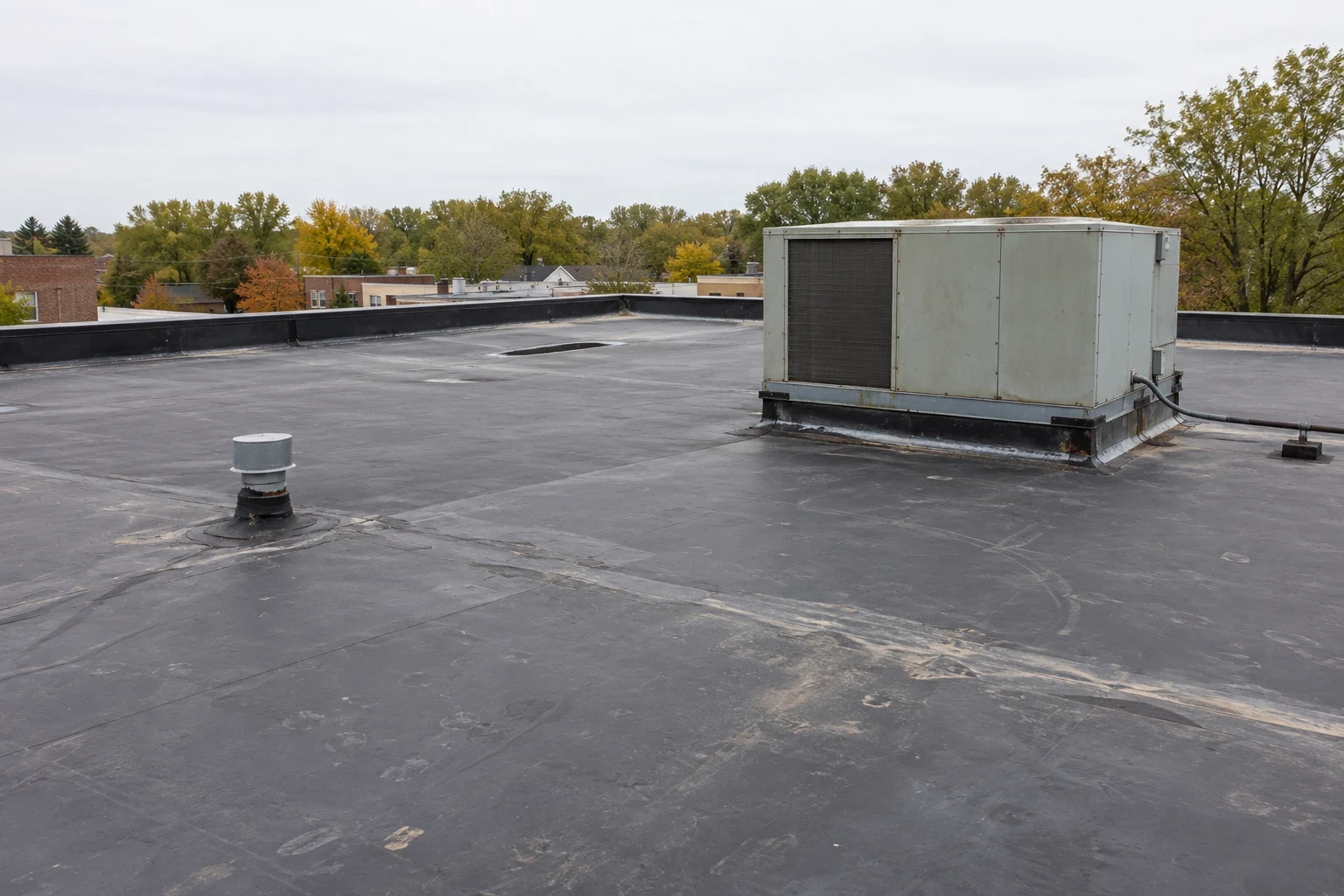
EPDM is a synthetic rubber single-ply membrane used in commercial roofing. Existing roofs vary in sheet size, attachment, insulation, cover board, and repair history. We identify whether seams are adhered or mechanically attached, review field patches and flashing changes, and check whether edge metal remains secure. At openings, a targeted inspection can show whether moisture is confined to one section or has traveled through insulation or deck layers.
The roof record should separate observation from assumption. A dark or stained area can justify investigation, but it does not prove that the membrane has failed across the entire roof. We label the location, take overview and detail photographs, and note what was visible under current access conditions. The commercial roof inspection scope can establish that baseline; where a puncture is identified, the membrane puncture repair process can describe the localized correction.
Separate seam repair from sheet replacement
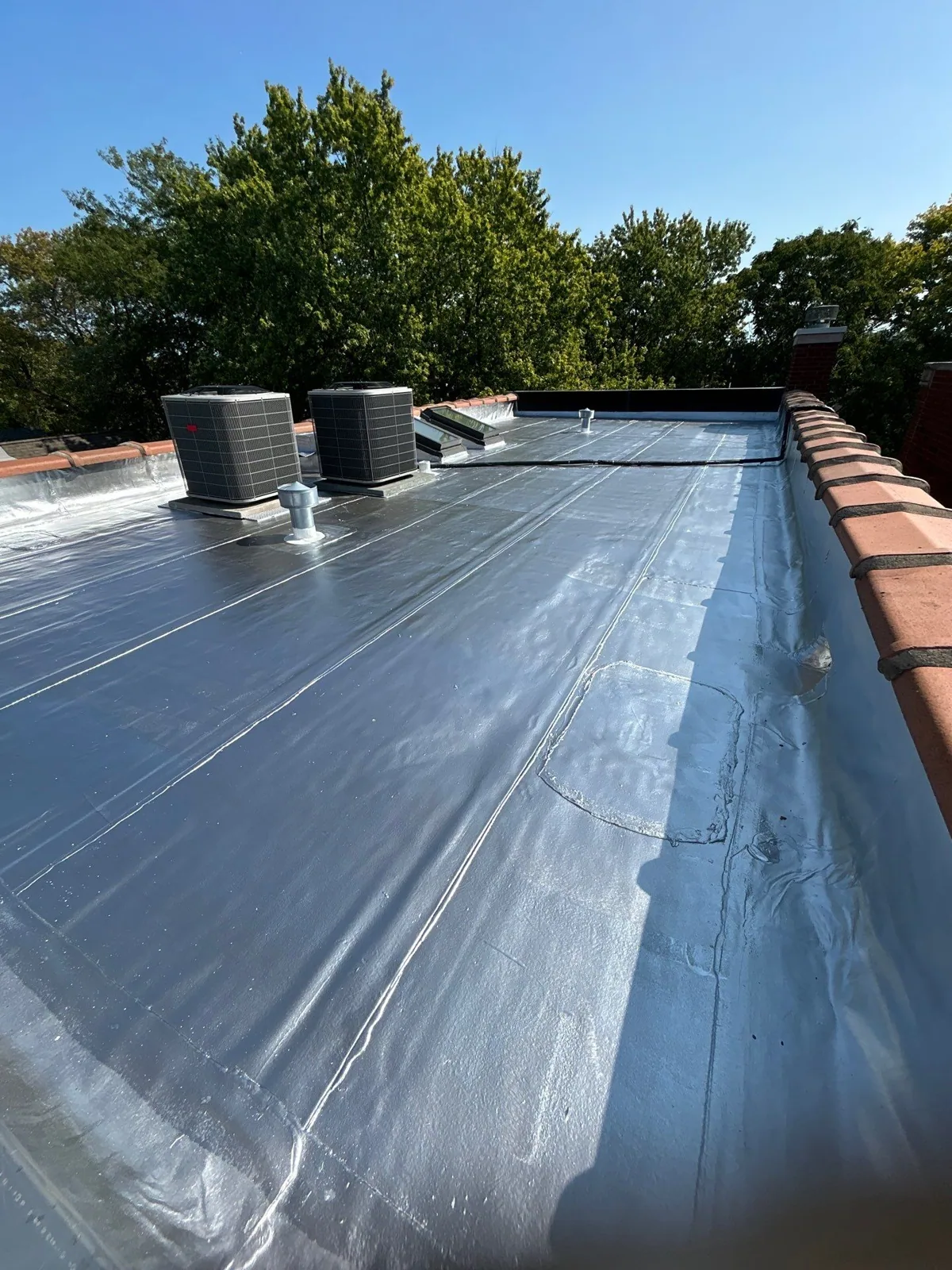
EPDM seam failures are not all the same. An open lap, fishmouth, surface wrinkle, damaged splice, or failed termination calls for a different repair detail. The installer confirms the membrane surface and compatibility of the repair materials, prepares the area according to the system requirements, and documents the completed transition. A patch should extend onto sound material, avoid creating a water trap, and leave a visible edge that can be checked later.
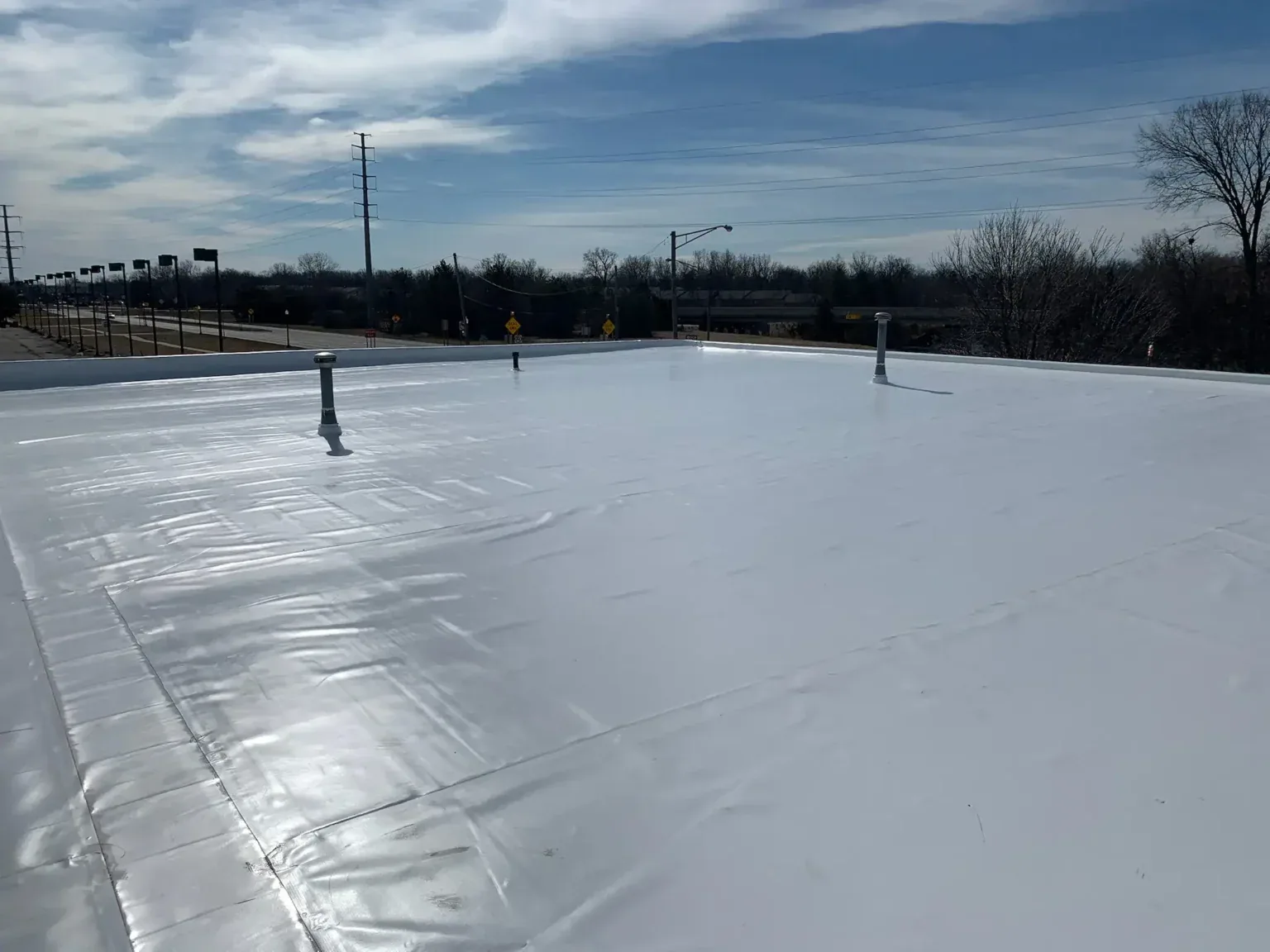
If the sheet has weathered or been repeatedly cut by other work, a patch count can become a useful scope signal. We compare repair locations with the roof map and discuss whether a section repair, recover, or replacement boundary is more defensible. New penetrations need a named trade and a closeout step; otherwise, a sound repair can be compromised by the next equipment change. For broader decisions, the recover and overlay review weighs the existing layers before a new roof is placed above them.
Use the roof map to manage wet conditions
Long-term normals at Bridgeport Sikorsky Memorial Airport average 33.6 inches of snowfall and 44.09 inches of precipitation; current conditions still set the roof work window. On EPDM, trace a leak from the interior symptom to a seam, penetration, or termination, then confirm the membrane is clean and dry enough for the specified repair method. For EPDM service, it reinforces why drains, edge terminations, and temporary protection deserve attention during a repair. We inspect water paths, remove loose debris from the work zone, and set a limit on how much membrane can remain open before the shift ends.
For a leak response, the first goal is to protect the occupied area and prevent additional entry while the source is confirmed. A temporary measure must be described as temporary, with an owner and a follow-up date. We note whether the roof is safe to access, which route avoids equipment, and what indoor location corresponds to the roof mark. The separate ponding-water condition review can help when persistent low areas appear alongside seam concerns, and drain and scupper work can address outlet details.
Plan access around active operations
Repairing a membrane over an occupied building requires more than a crew and a ladder. We confirm roof access authorization, fall-protection requirements, equipment clearances, interior notification, and material staging. On a working industrial property, a delivery route should not conflict with loading or vehicle movement. Where the roof is over offices or mixed-use space, the work notice can identify the affected zone and expected noise without exposing tenant information to people who do not need it.
A written boundary makes small scopes manageable. It identifies what is included, what is excluded, and who can approve a concealed condition or added work. If an existing curb, pitch pocket, or pipe boot is outside the initial repair, the crew records it rather than silently extending the scope. The owner can then compare the requested change with the roof map. A condition report helps preserve those observations for budgeting or a later inspection.
Leave a maintenance record that travels with the roof
EPDM maintenance records should show repair materials, locations, dates, and any limitation that remains. A facility team can use that history to decide whether a recurring leak is new or returns at an older detail. We review repaired seams and flashings during the agreed follow-up, check drain paths, and update the map when rooftop work changes an assembly. If a later contractor must lift or cut the membrane, the record points them to the existing repair boundary.
Along State Street, larger western parcels have industrial and showroom potential, while smaller retail-serving parcels appear farther east. A portfolio touching Bridgeport and Fairfield may use a shared inspection calendar, while each property keeps a distinct roof file. For a compatible comparison, we weigh a proposed TPO assembly against a modified-bitumen system using the same roof map and project requirements. A warehouse roof work sequence should preserve loading access, while a property in Fairfield needs its own inspection map and service record. The next step is to connect that context to the actual roof access and condition.
After mechanical service or sign work, ask the trade to identify every new cut, fastener, or removed support before it leaves the roof. The facility file can then distinguish a later opening from the EPDM repair already completed. We can review those marked locations during maintenance and note whether the new detail is intact, needs correction, or should be watched at the next scheduled visit. That small handoff is easier to manage than trying to reconstruct a roof change from an indoor stain months afterward.
Questions and Answers
How do you locate an EPDM leak when the stain is indoors?
We connect the interior report to the roof zone above it, then inspect seams, transitions, penetrations, and drainage routes that could carry water laterally. The finding is mapped with photographs. If evidence points to more than one possible path, we state what needs testing instead of guessing.
Can an EPDM seam be repaired without replacing the whole roof?
A localized repair can be appropriate when surrounding membrane and substrate are stable and the detail can be prepared correctly. We inspect the seam and adjacent layers, then define the patch boundary. Repeated failures or wet insulation may call for a broader review.
What belongs in an EPDM repair record?
Include the roof-zone location, observed condition, repair material, work date, photographs, and any remaining limitation. Tie the record to the drain or equipment landmarks used by the facility team so future technicians can find the same detail.
Can roof work proceed while a Bridgeport building is occupied?
It can be planned around occupancy if access, noise, staging, fall protection, and temporary dry-in are defined. The facility contact should set notification rules and identify routes that must remain open. The schedule still depends on the roof condition and weather window.
When should an owner compare EPDM with another system?
Compare only after the existing deck, insulation, drainage, and use conditions are documented. The decision can include repair history, detail complexity, future equipment work, and project requirements. A roof map gives the design team a common basis for evaluating alternatives.
Related Roofing Work

Map the EPDM Condition Before Choosing a Scope
Send the roof plan, leak locations, repair history, access rules, and any record of prior recover work. We will identify the observations that support a localized repair and the conditions that need a wider assembly review.