Commercial Roof Inspection in Bridgeport, CT
Get a documented roof review for seams, drains, flashings, rooftop equipment, and repair priorities at commercial buildings in Bridgeport, Connecticut.
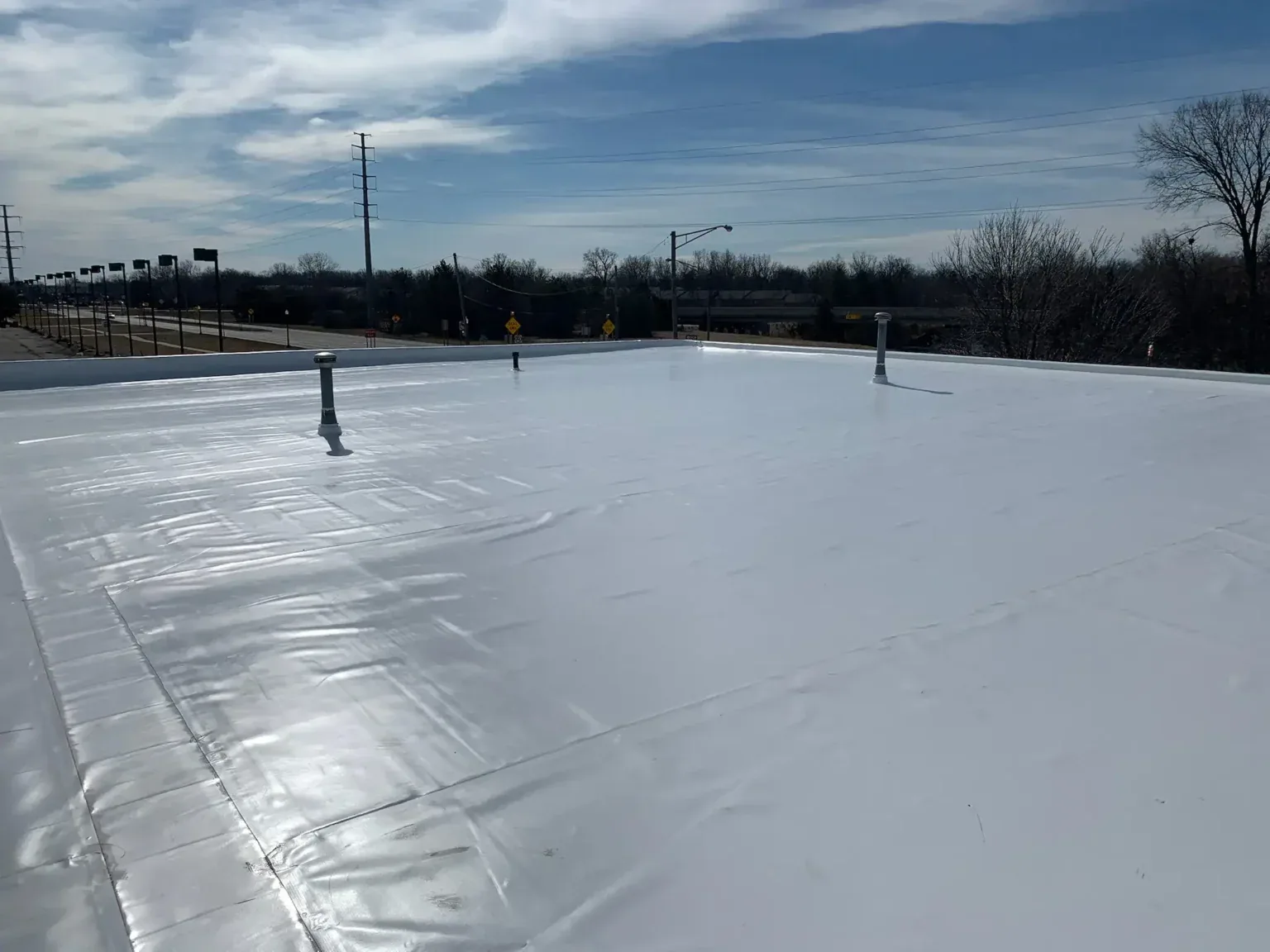
A useful commercial roof inspection answers a practical question: what needs attention now, what can be monitored, and what information is still missing? We walk the accessible roof areas, review visible transitions, note drainage conditions, and photograph defects that could affect service life or building operations. The findings are organized by roof section, not left as a collection of unlabeled pictures. That gives a facility lead a clear starting point for repair planning, budgeting, or a second look at a specific detail.
Bridgeport properties include port-adjacent industrial buildings, offices, retail spaces, and mixed-use facilities. A roof inspection should account for how each building is accessed and used. We confirm the roof hatch or ladder procedure, identify restricted areas, and ask about recent work or active leaks before walking the surface. At a busy loading operation, the crew may need to coordinate a short access window; above occupied offices, the site contact may want interior observations tied to the roof map.
Set the Inspection Boundary
Before the walk, we confirm which buildings and roof sections are included, whether prior reports or repair records are available, and whether the inspection is routine or driven by a current problem. The scope can include surface condition, seams and laps, penetrations, curbs, perimeter details, drains, scuppers, and visible rooftop equipment conditions. We note areas that cannot be reached or safely inspected so the report does not imply full coverage where access was restricted. If a leak is active, we record its interior location and timing, then compare that evidence with the roof above.
For a known water event, our leak tracing service follows likely entry paths and may require a more focused test than a general inspection. A roof condition report can help track a larger property portfolio or multiple roof sections over time. In either case, we separate what was directly observed from what still needs confirmation.
Review the Roof System and Details
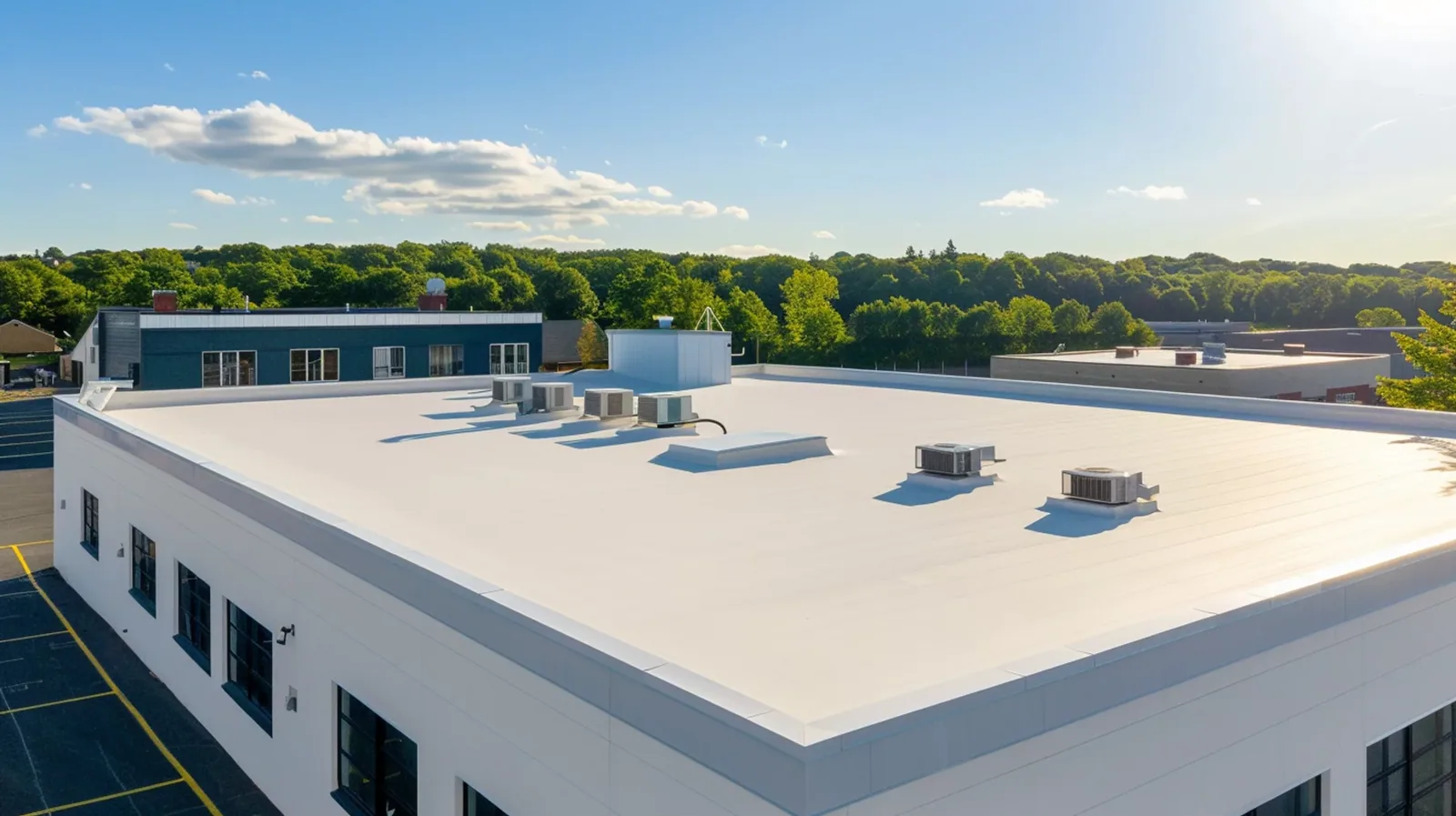
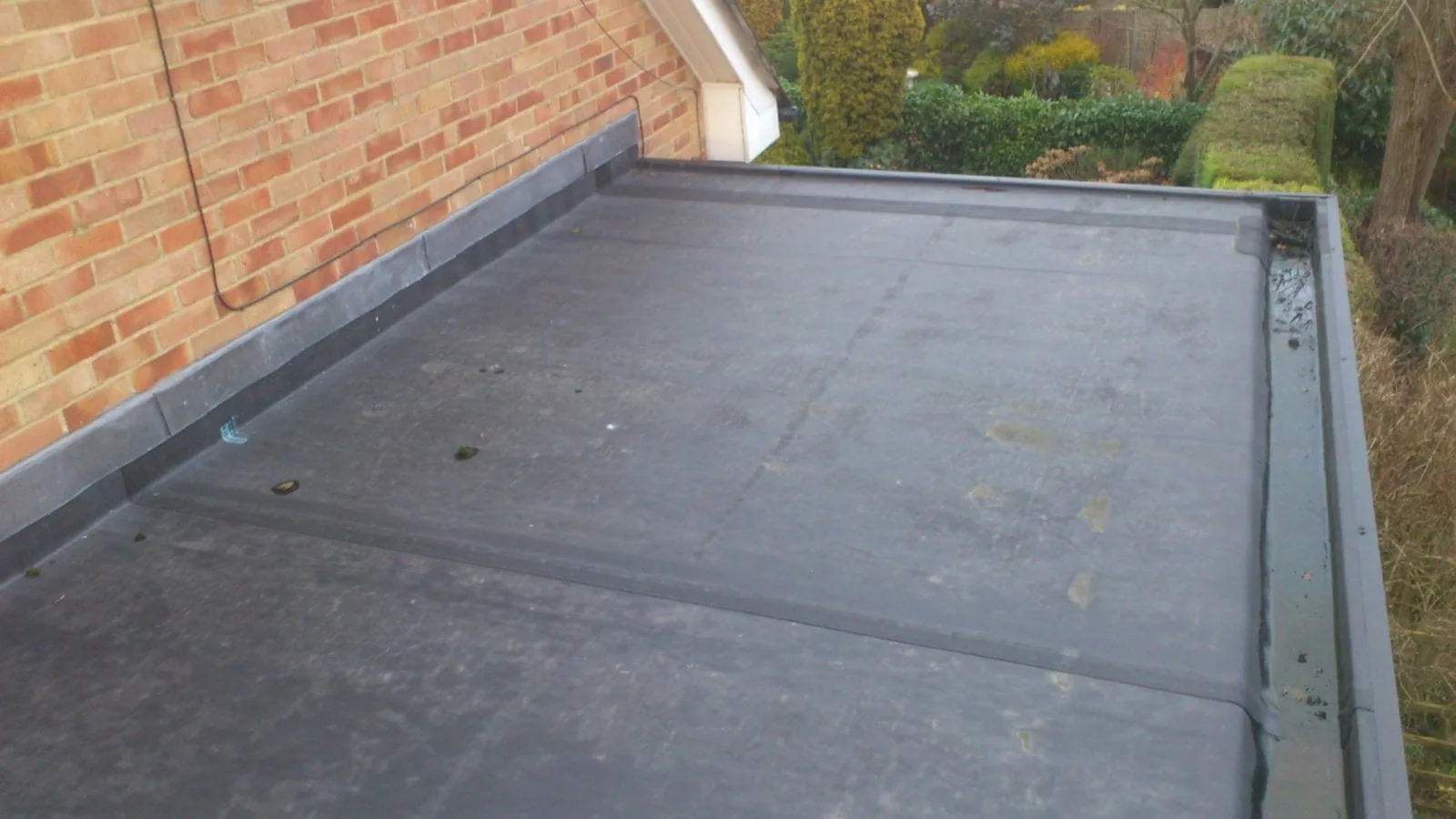
We identify the visible roof surface and inspect details where materials change or movement concentrates. On a membrane roof, that can include laps, patches, drains, penetrations, and transitions to walls or curbs. Metal roofs call for attention to panel seams, fasteners, clips, ridge and eave conditions, and flashings. The condition of an individual detail does not establish the state of the whole assembly, so the report links each observation to its roof section and notes whether additional testing would be useful.
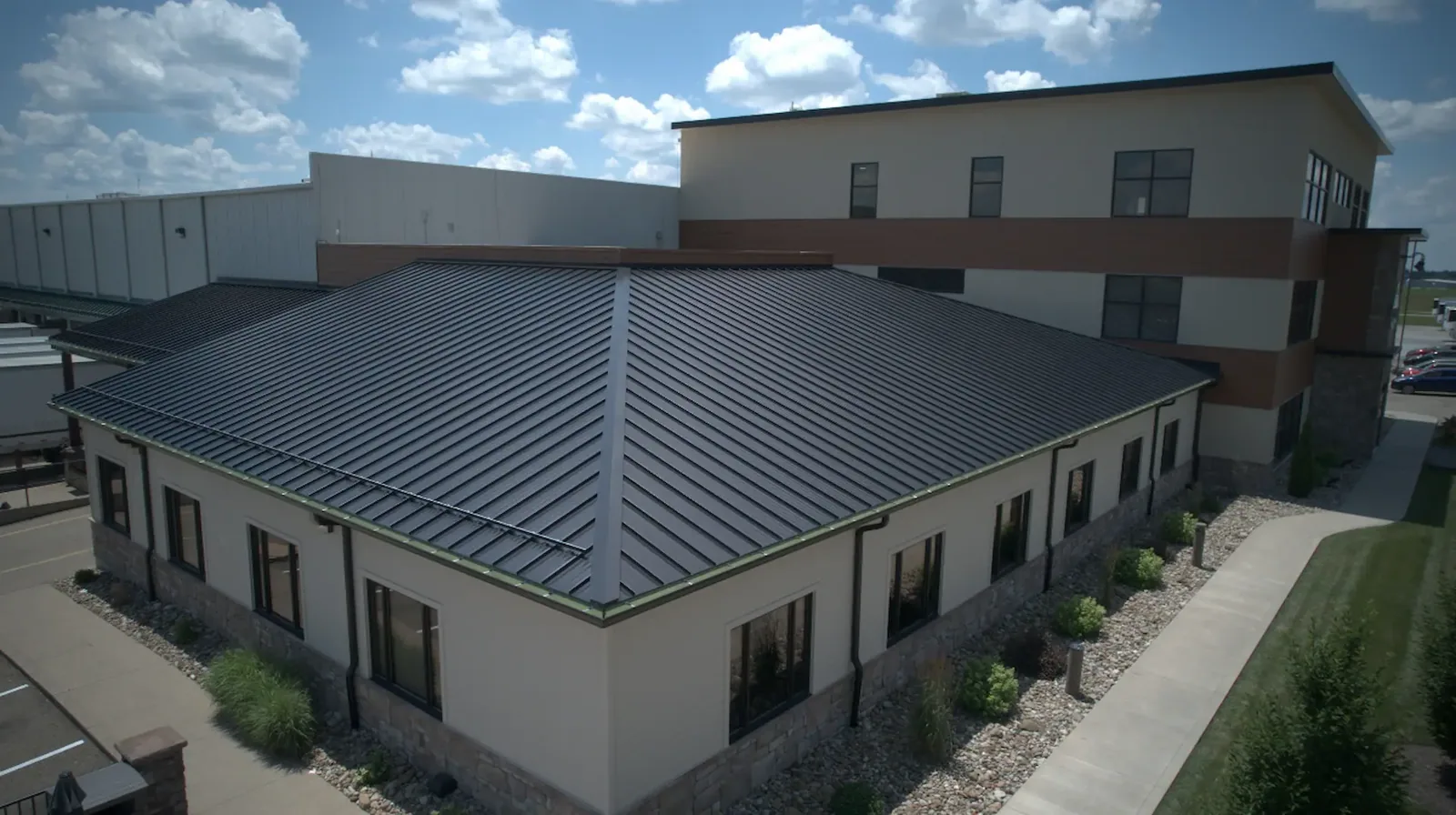
For a roof that may be a standing-seam metal system, we check the panel field and movement-sensitive terminations without assuming that a visible mark indicates a leak. If the existing assembly is PVC, we look at compatible repair history and seam condition. When a separate repair is appropriate, the commercial repair scope should identify the detail, preparation, and intended follow-up.
Check Water Routes and Roof Edges
Drainage observations are specific to how water leaves the roof. We look for visible obstruction, wear around drain bowls, debris at scuppers, low areas, and conditions that could divert runoff toward a wall or penetration. We do not infer structural capacity from a visual walk. If ponding is present, the report notes its location and the conditions observed, then recommends the next evaluation when the cause is not clear. The route from the roof surface to the outlet matters because a clear drain throat can still be affected by a blocked leader or an overlooked overflow path.
Bridgeport’s building repair process may call for a zoning plan with building information and a written scope for commercial or industrial work. That makes a well-defined inspection note useful before a repair is selected: the facility team can see the location, observed issue, and proposed work boundary. We can include a focused drain and scupper review when water management is central to the request. For larger or uncertain areas, an infrared moisture survey may help direct further investigation under suitable conditions.
Use Weather and Repair History as Context
Bridgeport’s recorded climate includes winter snowfall, measurable precipitation, and temperatures that cross freezing conditions. Those facts help shape an inspection window and the questions asked about a recurring leak, but they do not prove a roof defect. We ask whether an issue appeared during rain, after thaw, or following rooftop work. Findings are based on conditions visible during the visit, with weather context kept separate from physical evidence.
Where the inspection follows a storm, we prioritize safe access and note any areas that could not be checked because of wet, icy, or otherwise unsuitable surfaces. A later visit may be more informative once the roof can be walked without creating a hazard. In a building with occupied space below, interior observations can help focus the next roof check. In nearby Stratford or Fairfield, the same inspection questions apply, while each facility still needs its own access and maintenance records.
Connect Findings to the Building’s Use
Bridgeport has industrial areas south of I-95 as well as downtown office, retail, and mixed-use buildings. We ask whether a loading dock, production bay, tenant space, or public entrance sits below a suspect area. That context helps decide which repairs need fast coordination and which can be scheduled around normal operations. It also keeps the report useful to people who did not walk the roof with us.
At facilities in Bridgeport, Stratford, and Fairfield, the roof assembly and building use may differ within a short distance. We do not apply a condition rating to a neighboring property or a whole corridor. Instead, each observation stays tied to the roof section, photograph, and date. If there is a capital-planning question, we can distinguish immediate defects from work that can be budgeted in phases. That separation supports a realistic maintenance plan without turning a visual inspection into an unsupported replacement recommendation.
Leave a Clear Condition Record
The closeout should help a decision-maker act. We group photographs and notes by roof area, describe the observed condition in plain language, and state whether a repair, monitoring check, or additional test is recommended. If access was limited, the report names the uninspected area and why. A prioritization list can separate active water entry from worn but functioning materials. The owner can then decide whether to authorize a focused repair, request more information, or plan a larger capital project.
Share existing roof plans, leak logs, past repair invoices, equipment changes, and access rules before the visit. The more accurately the report identifies where each observation was made, the easier it is to compare the next inspection. For work in the Bridgeport service area, we can also note how the next step fits the building schedule. If conditions call for a replacement review, the roof replacement assessment can build on the recorded findings rather than starting from an unlabeled list of concerns.
Questions and Answers
What does a commercial roof inspection include?
The agreed scope can cover accessible roof surfaces, seams, flashings, penetrations, curbs, drains, scuppers, and visible rooftop equipment details. The report records observations by roof area and identifies access limits. It is a visual review unless testing is separately included.
Can an inspection tell us the remaining life of the roof?
A visual inspection can identify condition concerns and maintenance priorities, but it cannot promise a precise remaining-life date. System age, assembly details, past repairs, moisture, and ongoing maintenance all affect that decision. Additional testing may be needed before a capital recommendation.
Should we schedule an inspection after a leak?
Yes, especially when the entry point is uncertain or the leak has returned. Share the interior location, timing, prior patches, and whether water is still active. The inspector can compare those details with the roof above and recommend focused testing if a visual walk is not conclusive.
Do you inspect roofs in occupied or operating buildings?
We coordinate access and work boundaries with the site contact. Tell us about production windows, tenants, security procedures, loading routes, and areas that cannot be entered. Those details help sequence the roof walk and any interior checks without interrupting more activity than necessary.
What should we provide before the inspection?
Provide roof plans if available, past repair records, leak locations, building contacts, access procedures, and any active safety restrictions. A short description of what prompted the inspection helps set a useful boundary. We will distinguish reported concerns from conditions observed during the visit.
Related Roofing Work
Get Roof Findings You Can Use
Share the roof area, building access rules, recent repairs, and the decision you need to make. We will define the inspection scope and organize the findings by location and next action.