Wind Damage Roof Repair in Bridgeport, CT
Assess wind damage on Bridgeport commercial roofs, document lifted edges and opened seams, and plan repairs around occupied buildings and active operations.
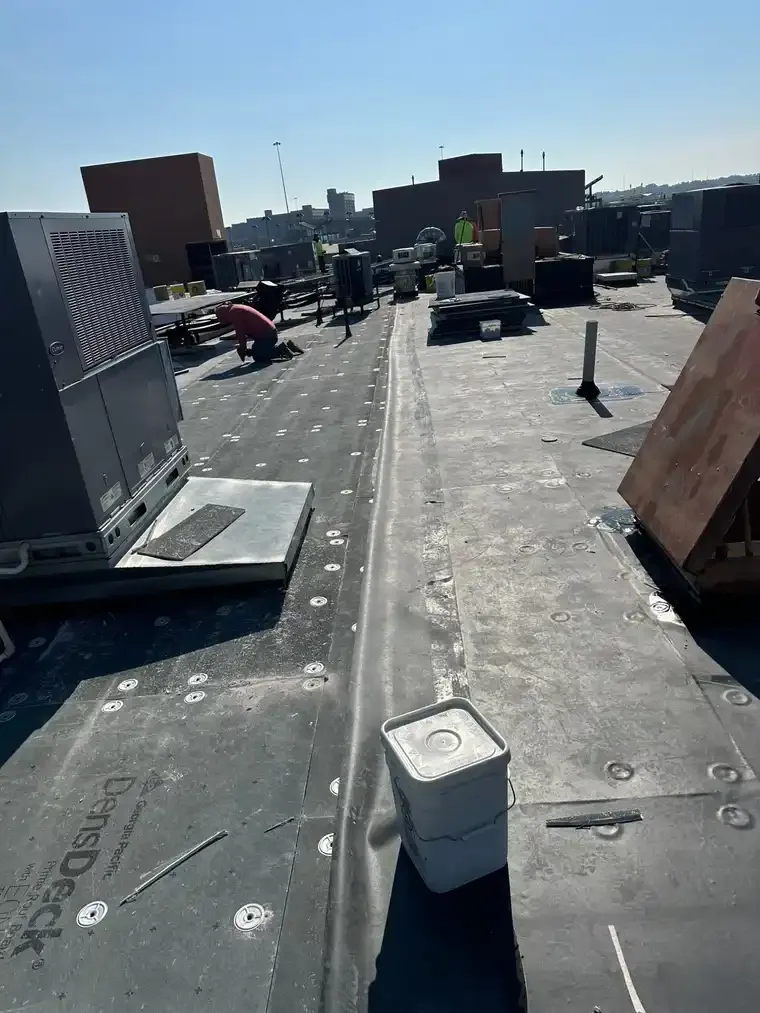
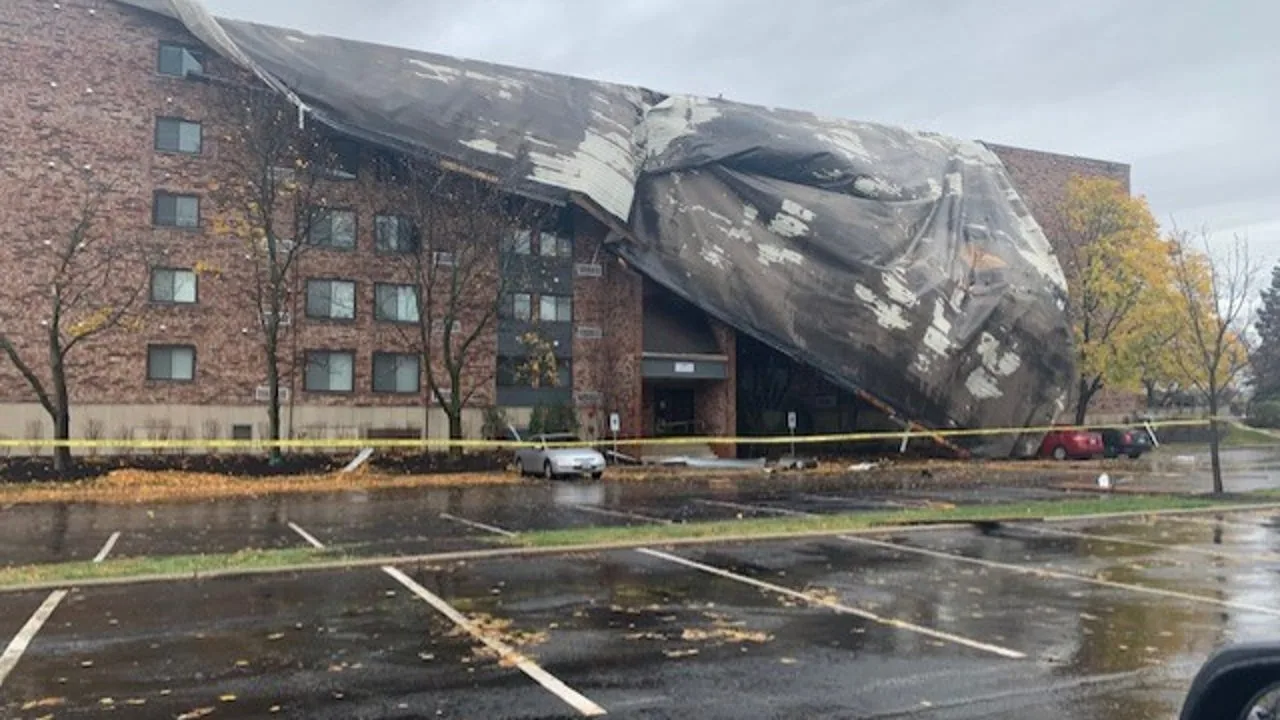
A panel edge folded back or a strip of membrane lifted after a gust gives the facility team an immediate problem: keep water out while the roof is checked. In Bridgeport, CT, the first work window has to account for wind exposure, safe roof access, and the floor or equipment below the damaged area. We establish a controlled route, photograph the condition, and identify what can be secured before permanent repair starts.
Wind can loosen edge metal, pull at a corner, open a seam, or move debris into drains. A mark on the ceiling does not identify which detail failed, so the inspection follows the water path and checks the surrounding field, perimeter, penetrations, and drainage route. Our storm damage roof repair begins with that separation between immediate protection and confirmed scope.
Check the Roof Edge First
At the perimeter, we look for displaced coping, loose fascia, pulled fasteners, open laps, and damage where a roof meets a wall or adjoining construction. Corners and transitions deserve close attention because the attachment and geometry change there. A lifted edge can let wind-driven rain reach insulation or the deck even when the central field appears intact. We mark each affected length and inspect both sides of the transition before assigning a repair method.
The Smile area sits between Railroad Avenue and I-95, where commercial and industrial uses meet. We still mark the access route and work area at the property. Where a loading route or occupied floor constrains the staging zone, our edge metal and coping review can be sequenced with the repair rather than left as an open perimeter item.
Trace Entry Before Closing the Assembly
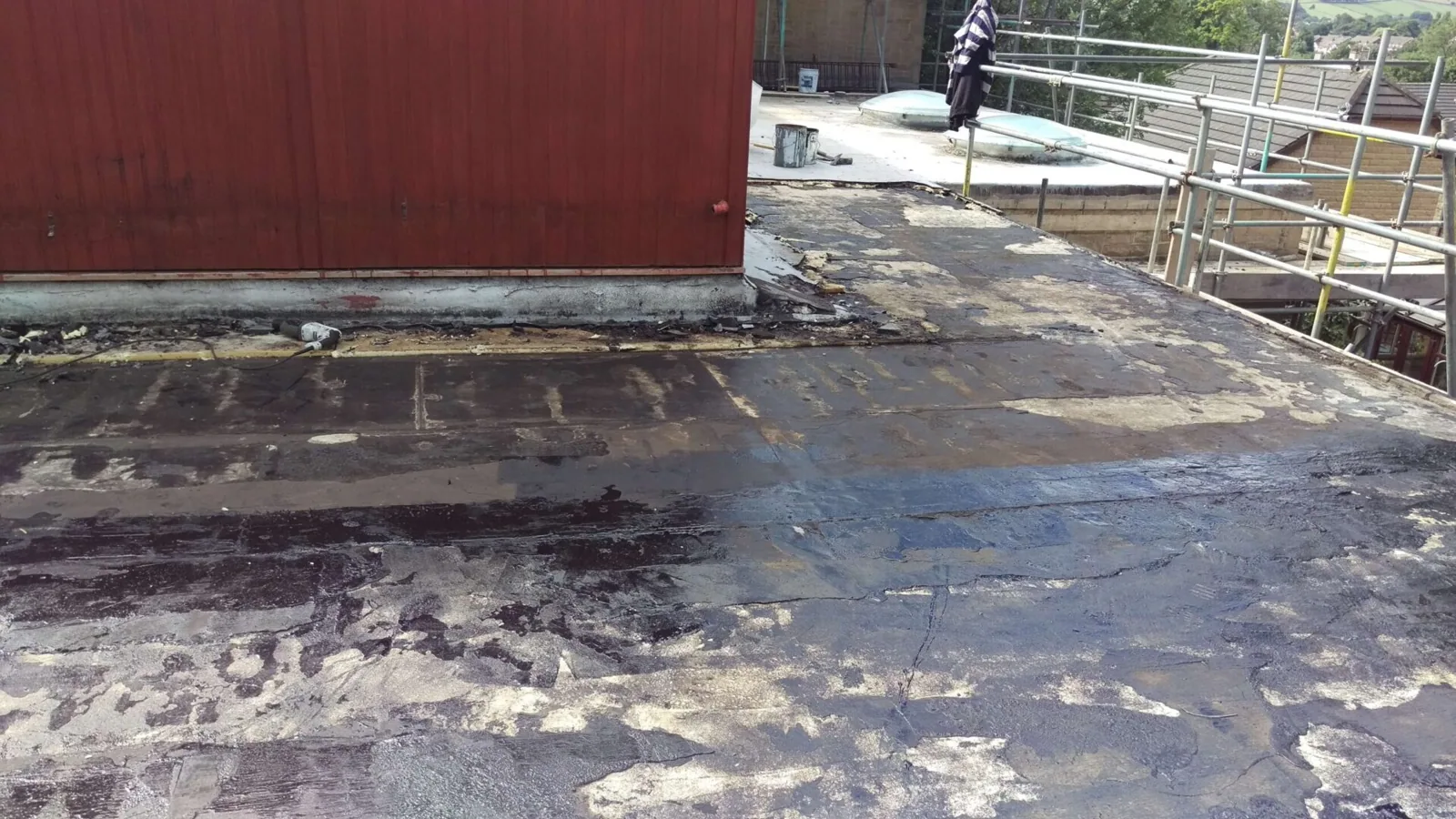
Once loose material is stabilized, the inspection moves uphill from the interior symptom. We test accessible seams and flashings, note punctures or displaced accessories, and check whether water collected at a drain or low area. A wind event can expose an old weakness without being the only cause. The report distinguishes visible impact from pre-existing wear so the repair boundary remains clear for ownership, facility staff, and any claim file.
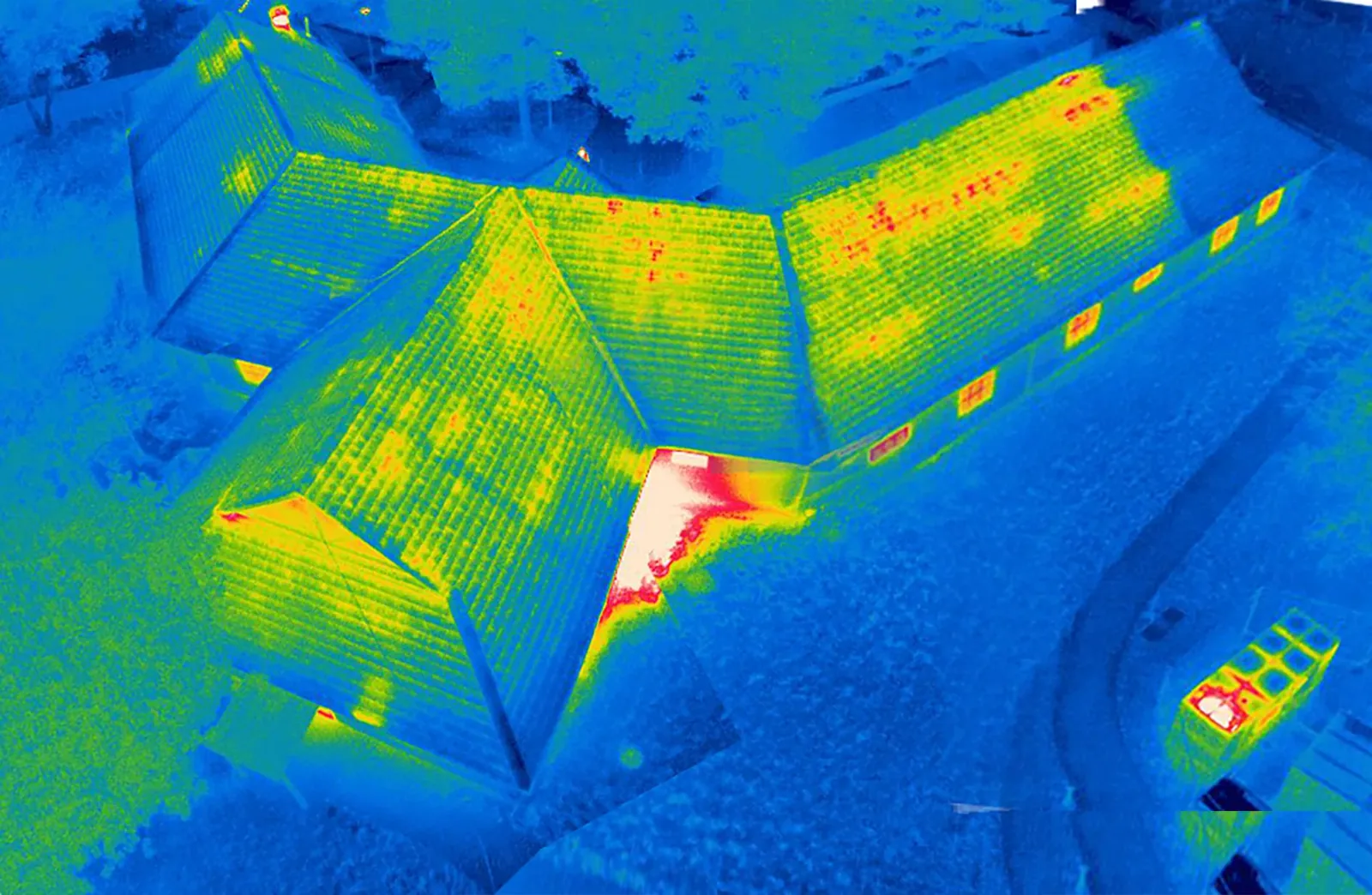
After wind lifts an edge or panel, secure loose material only after confirming a safe work position; photograph the attachment line and record what remains exposed for follow-up. After a wind event, we use that seasonal context to prioritize the drainage route and exposed transitions once the surface is safe to inspect. We document wet insulation and open pathways, then recommend a moisture survey only when it can answer a defined question about concealed wet areas.
Protect the Opening Without Spreading It
Temporary protection should cover the actual opening and remain secure through the next work interval. We select a method that suits the roof surface, forecast, and safe attachment points, then record where the protection begins and ends. A loose tarp can create another wind load or block a drain, so the crew checks its perimeter and the drainage route before leaving. If water is active inside, the facility contact also identifies sensitive rooms, electrical areas, and equipment that need attention.
That handoff matters when freight, tenants, or equipment movements continue below the active roof zone. For an active leak, the emergency response can address immediate exposure while the permanent scope is being confirmed.
Set the Repair Boundary
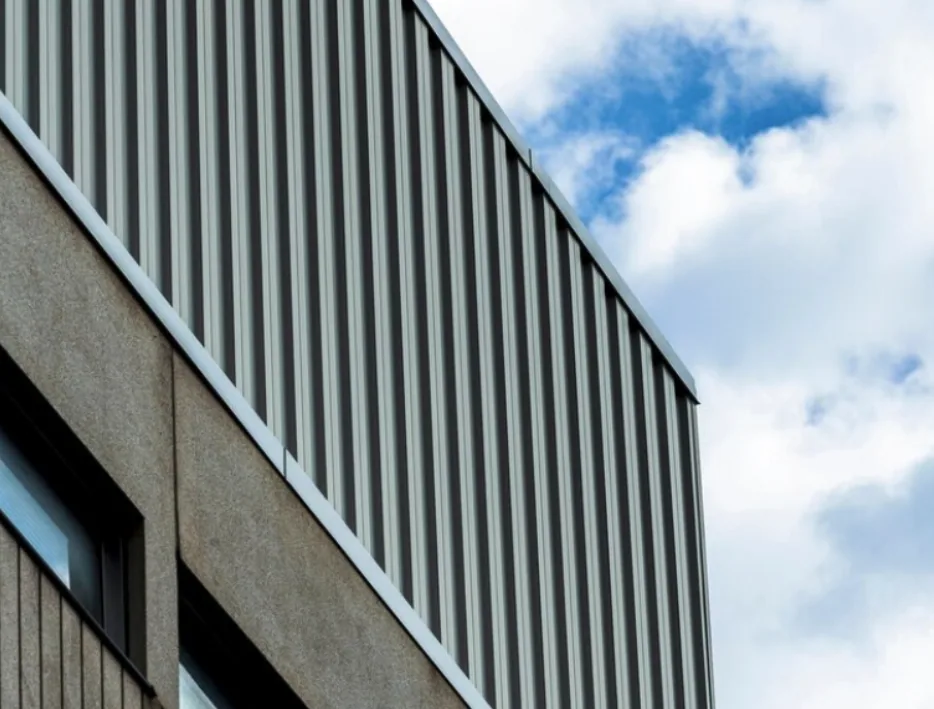
The permanent repair follows the assembly that is actually present. On a membrane roof, that may mean cleaning and preparing the surface, replacing incompatible or damaged material, and making a compatible seam or flashing repair. On metal, the crew checks panel movement, fastener condition, and the detail around penetrations. We do not bridge an open failure with a surface patch if the substrate or attachment needs correction. The written scope identifies removal, replacement, tie-in limits, and any substrate work that needs separate approval.
Where a project filing applies, we can provide the roof work description and affected zones for the owner’s permit team to review. We coordinate the roof sequence with the facility contact, keep the daily open area within the crew’s dry-in capacity, and record any condition that changes the agreed scope.
Keep Access and Operations in the Sequence
A repair plan has to account for who uses the building while the roof is open. We confirm roof access, fall-protection boundaries, rooftop equipment routes, material staging, and any interior notifications before mobilization. If a service technician must reach equipment, that path stays identified. If work is above an occupied floor, the site contact receives a daily note describing the affected zone and the next handoff. This keeps the repair tied to an operating schedule instead of treating the roof as an isolated surface.
Bridgeport's downtown plan includes office and shop uses, transit connections, mixed-use development, and reuse of older buildings. For a wind visit there, we trace the damaged edge or seam before setting a repair boundary. At a roof transition in that district, we inspect the wall and membrane as built, then record the materials and repair history confirmed at the property. A phased occupied-building work plan can help set that handoff where interior operations continue.
Leave a Useful Storm Record
At closeout, the owner receives photographs tied to roof locations, a description of the failed detail, the repair boundary, and any observation that still needs monitoring. If the storm affected more than one roof zone, each area should be listed independently so a later review can compare the same details rather than rely on a general note that the roof was repaired.
When several properties are involved, keep the Bridgeport file separate from records for nearby Fairfield or Stratford. Those municipalities are close to the market center, but each building has its own access and scope. A commercial roof inspection can establish a broader condition baseline, while flashing repair or seam repair can address distinct details found during the walk. The Bridgeport service area provides the local response context for the next call.
Questions and Answers
What should the facility team do before the roof is inspected?
Keep people clear of any falling material, report active interior water, and identify the affected rooms and rooftop access rules. Share the last known dry date, recent roof work, and any areas that cannot be blocked. We use that information to set a safe work window and a route for the inspection.
Can a lifted membrane edge be patched during the first visit?
A temporary securement may be possible if the surface and attachment points allow it. Permanent work depends on whether the membrane, insulation, deck, or edge assembly also moved. We document those layers where accessible and state what must be opened or tested before fixing the final repair boundary.
How do you separate storm damage from older roof wear?
The report records the condition and location of each detail, then notes whether the surrounding material shows a separate wear pattern. Dated photos, prior repair records, and the building contact’s observations help establish sequence. We keep confirmed damage distinct from conditions that require further review.
Will the repair require moving rooftop equipment?
That depends on the failed detail and available work area. We map equipment, service clearances, and the access path before selecting a repair sequence. If equipment must be shut down, disconnected, or moved, that responsibility and approval should be settled with the owner and the appropriate trade before the roof is opened.
What belongs in the written repair scope?
Include the affected roof zones, observed damage, temporary protection, material and tie-in limits, drainage checks, access controls, and any substrate work that remains conditional. For Bridgeport projects that require zoning review, building information and a written work scope are part of the city’s stated plan requirements.
Related Roofing Work
Set the First Safe Work Window
Have the roof plan, leak locations, access rules, prior repair notes, and any active interior impacts ready. We will map the affected detail, protect the opening where feasible, and put the permanent repair boundary and next inspection trigger in writing.