

Commercial Roofing in Stamford, CT
Commercial roofing in Stamford, CT is scoped by roof condition, occupied-building needs, access limits, and a documented repair or replacement sequence.
A roof opening over an occupied floor changes the order of the work. In Stamford, CT, we first confirm the affected area, the safe roof entry, and the person who can approve a repair boundary. The walk follows water from the interior mark to seams, curbs, wall transitions, and drains. We record what is visible and what still needs confirmation before selecting a patch or opening the assembly.
Stamford and Bridgeport sit within Connecticut's Coastal Corridor transportation investment area, which includes roads, bridges, waterways, ports, and airports. We confirm the actual truck route, lift location, and roof entry with each facility team. We confirm check-in, staging, roof safety, occupied areas, and service equipment with the facility team. A commercial roof inspection ties the condition record to a practical work sequence.
Set access before the roof walk
We identify the arrival contact, roof entry, lift or ladder location, material route, and any area that has to remain clear. If work crosses an occupied floor, the plan names who receives notice and how the repair zone will be protected below. Equipment service paths and emergency egress remain part of the access review. A short walk with the facility lead can prevent a staging choice from blocking an operating route.
Stamford covers 37.6 square miles, and its center lies about 19.9 miles from Bridgeport's. The facility's loading rules, building access, and staging area determine the work window, so we confirm each before mobilizing. We confirm those details before mobilizing and put any restrictions into the scope so the facility director can review them.
Separate the symptom from the cause
An interior stain can be several roof sections away from the opening that admits water. We inspect uphill and outward from the reported room, checking membrane seams, laps, curbs, pipe penetrations, wall flashing, edge metal, and drainage. A failure at one detail may be isolated; several nearby defects may share a movement, attachment, or water-flow issue. We note the evidence for each possibility instead of naming a cause before the path is traced.
On a roof with past repairs, we examine the edge of each patch and the material beneath it. Moisture readings can help direct an opening; we confirm suspected wet layers with a controlled test before adding removal to the repair scope. If insulation or deck condition cannot be confirmed from the surface, we discuss a controlled test cut and receive approval before opening. The report records the point tested, the layers exposed, and whether the finding changes the repair area.
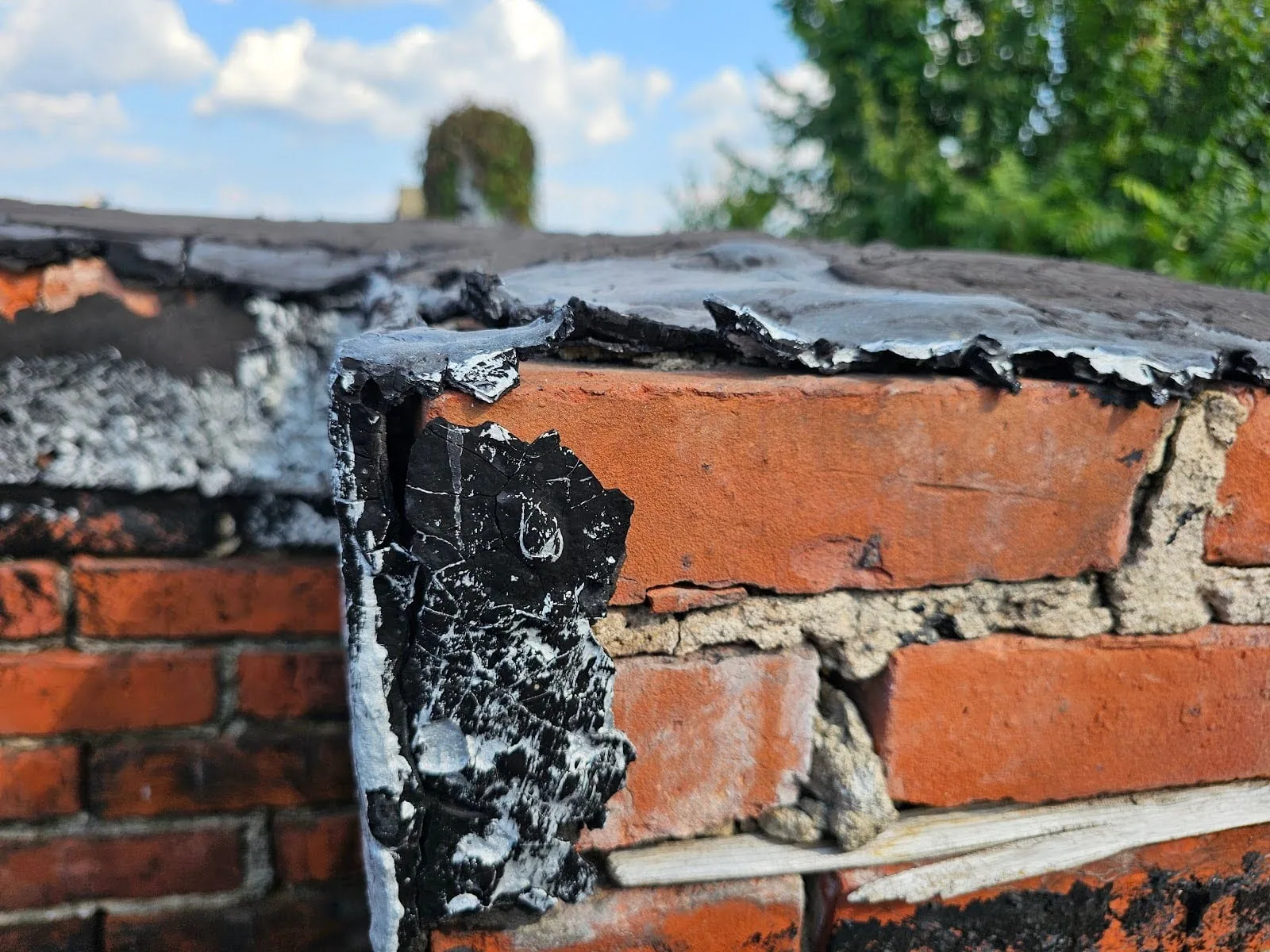
At a parapet or curb, the flashing must meet a stable surface and terminate in a way that sheds water. We inspect the attachment, lap direction, sealant, and adjacent membrane before choosing a correction. A flashing failure repair can address a confirmed transition, while a ponding-water roof repair involves the drainage area and the surface leading to it. The scope shows which issue is being corrected and which nearby condition remains separate.
Keep a stable work boundary
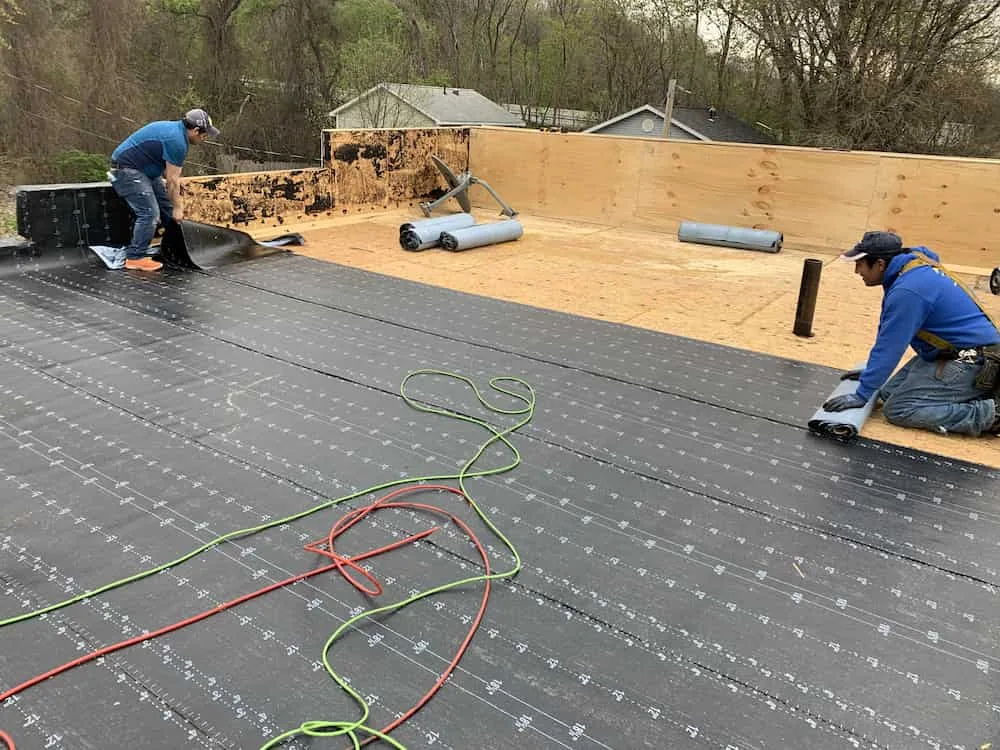
Before removing material, we divide the work into roof zones and set a stopping point that can be dried in before the shift ends. The plan identifies drains that must stay clear, how exposed edges will be secured, and what interior protection is required. If rain or access changes the sequence, the field lead reports what is closed, what remains open, and which task waits for the next work window.
A temporary measure has its own limit. It may reduce active water entry, but the permanent correction still needs a prepared surface and compatible tie-in. We label the temporary work, document the area it protects, and note any remaining exposure. The facility contact receives a return condition so no one mistakes interim protection for a completed repair.
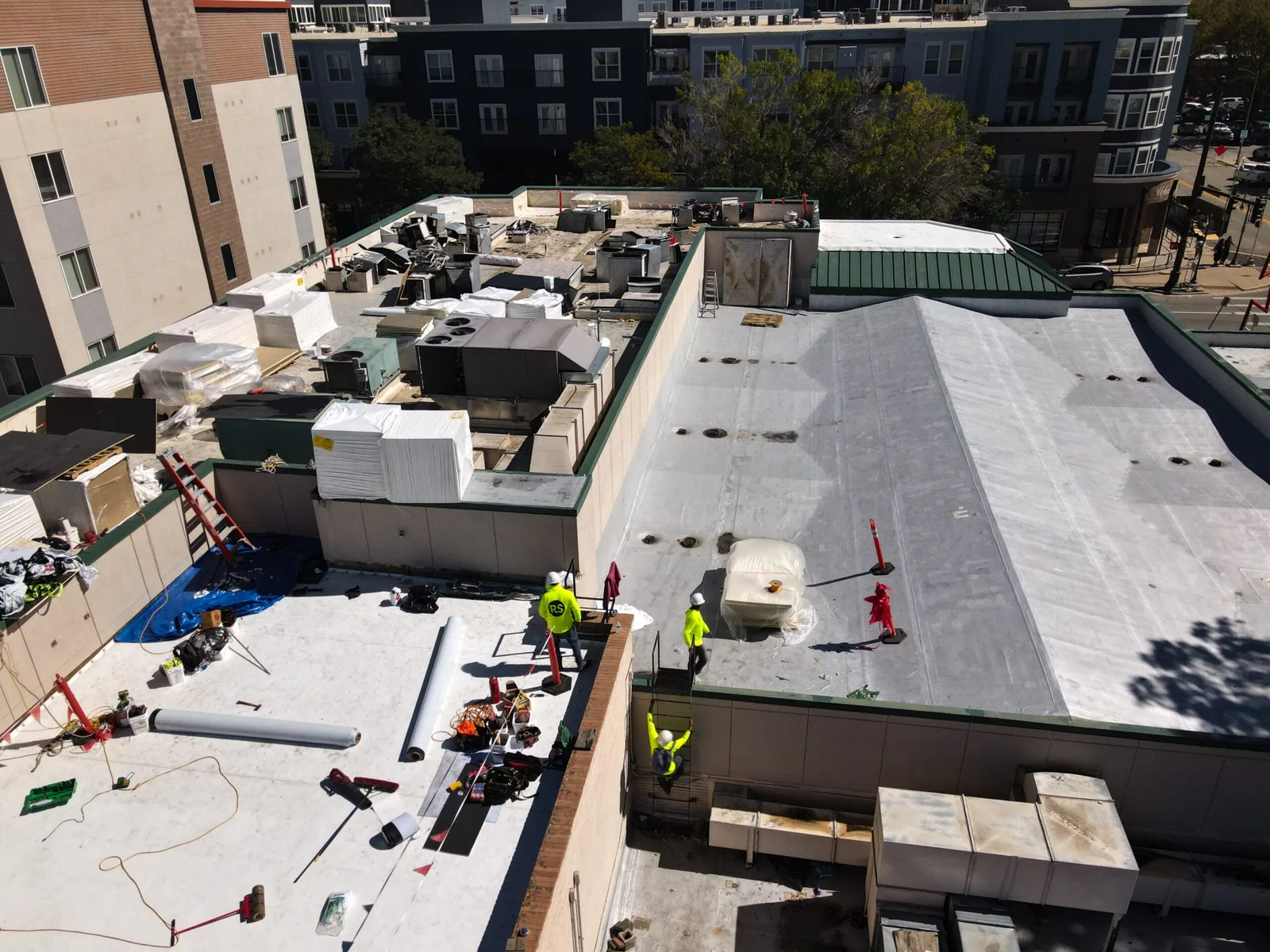
Staging, debris removal, and equipment movement are coordinated with the building schedule. Where a later trade must cross a roof zone, we mark the route and identify what needs protection. If the crew uncovers wet insulation or a damaged deck, the work stops at a safe boundary until the owner reviews the condition and scope change. Photographs and a short written handoff keep that decision connected to the roof area involved.
Compare a repair with replacement
A local repair may be enough where the surrounding membrane, insulation, and deck are stable. Repeated leaks, widespread moisture, failed seams, or attachment concerns may support a broader review. We map confirmed defects and separate them from areas that have not been tested. That gives ownership a like-for-like basis to compare immediate repair, phased replacement, and full replacement without assuming every roof zone has the same condition.
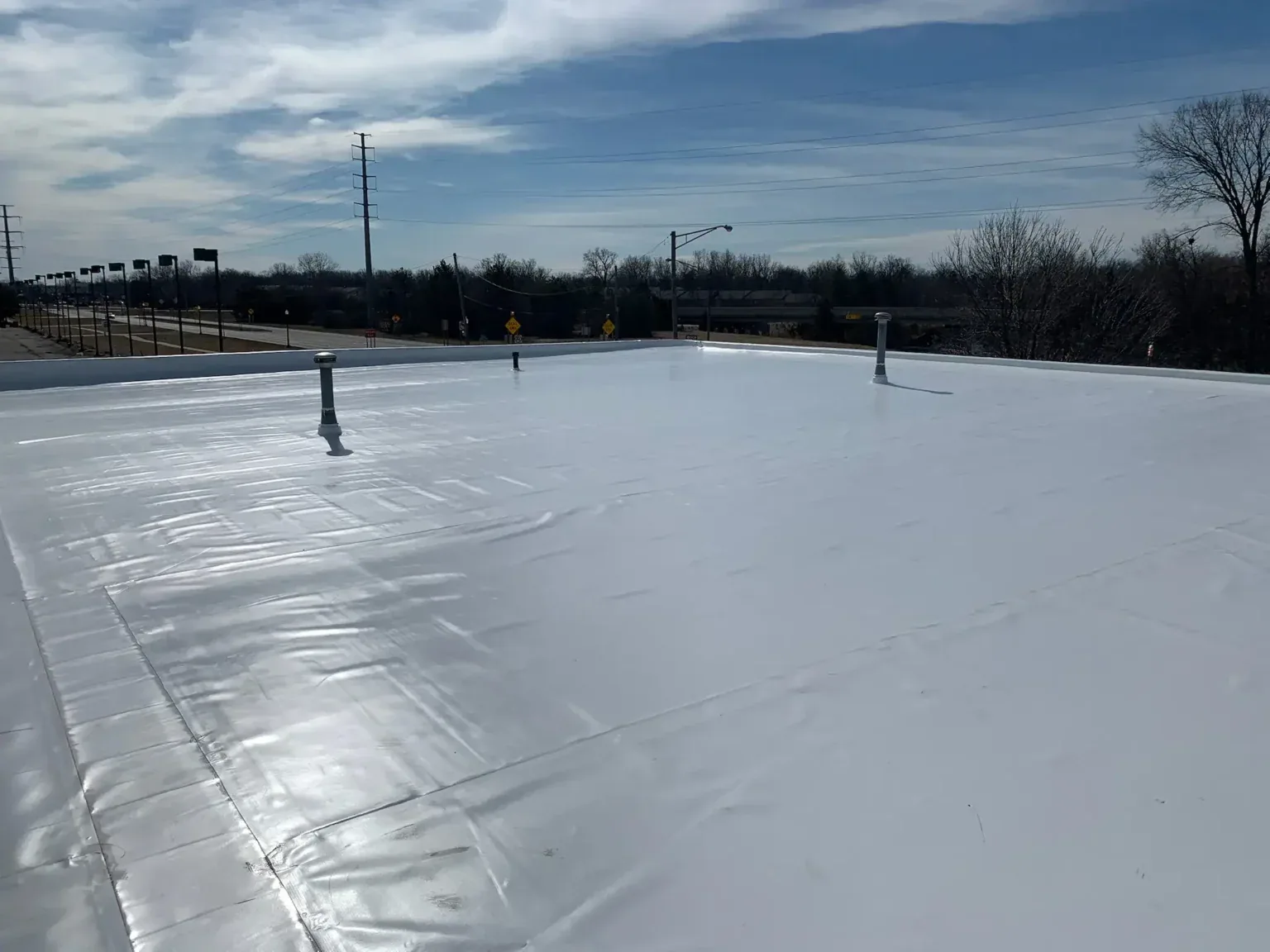
Scope and schedule depend on how far removal extends, deck and insulation work, edge metal, disposal, lifts, dry-in, and the number of areas that can be opened safely at once. A coating is considered only when the existing surface and assembly are suitable. It cannot correct wet layers underneath. A recover assessment weighs moisture, attachment, drainage, edge height, and retained-layer condition; a replacement plan sets removal and tie-in boundaries when those layers cannot stay.
A roof condition report can organize the findings by area, urgency, and next inspection trigger. We record the repair completed, the condition that remains, and what would justify another visit. If a property manager has several roofs, the same format supports a handoff without treating one site's observation as a conclusion about another.
Leave a record the next shift can use
Closeout should make the repair easy to locate. We identify the roof zone, defect, preparation, materials, tie-in, photographs, and nearby conditions checked. The record also names any exclusion, open question, or temporary measure. If another team later works on equipment above the same area, the facility can show where the roof scope ended and what must be protected.
At Sikorsky Memorial in Bridgeport, January's mean temperature is 31.4°F and the annual mean is 53.4°F. On a Stamford roof, we check drainage, membrane, flashing, and deck before setting the repair boundary.
Bring the roof plan, interior leak map, prior repair records, access instructions, and any operating-hour limits to a Stamford roof walk. We will trace the reported path, set a repair boundary, and document the next decision. A Bridgeport roof walk and a Norwalk roof walk each document the building's access route and operating limits before the scope is set. For ongoing checks, the roof maintenance program can carry forward the documented inspection triggers.
Questions and Answers
What if a roof leak appears in a different area each time?
We compare each interior location with roof seams, drains, penetrations, and prior repairs, then map the likely water paths. A changed stain does not by itself prove that a previous repair failed. The inspection records confirmed conditions and whether a test would narrow the next step.
Can you inspect the roof without disrupting building operations?
We agree on access, occupied areas, equipment clearances, and the work window with the facility contact. We confirm visit limits before arrival. If a repair is needed, the scope separately addresses noise, protection, and staging.
How do you handle a repair that exposes wet insulation?
We stop at a secure boundary, photograph the opened area, and identify the material condition. The facility contact reviews the added removal and replacement scope before work continues. The record shows how the new materials will tie into sound assembly and how the area will be dried.
When is a roof recover worth considering?
A recover is considered when the existing assembly is stable, dry enough, compatible, and suitable for the proposed system. We inspect moisture, attachment, deck, drainage, edge height, and detail conditions first. If those checks show the existing layers cannot remain, we explain the removal scope instead.
What records help with a multi-building roofing decision?
Roof plans, leak histories, prior scopes, access limits, and photographs help connect observations across locations. We keep each building's findings separate, then group repair urgency and next inspection triggers in a consistent format. That supports capital planning without treating a condition at one property as proof about another.
Related Roofing Work

Arrange a Stamford roof review
Send the roof plan, leak locations, access limits, and prior repair records. We will inspect the affected zone, map the work sequence, and document what decision comes next.