
Commercial Roofing in Ridgefield, CT
Commercial roofing in Ridgefield, CT starts with a roof-zone walk, an access plan, and a defined repair boundary for active facilities and tenants.
A roof repair can stall before the first seam is checked if the entry point, staging surface, or building contact is unclear. In Ridgefield, CT, we begin by setting that handoff: which roof area is available, what space below must stay in service, and who can approve a change once the assembly is opened. Then we trace the reported condition to the roof detail that needs attention. The first scope records access and the observed defect together.
Ridgefield is within our nearby Bridgeport service area, and we confirm the facility's arrival route, loading access, and lift space before the roof walk. The crew maps the route from the approved entry point to the roof work zone with the facility contact. We verify loading restrictions, lift placement, roof safety controls, occupied rooms, and the hours when a noisy task can occur. A commercial roof inspection gives the facility director a condition record and a sequence for the next decision.
Agree on the access handoff
The first site contact should know where the crew checks in, which entrance reaches the roof, and what work must not interrupt a tenant or operation. We review keys, escorts, fall protection points, ladder locations, lift setup, and material staging before selecting a repair method. If the roof is above a sensitive room, the work plan identifies the interior contact and the path for communicating a change in conditions.
Ridgefield sits about 17.9 straight-line miles from Bridgeport's center. Newtown is also nearby; for both towns, we set arrival and roof access with the facility contact.
Follow the defect across the assembly
A ceiling mark may sit several feet from the roof entry point. We inspect the membrane above it, then follow seams, laps, wall transitions, curbs, drains, and changes in slope toward the likely source. The Diligence Notes separate visible damage from a suspected water path. A loose termination, puncture, failed seal, and blocked outlet each call for a different correction, so we do not start with a patch before identifying which condition is present.
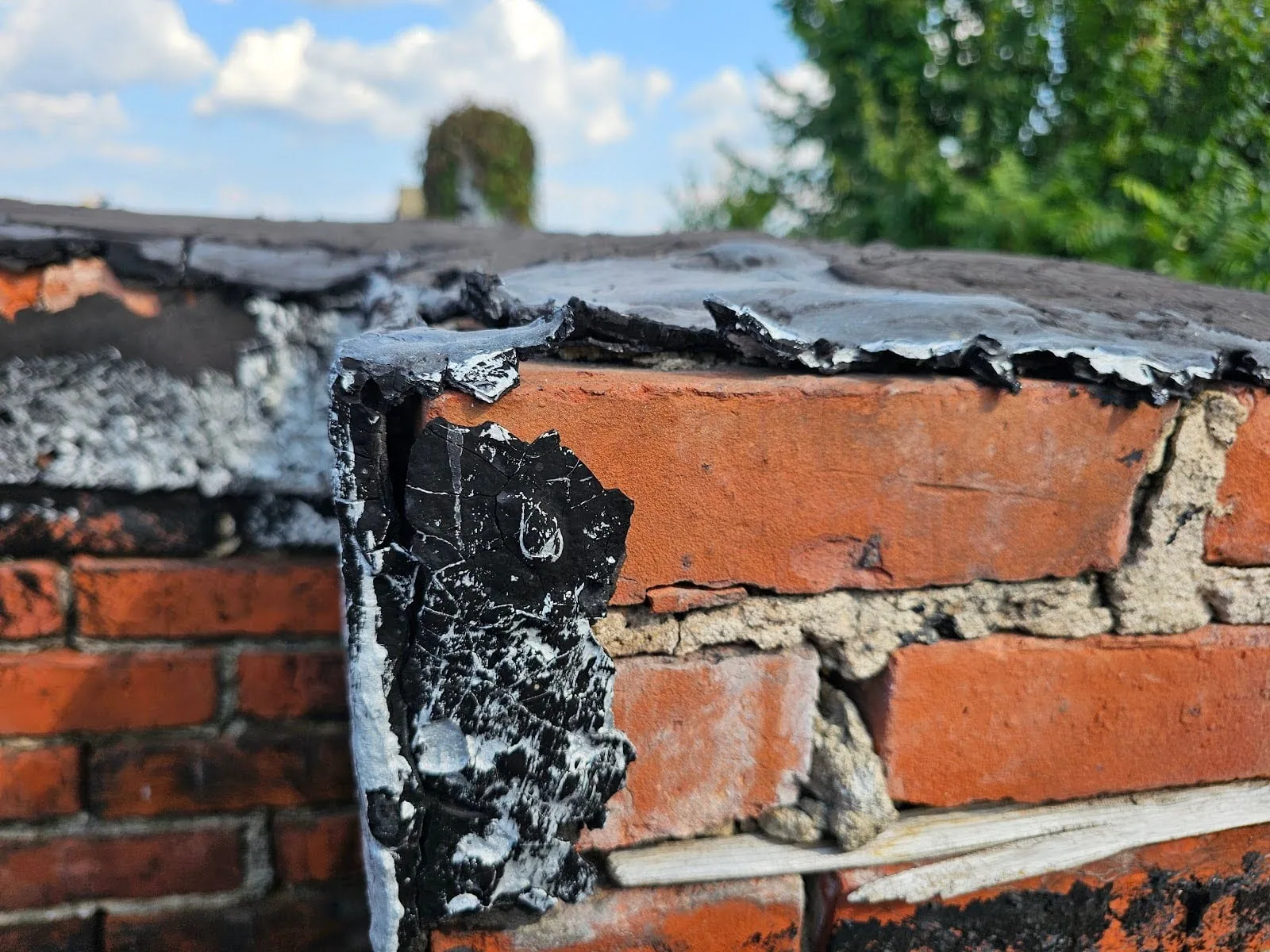
A wall detail that has separated from its substrate needs more than a bead of sealant if the attachment has failed. We inspect the termination, counterflashing, and adjacent membrane, then set a boundary where the repair can meet stable materials. The written scope can point to a flashing failure repair when that is the confirmed issue. If the failure extends beyond one transition, we show the additional area before it is added to the work.
Protect the open roof zone
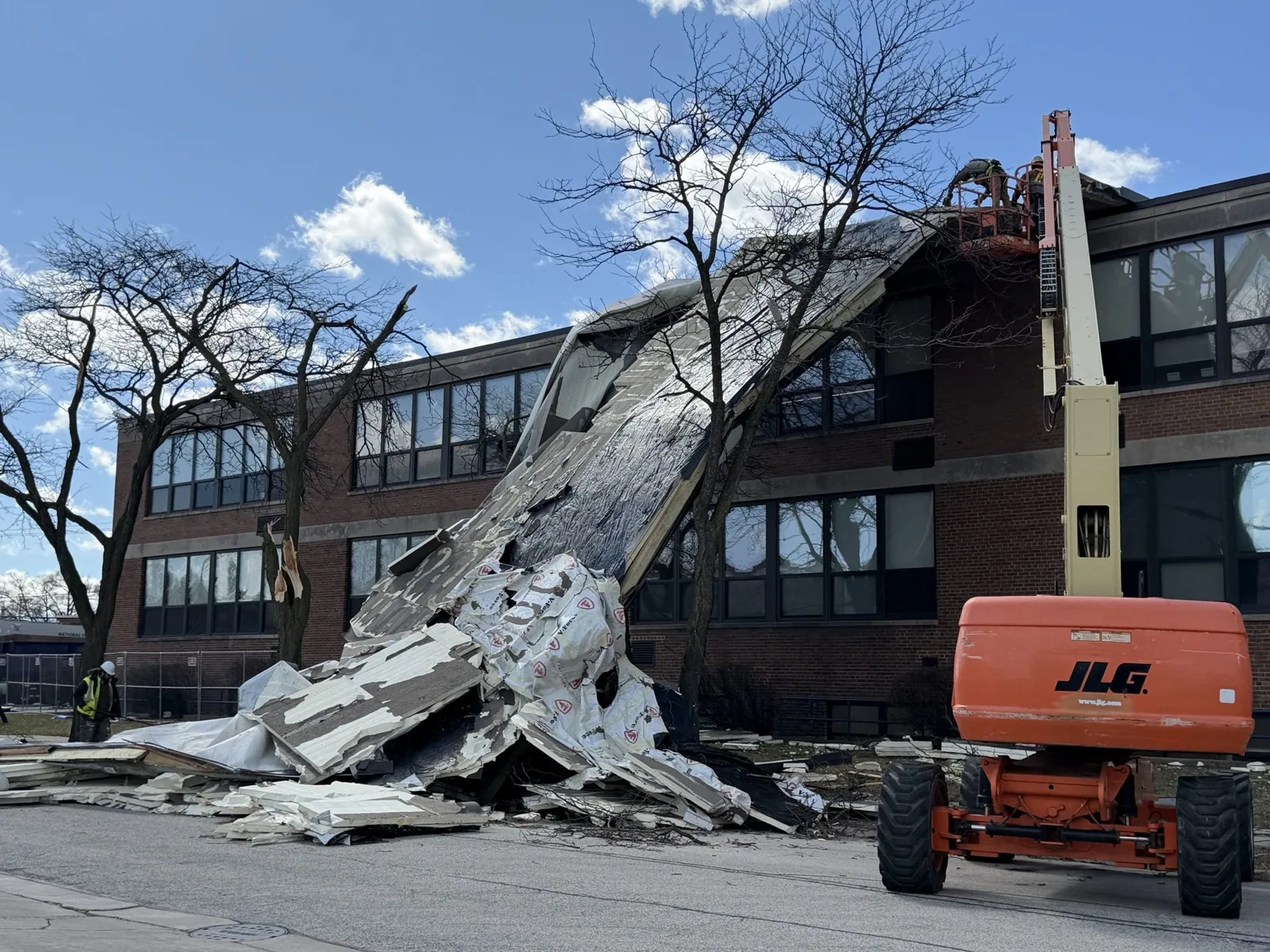
Once removal begins, the crew needs a planned stopping point that can be made watertight before the shift ends. We divide work into roof zones and specify how each open area will be dried in if weather or access changes. Drains and overflow paths stay clear, and temporary protection cannot trap water against a detail. The facility contact receives an update if the planned boundary needs to move or if concealed conditions change the next step.
For occupied floors, protection extends below the roof. We agree on where contents should move, how a ceiling area will be isolated if necessary, and who can authorize a temporary interruption. Dust, noise, vibration, and the movement of materials are included in the sequence where they affect the building. A repair should not leave operations guessing whether the crew has finished the area or whether a return visit is still required.
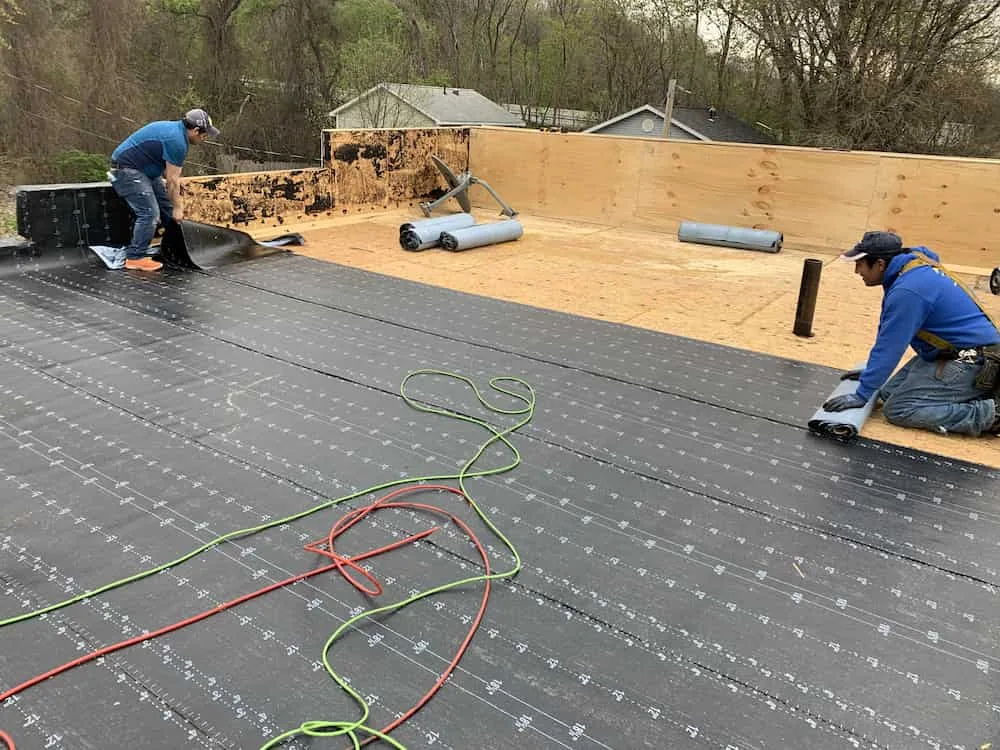
Temporary work and permanent work have separate limits. A tarp or emergency seal may reduce immediate entry, but it is not described as a completed membrane repair. We label the temporary measure, document the remaining exposure, and set the condition for a permanent tie-in. When the surface can be prepared, compatible materials are installed to sound membrane or substrate, and the adjacent seams and drainage route are checked before closeout.
Match the scope to what is sound
A localized repair can make sense when the surrounding membrane, insulation, and deck remain stable. Repeated leaks in separate zones, widespread moisture, or failure at many details can point to a broader project. We map each confirmed condition and mark what remains unknown so ownership can compare a repair, a phased replacement, or a full replacement against the same roof areas. That is more useful than estimating a broad scope from one interior stain.
Timing and cost depend on removal depth, deck repair, insulation, edge metal, access equipment, disposal, and the number of sections that can be opened safely. Coating is considered only when the existing assembly and surface preparation support it. It cannot correct wet insulation or loose attachment underneath. A recover or overlay review checks whether the existing roof can remain in the assembly, while a replacement scope defines removal and dry-in limits when it cannot.
Where the near-term repair and the capital decision need to coexist, we specify what the repair is expected to address and what should trigger a new inspection. The owner can assign follow-up by roof zone, preserve photographs, and avoid treating an interim measure as a final condition. A roof condition report can group the findings by urgency and distinguish confirmed defects from further investigation.
Close with a usable roof record
At closeout, we review the finished tie-in, adjacent transitions, equipment clearances, and open drainage paths. The record names the roof zone, material used, repair limit, and any area that still needs monitoring. Photographs are labeled so a facilities lead can find the work without searching through a folder of unlocated images. If the repair was temporary, that status and its return condition remain visible in the handoff.
For owners with properties in Ridgefield, Newtown, and Bridgeport, we coordinate visit dates while keeping each roof's drainage map, access contact, and repair boundary separate. A multi-site owner can group roof visits in Newtown and Bridgeport and retain an independent inspection record at each property.
For a Ridgefield roof walk, have the roof plan, leak locations, previous repair records, access rules, and the facility contact ready. We will identify the reported path, explain whether a test opening is justified, and define the proposed work boundary. The service team can also review the maintenance sequence after a repair so drains, seams, and recurring details have a clear next inspection trigger.
Questions and Answers
How do you keep tenants informed during roof work?
We set the work zone and notice path with the facility contact before starting. The plan identifies affected rooms, access limits, expected noise, and the person who receives a change notice. If the repair boundary shifts after opening the roof, we stop at a secure condition and confirm the next step before expanding the scope.
What if the leak source is not visible during the first visit?
We record the suspected path and the observations that support it, then decide whether a controlled opening or additional moisture survey would resolve the question. We do not label an unconfirmed location as the cause. The next visit is scoped to gather the missing evidence while protecting the interior and keeping the roof area secure.
Can roof repairs be phased around an operating schedule?
Yes, when the assembly and weather allow a safe stopping point. We map the repair into zones, set a daily dry-in limit, and coordinate noisy work or lifts with the site contact.
How do we know whether an overlay is suitable?
The existing layers need to be dry, stable, and compatible with the proposed assembly. We check moisture, attachment, deck condition, edge height, and drainage before recommending a recover. If removal is required, the scope identifies the boundary and the new materials so the owner can compare options clearly.
What should the closeout record contain?
It should identify the repaired zone, observed defect, preparation, material, tie-in, photographs, and any remaining concern. We also note whether the work was temporary or permanent and what condition should trigger another visit. That record lets the next facilities handoff start with the actual roof history.
Related Roofing Work
Set the first roof walk
Send the roof plan, affected room locations, prior repair notes, and site access limits. We will trace the reported condition, map a safe work window, and put the repair boundary and next decision in writing.