Auto Dealership Roofing in Bridgeport, CT
Plan auto dealership roof repair or replacement in Bridgeport, CT around showroom access, service bays, inventory, drainage, and daily customer routes.
A leak over a showroom, parts counter, or service bay calls for a roof trace that protects the cars and the work below. We map the reported interior location, inspect the roof detail above it, and set a boundary for any temporary opening or repair. The scope notes whether the affected area sits above customer space, a lift, or active service equipment. That distinction guides where materials can be staged and what the dealership needs to keep moving during the work window.
Bridgeport, CT's planning record distinguishes The Smile, between Railroad Avenue and I-95, from the State Street corridor. These settings can bring different delivery and circulation constraints, but the dealership's own service drive, inventory layout, and customer entrances set the field sequence. We confirm lift access, pedestrian paths, vehicle protection, and the contact who can approve a concealed-condition question. Each shift ends with dry-in status and a clear handoff for the next work area.
Keep the Customer Route in Service
Showroom traffic and service-bay activity can continue only when the work boundary is visible and the access path is understood. We identify doors, display areas, parts deliveries, service lanes, and emergency routes before the crew arrives. The staging plan shows where a crane or lift can stand without cutting across customer circulation. If a row of vehicles needs to move, the dealership contact sets that sequence before roofing materials are raised. The crew follows the agreed route and keeps ground protection in place for the shift.
Above an occupied sales floor, vibration, odors, and overhead protection may shape the roof zone that opens first. Work over a service bay may need equipment access or a brief shutdown coordinated with the shop lead. The occupied-building sequence can coordinate those limits. A related retail roof plan also requires a building-specific staging route, while a warehouse scope addresses a different balance of loading and interior use.
Trace the Leak Above the Correct Department
A drip at a ceiling tile or service-bay light is a starting point, not a roof diagnosis. We compare the reported location with seams, penetrations, rooftop curbs, drains, and wall transitions. Water can follow a deck or framing line before it appears indoors, so photographs and a roof-zone map keep the investigation tied to the actual path. If the mark is old or dry, the record says so. If the leak is active, we identify a temporary containment step and the next inspection needed to close the question.
The Sikorsky station's Bridgeport climate normal is 33.6 inches of snow per year; its 1991-2020 precipitation average is 44.09 inches annually. Bridgeport Sikorsky Memorial Airport's snowfall and precipitation normals make outlet condition and post-thaw review useful items in the local inspection sequence. A flashing review can check a curb or wall detail, and a seam repair assessment can isolate a lifted or separated membrane joint.
Review Membrane, Metal, and Roof Equipment
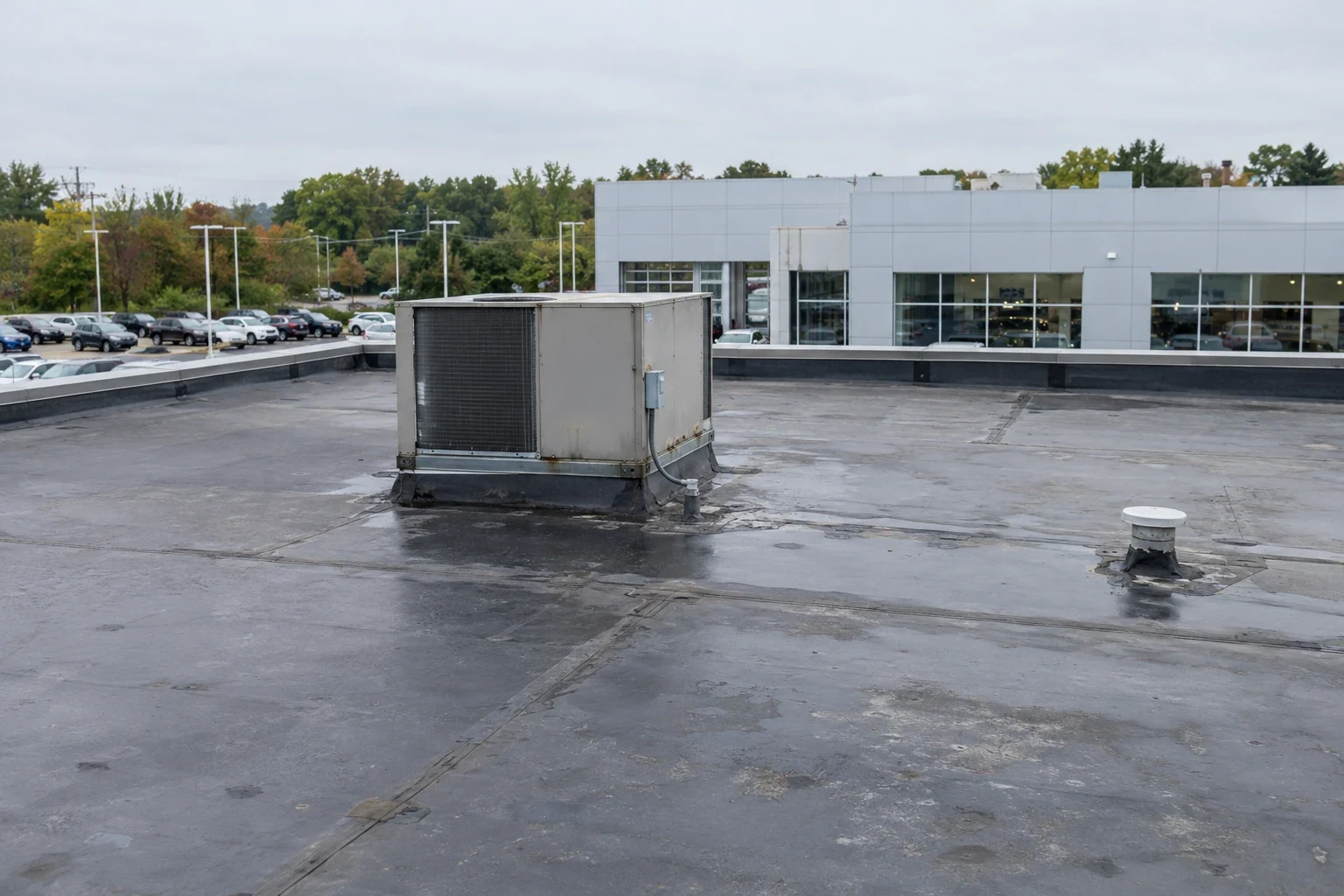
We inspect the field surface, perimeter, drains, penetrations, and transitions to canopies or additions. Rooftop units and exhaust equipment matter because service access must remain possible and new work must terminate cleanly around each curb. For metal roof sections, we check panel seams, fasteners, clips, and edges. For a membrane, we map laps, patches, and any area where attachment or moisture needs further review. The report names what was observed and does not infer the condition of hidden layers from the visible surface alone.
A recover or coating may be possible only when the existing assembly and substrate support it. We look for moisture, weak attachment, incompatible materials, and drainage issues before defining that option. The commercial inspection establishes the baseline, and a repair scope can define a local correction. If broader deterioration is confirmed, replacement planning sets removal, tie-in, and dry-in limits. A TPO system review can be part of a later assembly comparison, after field conditions are documented.
Coordinate Work With Sales and Service
The dealership contact should know the roof zone, the expected noise, the vehicle route, and the condition required before an area can reopen. We divide the work into sections the crew can protect at the end of each shift. The daily handoff records which curbs, seams, or edges are complete and whether any customer or technician route remains restricted. If concealed damage changes the plan, the crew pauses at the scope boundary and documents the condition before adding work.
For many commercial or industrial changes, Bridgeport zoning review requires a building description plus a written explanation of the proposed work. A clear map and work limit help the property team coordinate permit review, internal approvals, and dealership operations. For a site near the State Street corridor or The Smile, truck movement and material delivery may need a separate time from customer arrivals. The drainage scope can be priced separately from membrane repairs, while perimeter metal work defines the edge condition. We keep each item tied to the roof plan.
Leave the Service Team a Roof Record
Closeout includes labeled photographs, a list of completed details, installed material information, approved changes, and areas that still need monitoring. The dealership's maintenance lead can use the roof-zone map to locate a new report or schedule a future check. We note whether rooftop equipment access changed during the work and identify the next inspection trigger, such as an equipment replacement, recurring water mark, or planned roof service. That record supports follow-up without implying that one repair closes every roof question.
Bridgeport properties near Stratford and Fairfield may share a regional service calendar, but their roof assemblies and customer routes remain separate. A condition report can organize priorities by building, and the Bridgeport service area provides local scheduling context. Keep the service-bay contact and access instructions with the roof file so the next crew can reach the correct zone. When the next inspection is scheduled, compare the same seams, curbs, and drains noted during this visit.
Questions and Answers
Can roof work proceed while the showroom stays open?
The work plan depends on the roof zone, lift location, customer entrances, and how the area below can be protected. We map those routes with the dealership contact and phase the work to keep a safe path available where possible. Any temporary restriction is tied to a defined place and time.
How do you protect vehicles and service operations?
Before mobilization, we identify vehicle staging, the service drive, parts deliveries, and the material route. The site contact moves inventory or equipment where needed, and the crew maintains the agreed ground boundary. Daily handoffs state whether a lane or roof access point remains restricted.
What details commonly need review above a service bay?
Curbs, exhaust penetrations, drains, seams, and transitions to canopies are inspected because each can interrupt the roof's water path. We record the actual condition and compare it with the leak report below. If a rooftop unit needs service, its access and shutdown are coordinated with the appropriate technician.
When is replacement more appropriate than another repair?
A replacement review is warranted when damage or moisture extends beyond an isolated detail, repairs recur across multiple zones, or the retained assembly cannot support the proposed work. We document the condition and explain what testing or removal would confirm. The recommendation stays tied to the surveyed roof, not a general assumption about dealership buildings.
What should a dealership send before a roof inspection?
Provide roof plans, prior repair notes, leak locations, service-bay and showroom hours, vehicle circulation rules, equipment contacts, and any access restriction. Those details let us plan the route and identify which roof areas can be reached without interrupting customer or technician movement.
Related Roofing Work
Schedule a Dealership Roof Review
Share the roof plan, leak locations, showroom and service hours, vehicle routes, equipment needs, and prior repairs. We will map the inspection boundary and return a written repair or replacement path tied to the building.