
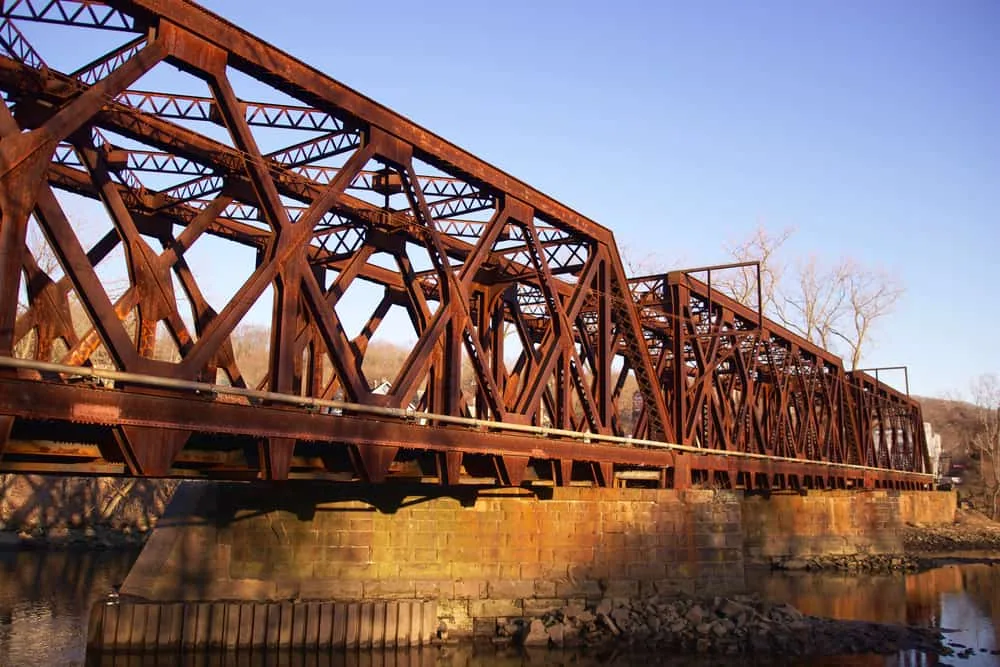
Commercial Roofing in Derby, CT
Assess commercial roof damage in Derby, CT with a mapped inspection, coordinated access, and repair options based on verified assembly conditions.
A Derby roof inspection starts by matching the reported problem to a roof zone. We ask who can authorize entry, which area below needs protection, and how a crew can reach the work without blocking the building's daily route. Then we trace seams, flashings, drains, curbs, and edge metal above the report. Derby is a Connecticut town whose center is about 11.3 straight-line miles from Bridgeport's center. The station used for Bridgeport's climate reference averages 33.6 inches of snow each year; its annual precipitation normal is 44.09 inches. That seasonal context puts drainage and dry-in in the inspection plan, but only the roof itself shows whether a seam, outlet, or concealed layer needs work.
Map the building before mobilization
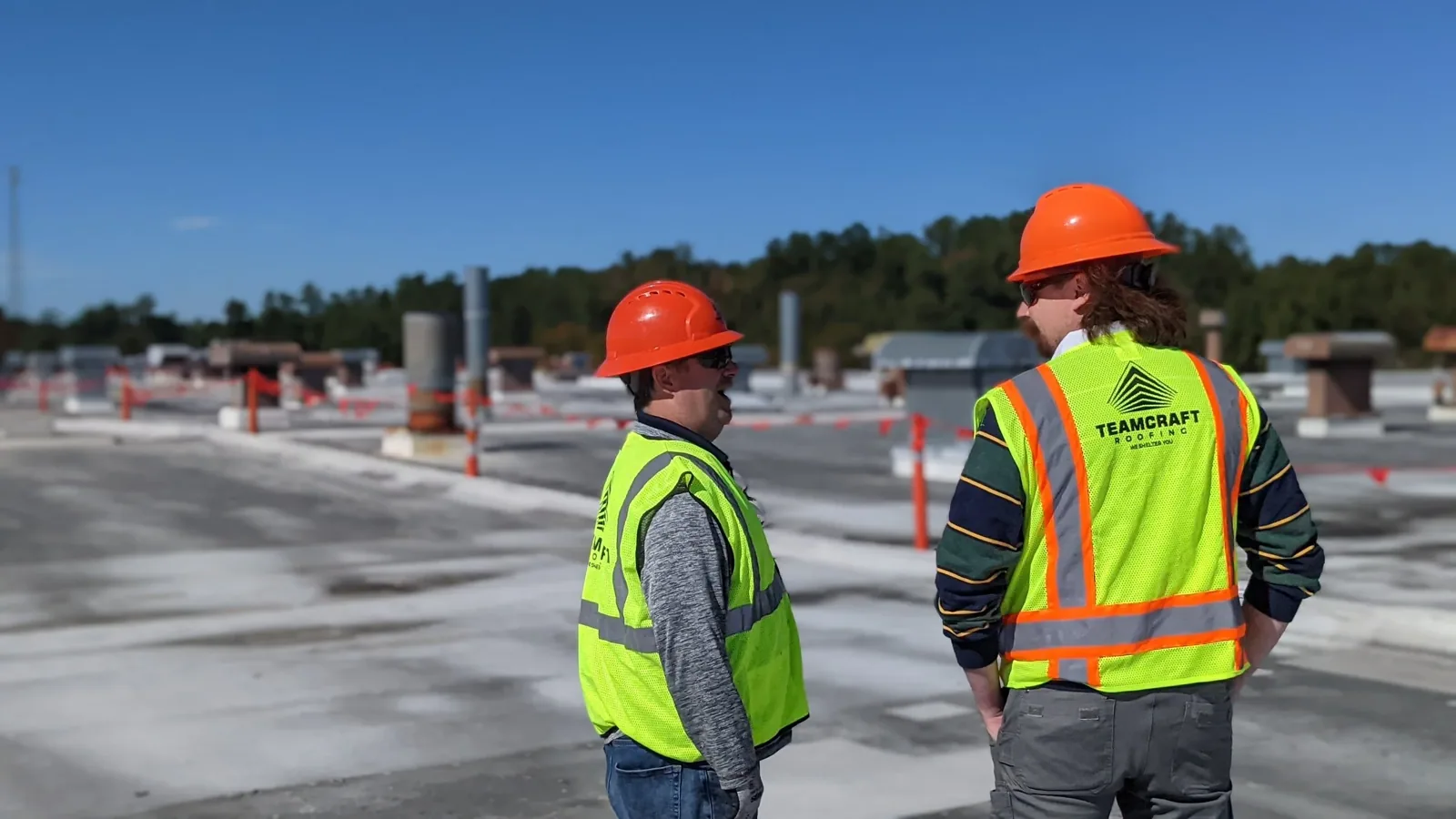
We confirm the roof access point, alarm steps, lift or ladder location, and staging area with the facility contact. If occupants, deliveries, or rooftop equipment limit access, those restrictions belong in the sequence before material arrives. The work plan identifies which section can be opened, what protection is installed below, and who checks the temporary closure at each handoff. That matters when a building has more than one roof level or a mechanical area that cannot be isolated for long. A phased occupied-building approach can keep work organized when roof condition and weather allow the area to close before the crew advances.
For each Derby property, we verify the entry path, delivery window, pedestrian separation, and after-hours contact before materials arrive. Emergency response runs around the clock, including holidays, but the immediate sequence depends on the hazard: protect people and contents, control active water where possible, and document what permanent repair needs a safe roof and suitable surface conditions. The work window is then updated with the owner rather than assuming a full repair can proceed during a storm or on a wet assembly.
Find the defect behind the interior report
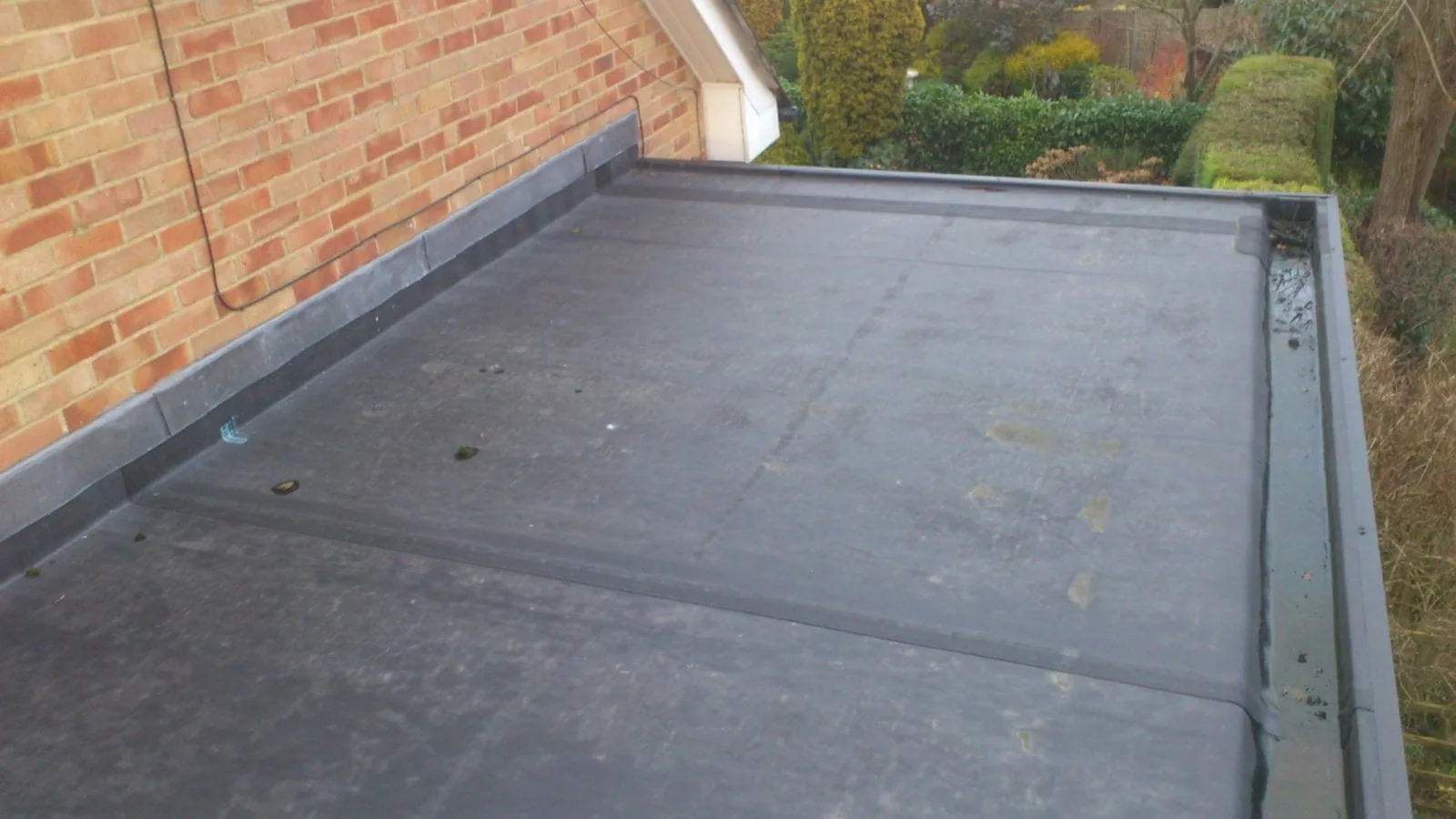
A mark on a ceiling tile is one clue, not the full roof map. We check above and uphill from the interior point, following membrane seams, fasteners, penetrations, curbs, wall intersections, and the route toward an outlet. At an edge, we inspect metal attachment and the transition where water could move behind the fascia. At a drain, we assess the bowl, clamping ring, nearby laps, and whether slope directs runoff to the opening. The inspection record places these findings beside dated photographs, so the owner can see whether one repair detail or a larger area is involved.
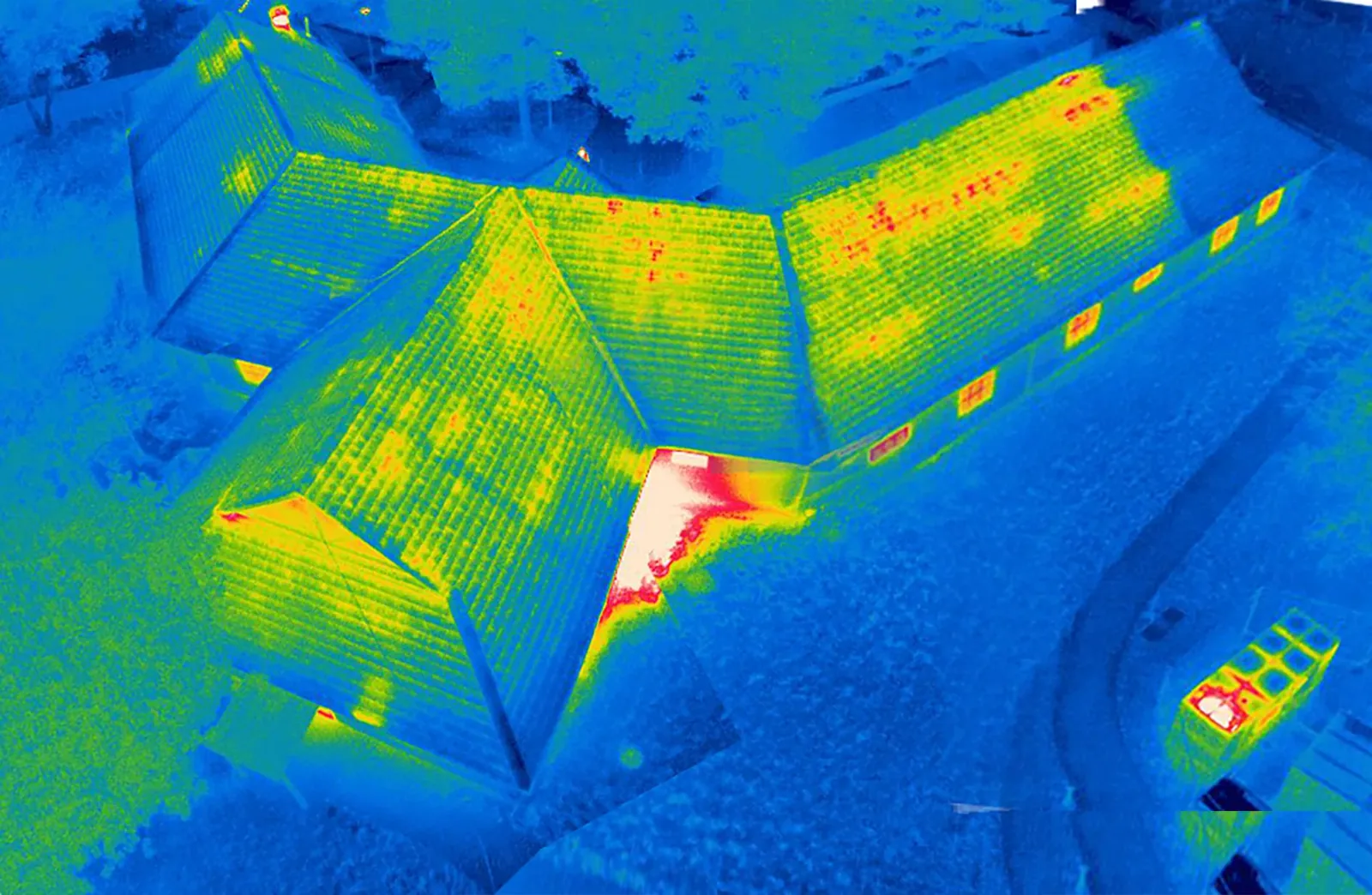
If water may be below the membrane, we plan how to confirm it without treating an untested zone as damaged. A moisture survey can identify a pattern and help select test openings. We record test locations, conditions, and results, then separate visible findings from areas that remain inaccessible. If the deck or insulation changes the scope, the report describes what additional opening would answer the question and requests approval before removal grows. The infrared moisture survey can guide that investigation, while a separate visual test confirms what is beneath the roof surface.
Choose work that fits the assembly
When one flashing or seam has failed, a localized correction may be enough if the adjacent membrane, attachment, insulation, and deck are in serviceable condition. We describe the prep, material compatibility, tie-in, and exact boundary, including nearby defects that are excluded. Recurring water, multiple separated seams, or wet insulation can point to a larger problem that should be measured before estimating. The repair proposal identifies the confirmed quantities and the conditions that would require a change order, so approvals stay tied to observed work.
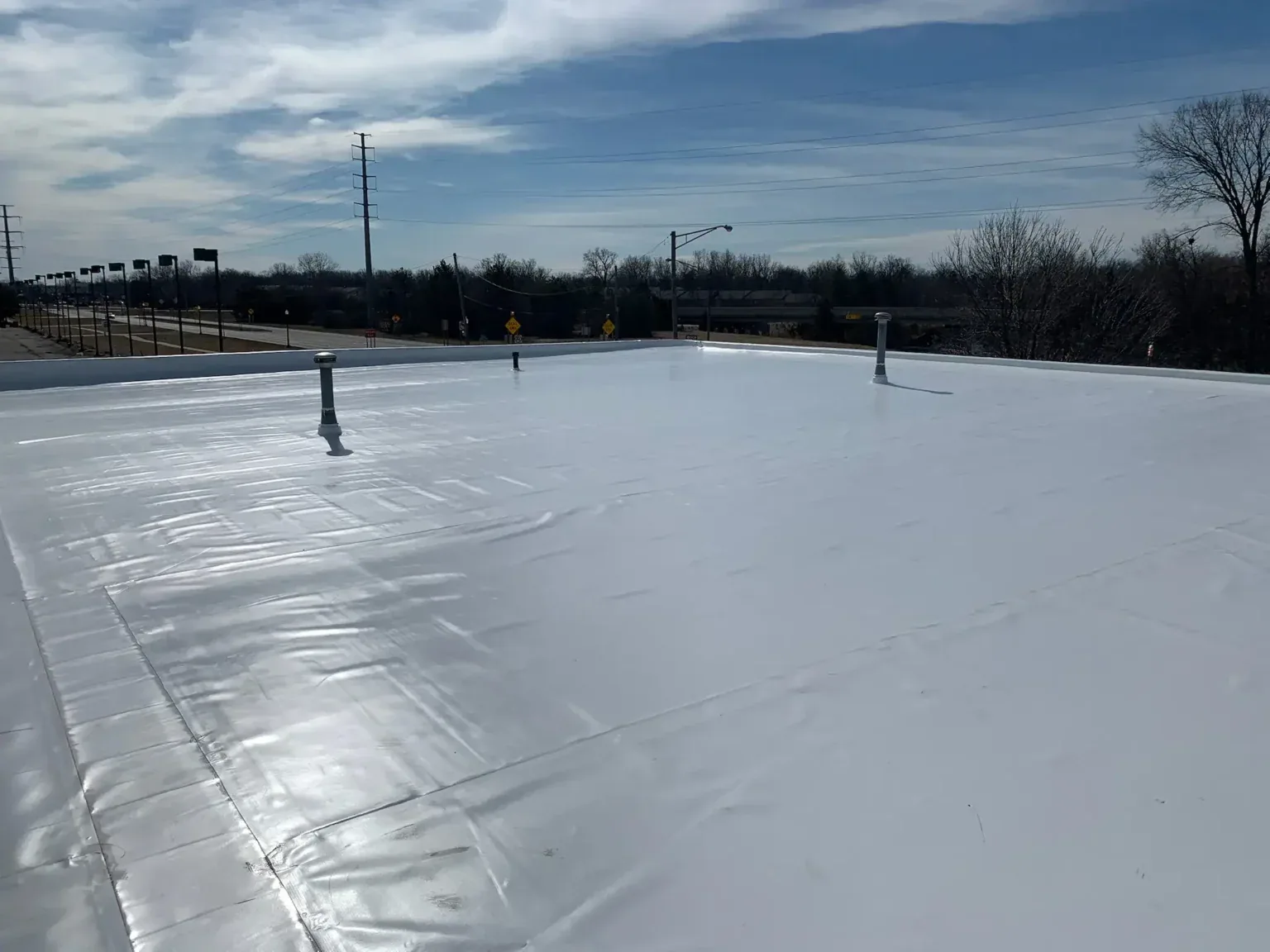
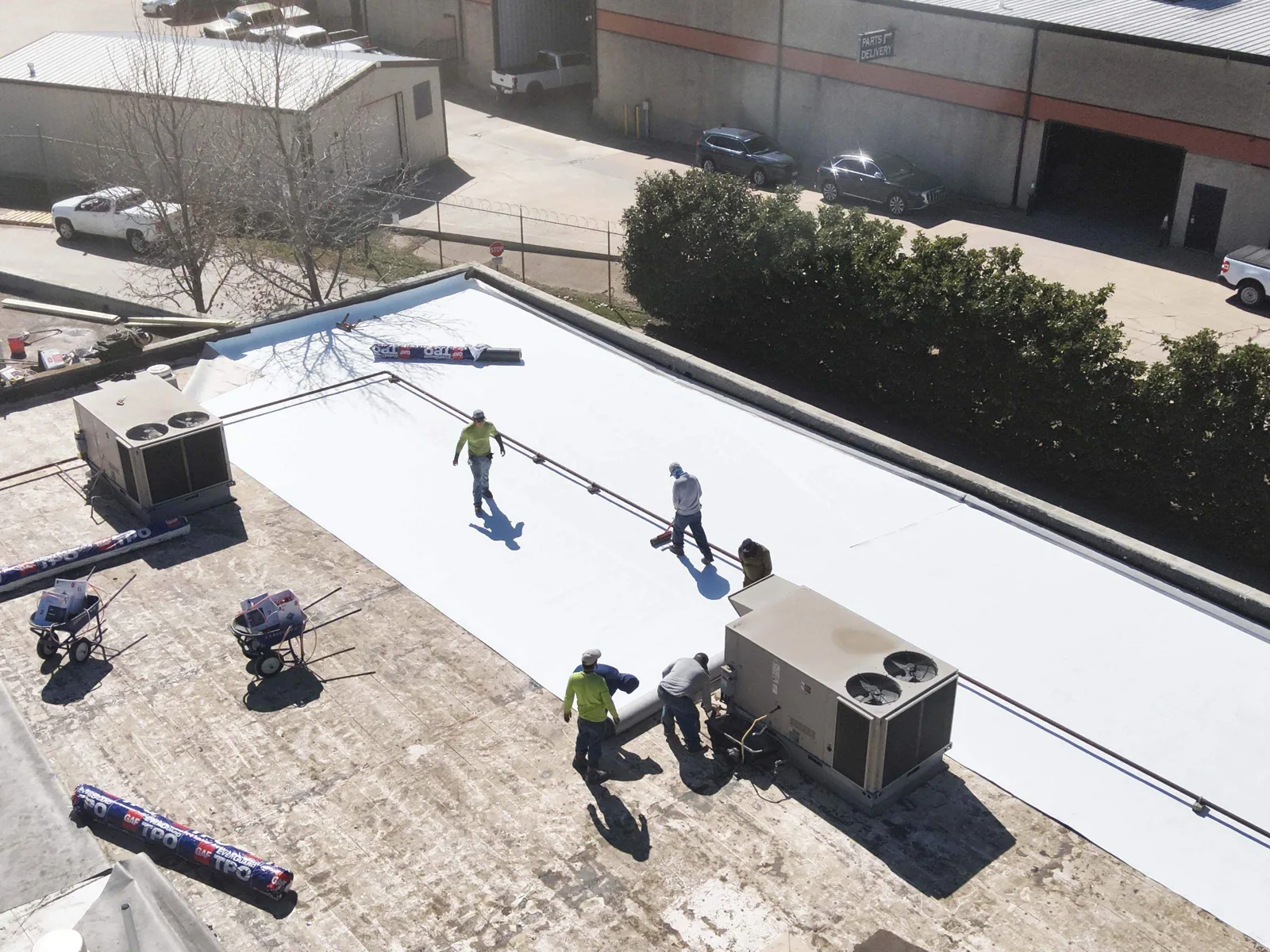
A recover is considered only after checking the current roof layers, moisture, attachment, structural capacity, drainage, and available height at curbs and perimeter edges. Replacement exposes concealed materials as removal proceeds and needs a daily dry-in plan. Coating can be useful on a compatible roof surface, but it cannot correct a failing deck or trap water below the membrane. If a new TPO assembly is an option, the proposal covers insulation, fastening, seam welding, flashing, drainage, and termination details. The owner can compare that full assembly with repair or replacement based on the condition found, building schedule, access, disposal, and protection below.
Carry the findings into maintenance
At completion, we mark the repair area and record the preparation, material, photographs, tie-in, and unresolved conditions. The handoff explains which parts are permanent and whether temporary protection remains. A facility manager can use that detail to direct a later inspection toward the same curb, drain, or edge rather than reopening a broad question. A roof condition report keeps the observation and recommended next trigger together for maintenance and budget review.
The proposal identifies roof work and any observed condition relevant to the owner's project review without promising a permit outcome. The Port of Bridgeport supports commercial shipping and several kinds of cargo, but that regional fact does not tell us what staging a Derby property can support. We confirm its access path directly. A Bridgeport location provides a nearby comparison point, and a separate Shelton roof assessment begins with that town property's own plan and findings.
A maintenance record can also show whether work is affecting a roof detail over time. We compare dated photographs at the same seam, curb, or drain and note any change in movement, sealant, corrosion, or water path. If rooftop equipment has been serviced since the prior visit, the facilities contact can record what was moved and whether its support or flashing was disturbed. That history makes a new inspection more direct: the crew can revisit the changed point and check adjacent materials before recommending a repair. After snow or a heavy rain period, the next trigger may be a blocked outlet, a new interior report, or a shift in edge metal. The record should state who receives that call and where the affected zone is marked.
A Derby work order should identify the receiving contact, material drop location, and roof zone included in each day’s scope.
Questions and Answers
What should we do if a leak begins during a Derby roof project?
Keep people away from the affected area if water is near electrical systems or an unsafe ceiling. Contact the person coordinating the work so temporary protection and the roof opening can be checked. We document the active condition and update the work boundary before permanent material is installed.
How can a facility manager tell if a patch is enough?
A patch is easier to justify when the defect is isolated and the adjacent assembly can accept a durable tie-in. Repeated leaks, widespread moisture, loose attachment, or recurring drainage problems call for additional inspection. We show the owner what is confirmed and which test would resolve a remaining question before moving to a broader scope.
Will snow or rain change when the crew can work?
Weather can affect access, substrate moisture, safe material handling, and the area that can be dried in during a shift. Bridgeport's long-term normals give the region's seasonal context, but the current roof and forecast guide the actual schedule. We identify a safe work window and revise it if conditions change.
What should be included in the repair closeout?
Include the roof-zone location, condition found, preparation, materials, photos, completed boundary, and any remaining item that needs attention. If a temporary measure was used, note what will replace it and the condition that triggers follow-up. The record should let a new property contact understand the work without relying on a verbal handoff.
Related Roofing Work
Request a Derby roof assessment
Share the building location, reported issue, roof access contact, and work-hour limits. We will inspect the relevant roof zones, document the findings, and provide a written boundary with any testing or follow-up called out.